
Residents urge Sumner County to act after will bequest; public commenter reads codicil
Get AI-powered insights, summaries, and transcripts
Subscribe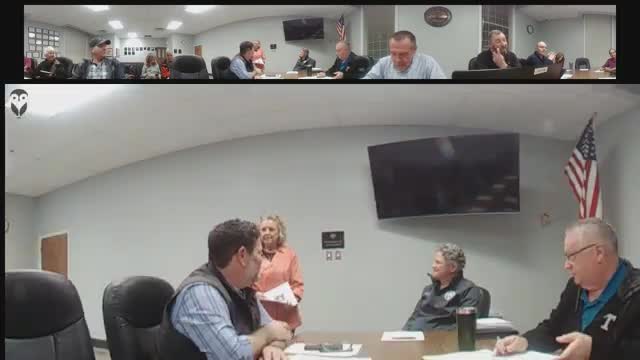
Summary
Public commenters urged quick action to preserve the Brown House; Cynthia McLeod read Mr. Brown's will and codicil that, according to her reading, bequeaths $500,000 to Sumner County to establish and maintain the William and Martha Brown Park with the house as its centerpiece.
Residents and descendants of families tied to the property urged the ad hoc committee to move quickly to preserve the Brown House and surrounding parkland.
Cynthia McLeod, identified as a neighbor at 102 Tioga Trail in Hendersonville, presented photos, described the house's 1790 origin and current deterioration and read language from what she identified as William Brown's will and codicil. In her reading the codicil bequeaths $500,000 to Sumner County to establish and maintain a public park at 212 Hunters Lane, with the historic home permanently maintained by the county as the park centerpiece.
"I specifically be bequeath to Sumner County, Tennessee ... the cash sum of $500,000 to establish and maintain a public park ... with the historic home currently situated there being permanently maintained by the county as the park centerpiece," McLeod read aloud during public comment.
Other residents, including Kevin Baker, described the property's Revolutionary War-era ties and urged cooperation between the mayor's office and the director of schools. Baker referenced a large historical donation in his remarks (he mentioned $8 million), but that figure was not corroborated during the meeting; the official will text read during public comment specified $500,000.
Speakers expressed emotion about the house's condition and said the property is overgrown, the fence is falling down and some doors have been kicked in. Neighbors described prior attempts to have the area mowed and noted the site sat unsecured for a period before it was boarded.
The committee acknowledged the bequest and discussed the legal and procurement steps necessary before full renovation can begin, including environmental buffer coordination, an RFQ for an architect, and subsequent RFP for contractors. Members asked county staff (Don Long and road department personnel were referenced) to stake the boundary and help with short-term clearing so work can proceed once procurement steps are complete.
The committee did not change ownership status; members said the property is county-owned and the ad hoc's role is to make recommendations to GenOps about using the restricted funds.
Next steps mentioned in the meeting included staking the buffer, arranging mowing/bush-hogging, and continuing the RFQ/RFP process so the architect and contractor can be selected.