
Southern Kern Unified holds second public hearing on switching to trustee-area elections; draft maps to be posted Nov. 21
Get AI-powered insights, summaries, and transcripts
Subscribe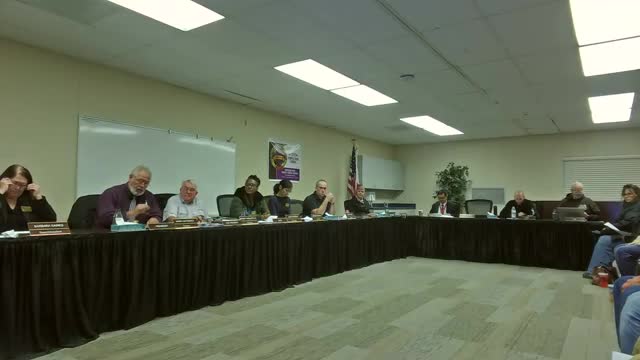
Summary
At a second required public hearing, district consultant Justin Levitt outlined why the district is moving from at-large to trustee-area elections under the California Voting Rights Act and Fair Maps Act, walked trustees and the public through demographic data and criteria for drawing lines, and said draft maps will be posted Friday, Nov. 21 for public review.
At a public hearing the Southern Kern Unified School District Board heard a long presentation on moving from at-large to by-trustee-area elections and set a timetable for draft maps to be posted for public review.
Justin Levitt, vice president of National Demographics Corporation, told the board the California Voting Rights Act and new state Fair Maps Act are the principal drivers behind the change and explained the legal and technical constraints trustees must follow. "The law requires two initial hearings before drawing lines, and once we post draft maps there must be a minimum seven-day public review before the board discusses them," Levitt said. He noted litigation risk and settlement costs in other jurisdictions have pushed many districts to adopt trustee areas.
Levitt presented the district's 2020 census-derived numbers: a total population of about 22,101, roughly 43% Latino, about 38–39% non-Hispanic white, 11% Black and about 5% Asian. Using those figures, he said the district's ideal population per trustee area is approximately 4,420 residents. He also said the citizen voting‑age population closely mirrors total population in this district, which affects how the Voting Rights Act is evaluated.
The consultant described the rank-ordered Fair Maps Act criteria trustees must consider: continuity (contiguous geography), avoiding dividing neighborhoods or communities of interest, minimizing splitting of cities or census-designated places, following identifiable boundaries such as major roads and natural features, and compactness. Levitt emphasized that while state and federal requirements come first, local testimony about neighborhoods and schools will be carried forward into the map‑drawing process.
Board members and public commenters asked practical questions about implementation. Several residents worried that switching to trustee‑area elections could leave some areas with fewer candidates and raised whether historical election patterns were being factored into map design. Levitt and trustees replied that if a trustee-area seat receives no candidates, the board fills the vacancy from qualified residents living in that trustee area, and that the purpose of smaller election areas is to encourage local candidates who might otherwise not run districtwide.
Trustees discussed whether to place maps on the ballot or adopt them directly. Levitt noted a statutory provision that allows trustees to adopt maps without a voter referendum in some circumstances and said that can reduce litigation risk, but he left the policy choice to the board. "You can put this on the ballot," he said, "or you can adopt the map without voter approval; the alternative is the voters decide, but that carries the risk of expensive litigation."
The board closed the hearing and will receive draft maps (Levitt said they would be posted Friday, Nov. 21) that will serve as starting points for at least two additional public hearings and potential revisions before trustees select a final map and submit it to the county committee on school district organization for review and approval.
Next steps: trustees will review posted draft maps, hold at least two additional hearings to receive public input and possible revisions, and then select a final map for county review before implementation for the 2026 and 2028 elections.