
Vibe Credit Union hosts Canton webinar on common scams and how to protect accounts
Get AI-powered insights, summaries, and transcripts
Subscribe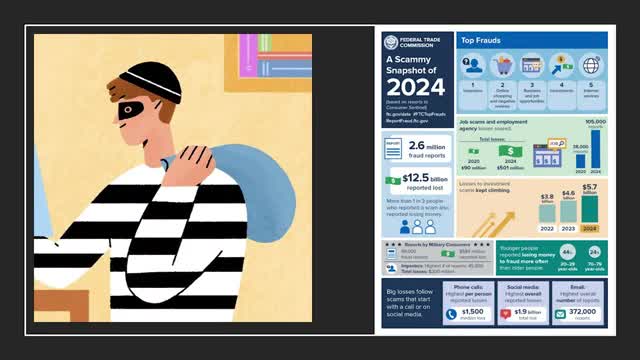
Summary
Vibe Credit Union led a fraud-prevention workshop in Canton Township covering imposter scams, phishing, card-skimming, password hygiene, and local resources including credit freezes and a card-control app. Staff urged attendees to report fraud promptly and to verify callers by calling known numbers.
Vibe Credit Union held a community fraud-prevention webinar in Canton Township to walk residents through the most common scams and practical steps to protect accounts and devices. Nouk, the credit union’s community engagement specialist, led the session and said the Federal Trade Commission reported consumers lost more than $12.5 billion to fraud in 2024, a figure she used to underscore the scale of the problem.
The presentation outlined frequent attack methods — imposter scams, phishing emails, fraudulent checks, vishing (voice scams) and smishing (text-message scams) — and recommended concrete protections. "Don't give out your account information," Nouk told the audience, adding that members should hang up on urgent-sounding calls and call their financial institution using a number they already have, not a number provided in a suspicious message.
Nouk and Rima, a branch manager who identified herself as the Canton branch manager, role‑played a common scam call to show how fraudsters might pressure victims to provide sensitive data. Rima said Vibe staff "would never ask for your account number when we called you," and described the use of so‑called out‑of‑wallet verification questions (for example, last deposit or number of share accounts) to confirm a caller’s identity.
Presenters recommended password managers and multi-factor authentication to reduce credential reuse. Nouk noted that Vibe staff use a password manager called Keeper and advised attendees who prefer paper to keep written passwords encrypted or stored safely. Attendees also discussed device syncing and face‑recognition authentication; presenters cautioned against syncing passwords to devices without evaluating the security settings.
The webinar covered card-related fraud in depth. "Card cracking," the speakers explained, can occur when someone deposits a fraudulent check into another person's account and uses that person's debit card to withdraw courtesy cash before the check is returned as fake. Presenters advised using teller services rather than ATMs when possible, watching for ATM skimmers, and favoring contactless 'tap' or chip transactions over entering a PIN in public. They also described a third‑party monitoring service (Falcon) that flags unusual spending and encouraged members to notify their bank of travel plans to avoid legitimate transactions being declined.
Nouk walked through recovery and preventive options: freezing credit files with the three major credit bureaus via annualcreditreport.com, using a card-control app to lock stolen cards instantly, and filing a police report so financial institutions have a documented affidavit of fraud. She encouraged attendees to report suspected fraud promptly to their local bank or credit union and to file police reports so institutions can track patterns and identify fraud rings.
The webinar closed with an offer to bring similar workshops to senior centers, schools and businesses. Pam, one of the event organizers, and Demi from the Canton Chamber assisted with logistics and photography; the session was recorded for Canton Cable and will be posted to YouTube and the chamber website for later viewing.