TMAC votes to send micro‑mobility code recommendations to City Council
November 21, 2025 | Provo City Other, Provo, Utah County, Utah
This article was created by AI summarizing key points discussed. AI makes mistakes, so for full details and context, please refer to the video of the full meeting. Please report any errors so we can fix them. Report an error »
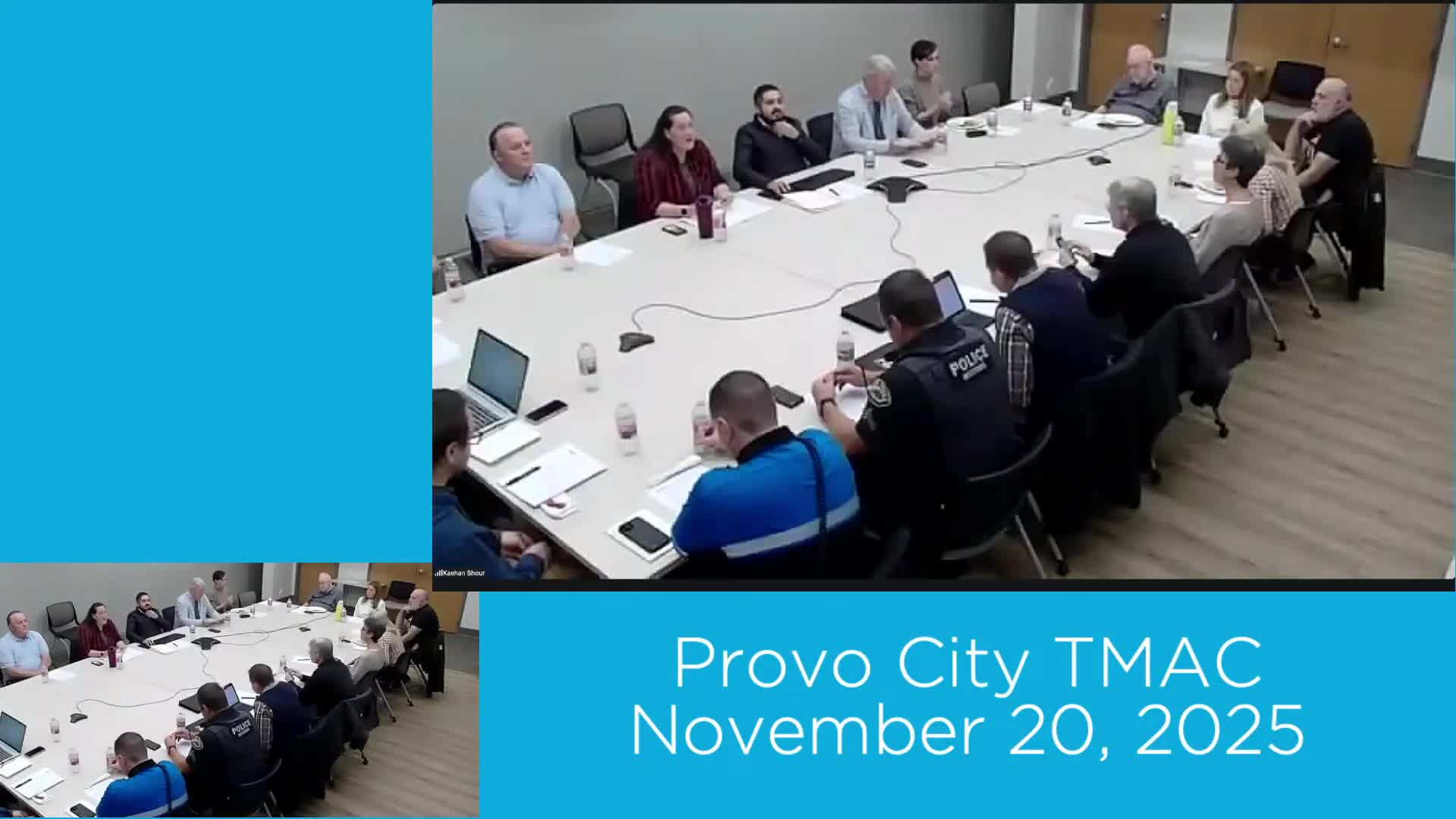
Committee members said the recommendation synthesizes a year of discussion about how to regulate electric scooters, e‑bikes and similar devices. The proposal identifies three primary areas for Council review: (1) safety and age requirements; (2) where devices may be ridden and maximum speeds in different rights‑of‑way; and (3) traffic adherence and equipment standards amid rapidly changing vehicle technologies. Members debated whether added enforcement measures should accompany code changes and whether some elements fall under administrative, not legislative, responsibility.
TMAC asked that city policy analysts prepare a concise staff report for Council, summarizing TMAC’s pros and cons for each potential approach rather than requiring staff to re‑watch months of meetings. "I move that we accept this as written with an addition to communicate and desire to communicate," McFarland said during the meeting. The Chair called for the question and the motion passed by voice consensus; the transcript records no roll‑call tally.
Why it matters: the Council will receive a targeted request that could lead to a formal code change or to administrative measures, such as enhanced safety messaging or enforcement priorities. TMAC members emphasized the separation of responsibilities: the City Council may amend code while administration and police determine enforcement and education tactics.
Next steps: the item will go to City Council staff for statewide comparison, a formal analysis of how other cities regulate micro‑mobility, and a staff recommendation on possible code language or administrative actions. TMAC expects the Council’s policy analysts to return a concise report that reflects the committee’s discussions rather than a transcript of all meetings.
Don't Miss a Word: See the Full Meeting!
Go beyond summaries. Unlock every video, transcript, and key insight with a Founder Membership.
30-day money-back guarantee
Sponsors
Proudly supported by sponsors who keep Utah articles free in 2025

Excel Chiropractic

