
Baltimore City Fire Department outlines new apparatus deliveries, warns of vendor delays
Get AI-powered insights, summaries, and transcripts
Subscribe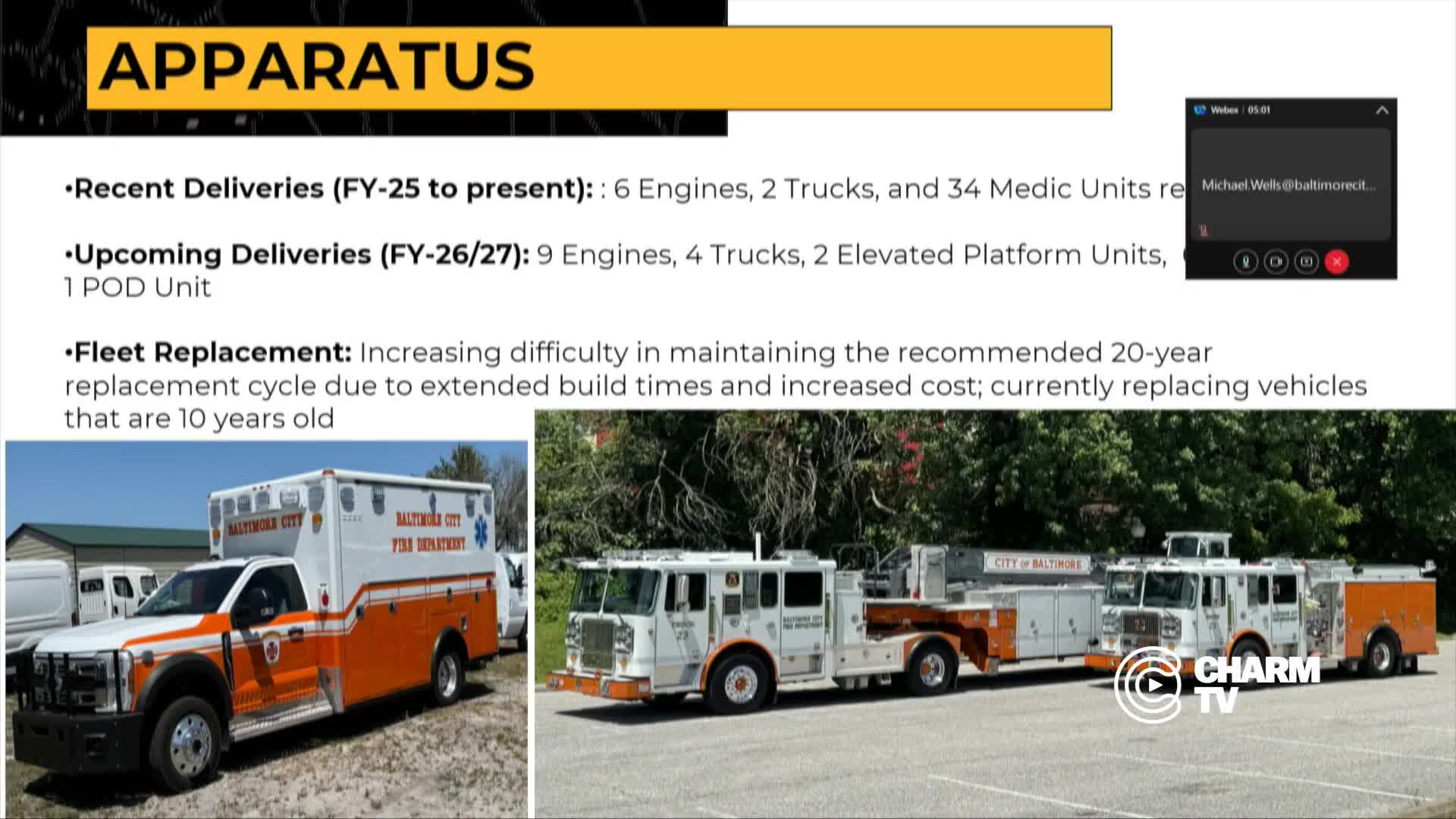
Summary
At a Public Safety Committee hearing on LO 25-0006, Chief James Wallace told members the department has taken delivery of multiple engines and medic units and outlined planned purchases — while warning vendors have pushed some deliveries from November to April, creating scheduling challenges.
At a Public Safety Committee hearing on LO 25-0006, Chief James Wallace of the Baltimore City Fire Department said the department has begun receiving a wave of new apparatus and outlined remaining procurement plans while flagging vendor-related delays.
"We have been fortunate enough to take delivery of 6 engines, 2 ladder trucks, and amazingly 34 medic units," Wallace said, describing the recent backlog of medic units that arrived rapidly. He told the committee the department expects nine engines, four ladder trucks, two elevated-platform units, six more medic units and a new "pod unit" for special operations this fiscal year.
The pod approach will use containerized, discipline-specific equipment caches that can be loaded onto a response truck when needed, Wallace said, reducing the number of specialized vehicles required on-scene. He described expanded logistics and apparatus coordination as central to operations but warned vendors have pushed some equipment delivery timetables: "That's all been pushed back from November to April," Wallace said.
Wallace also described investments in firefighter safety gear, including plans to replace aging self-contained breathing apparatus (SCBA) purchased in 2013 that met the 2007 NFPA standard. He said the department secured an agreement with its supplier to exchange current units for ones compliant with the next NFPA standard when it is released, helping the department plan compliance over the coming years.
Committee Chair Mark Conway opened the hearing noting recent clusters of fires in Baltimore and said these oversight hearings are intended to ensure the department remains equipped for similar incidents.
There were no formal motions or votes during the discussion of apparatus procurement; the presentation was informational and Wallace agreed to provide additional timing details to committee members on request. The department signaled the primary ongoing risk to timelines is vendor scheduling and delivery backlog.