
Lorain County judges press commissioners to protect court services amid rising jury workloads and tech costs
Get AI-powered insights, summaries, and transcripts
Subscribe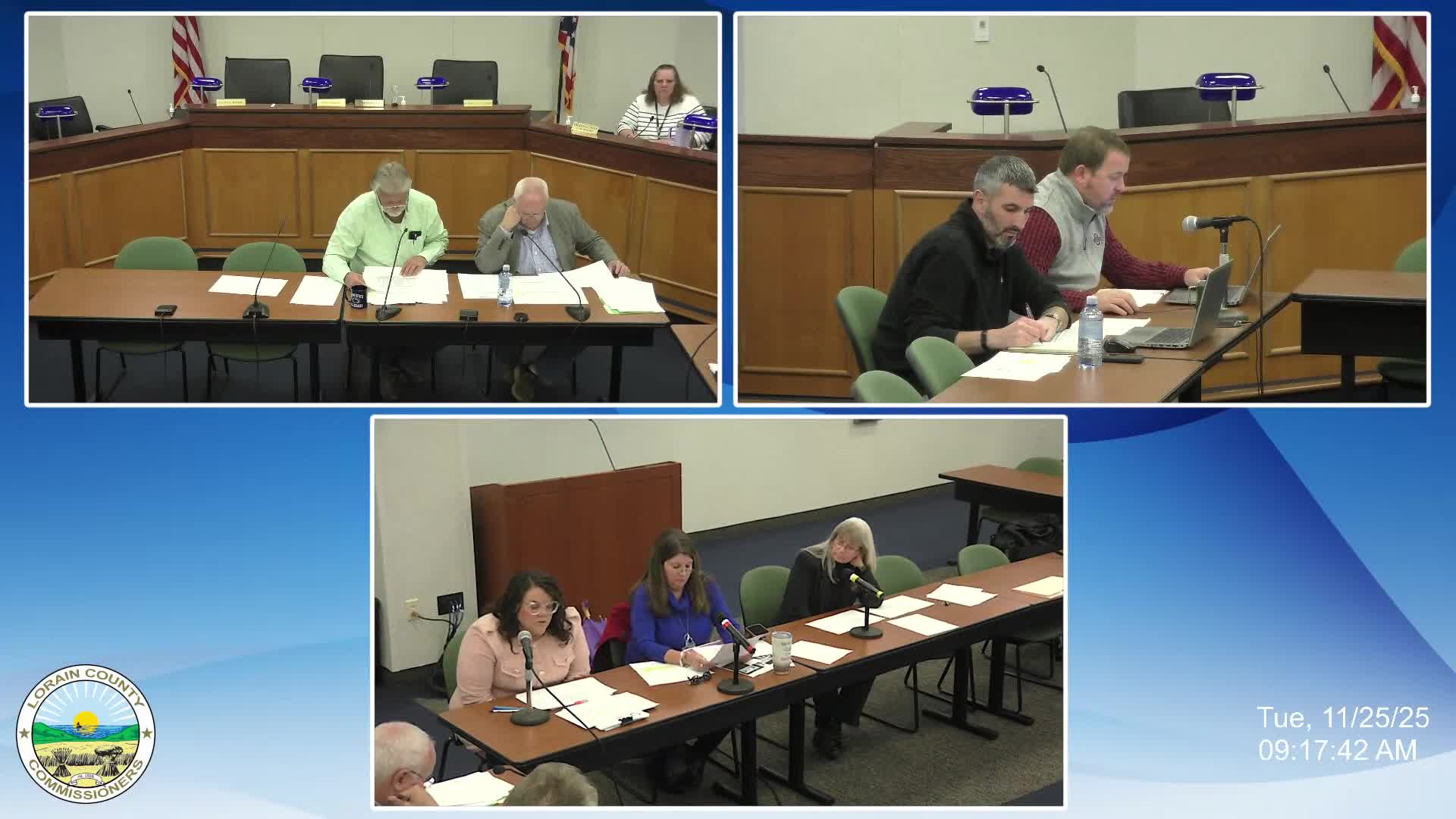
Summary
Judges and court administrators told commissioners that rising jury trials, mandated software upgrades and security needs are driving courtroom and probation costs; they said many expenses are borne by special revenue funds but flagged upcoming capital and technology outlays.
Judges and court administrators told the Lorain County Board of Commissioners at a budget work session that rising jury workloads, a mandated new case-management system and courthouse security needs are driving court-related costs and complicating plans for a no-increase 2026 budget. "I've done 17 [jury trials] myself this year," said Judge Giovanna Bremke, describing a substantial jump in trials that has increased juror and administrative expenses.
The judges said the court will launch a new case-management system on Dec. 8 and that the court paid its portion from special revenue funds rather than the general fund. Bremke said the court and clerk contributed to the upgrade to avoid immediate general-fund pressure. The judges also described prior courtroom-technology projects: a complete update previously cost about $750,000, partly offset by a $150,000 grant, and they said further upgrades are likely to be needed.
Probation and alternatives to incarceration were a central part of the discussion. Judges reported using grant funds for GPS supervision and provided specific figures: as of Sept. 25 the court had spent $204,275 in grant funds to pay for roughly 17,023 days of GPS supervision at about $12 per day; they argued that keeping those same individuals in jail at an average cost of $84 per day would have been far costlier. "At about $12 per day for that GPS supervision, we paid for 17,023 days for people to be released this year," one judge said, noting the grant-funded savings.
Court leaders emphasized that many courtroom and probation salaries and services are paid from special revenue funds that are restricted to particular uses. Bremke said those special funds cover IT staff, probation positions, mediation and foreclosure work and that those arrangements reduce pressure on the general fund. She described the special projects fund balance as modest compared with other departments and roughly $1.4 million.
Commissioners asked judges to identify line items where trimming would not harm critical services. County leaders said they want to preserve capital-expenditure capacity after years of deferred maintenance — noting they have already allocated $1,000,000 to HVAC work — while evaluating whether some nonmandated programs should be reduced if revenue remains flat. "Our goal is to see if either through increased revenue from special revenue funds or through some trimming of line items we can get back to the '25 budget for a 0 increase for '26," a county official said.
The meeting closed with agreement to share assessments and budget details and to continue working through options for special revenue spending, courtroom technology, and capital priorities. Commissioners and court leaders also said they would discuss whether courtroom upgrades can be phased or funded through grants.