Public testimony: youth, housing groups and developers weigh in on whole-block strategy
Loading...
Summary
At the committee hearing, a high-school student urged a vacant-property registry and reinvestment fund; housing nonprofits supported neighborhood-scale approaches; some residents criticized the plan for favoring developers and urged climate-resilient, community-led solutions.
Public testimony followed the agency presentation and covered a range of views.
Ace Azire, a high-school student in a Youth-in-Government project, proposed a local vacant-property ordinance to require registration of vacant buildings and to create a City Rehabilitation and Reinvestment Fund that would use penalties and surcharges to support renovation, first-time homebuyers and green-space projects. "This ordinance gives Baltimore the tools we need to take control of our housing landscape," the student told the committee.
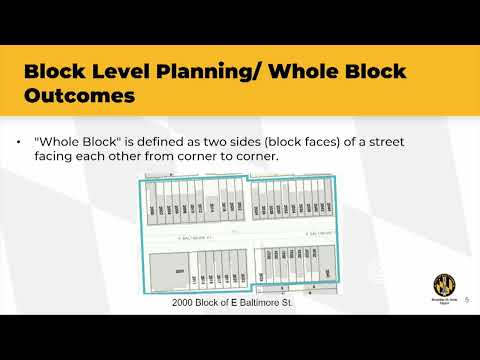
Dan Ellis, CEO of Neighborhood Housing Services of Baltimore, urged the city to view interventions at neighborhood scale rather than by isolated blocks, arguing broader market change is needed to catalyze homeownership and private renovation.
Developer representatives including Victor Akinabe of Rebirth Development praised DHCD's use of receivership and city tools to assemble sites but urged stronger developer accountability to finish projects and secure use-and-occupancy permits.
Resident Shiel Seltzer criticized the whole-block approach as favoring developers and said the city should prioritize climate-resilient infrastructure and community-led building programs instead of large developer-driven projects. The chair limited public-comment time per chamber rules.
Speakers included neighborhood housing groups, local developers and residents; testimony reinforced the committee's request for follow-up materials on developer vetting and post-sale compliance tracking.