
Business groups and residents speak in favor of proposed tax plan ahead of Springfield vote
Get AI-powered insights, summaries, and transcripts
Subscribe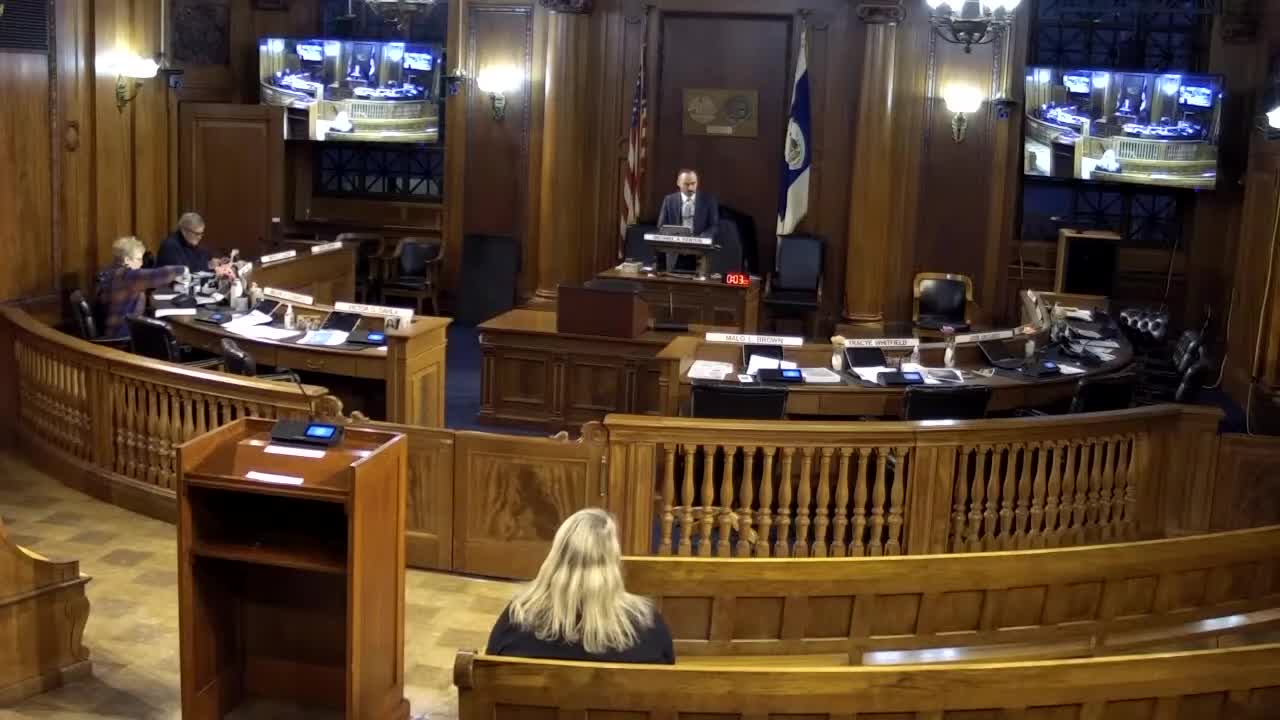
Summary
At a public hearing before a scheduled 5 p.m. tax-rate vote, business and resident speakers broadly supported the council’s proposed rate while urging year-round fiscal reforms; speakers emphasized full-market valuation, new-growth drivers and use of free cash to soften taxpayer impacts.
Diana Bridal, president and CEO of the Springfield Regional Chamber, told the Springfield City Council on Nov. 24 that the chamber supported the process that produced "a really fair proposal" this year and thanked the tax advisory committee, council and assessors for their work. Bridal said the chamber represents hundreds of local businesses and the employees who work for them.
At the public hearing portion before a scheduled 5:00 p.m. vote, multiple speakers stressed different priorities but agreed the discussion must continue into the budget cycle. Freddy Lopez, representing the real estate industry, described how the mill rate (tax per $1,000 of value) is applied to full marketable value in Springfield and urged the council to address tax relief during budget formation rather than only at tax-rate time. "So whatever rate we decide on, that in the real estate industry is called the mill rate," Lopez said, adding that personal property and levy rules determine what households ultimately pay.
Juan Latore, who gave a local address, said he supports the proposed tax rate and "the max shift towards 1.75," despite acknowledging it places a larger burden on businesses. Latore warned that continuing to plug city pension gaps with one-time free cash is not sustainable and urged the council to pursue year-round efforts to identify new revenues and operational efficiencies to limit future property-tax increases. "We come here every year, and we have this conversation at the tax rate time," he said.
Speakers raised the possibility of using certain free-cash sources (referred to in the hearing as "MGM money") and other non-levy funds to provide targeted tax relief; that approach was offered as a way to reduce individual tax bills without changing the city’s overall revenue needs. No formal vote or action occurred during the public-comment segment recorded here; the council adjourned the hearing portion to proceed to the full meeting and the scheduled 5:00 p.m. vote.
The public comments underscored two repeated themes: residents want near-term relief from rising property-tax bills, and several speakers asked the council to treat tax relief as a continuous, year-round policy and budgeting priority rather than a once-a-year debate.