
Springfield pilots two‑way AI texting at Central High to curb chronic absenteeism
Get AI-powered insights, summaries, and transcripts
Subscribe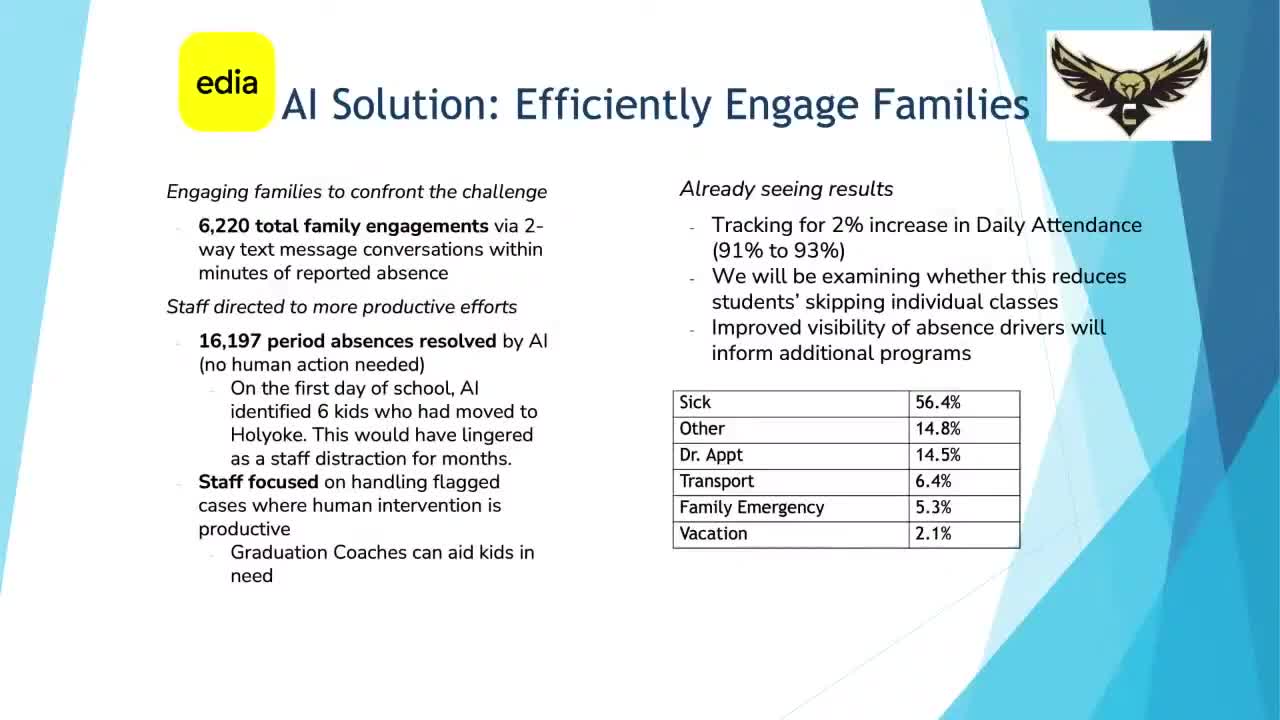
Summary
Principal Tad Tokar and Assistant Superintendent Jose Escobarno described a two‑way AI texting pilot at Central High that notifies parents when students are marked absent, allows immediate responses that can be logged as excused, and routes concerns to school staff for follow‑up; district will review midyear data before wider rollout.
Springfield Public Schools is piloting a two‑way AI‑assisted texting system at Central High School aimed at reducing chronic absenteeism and improving student follow‑up.
Assistant Superintendent Jose Escobarno told the school committee the district has taken an evidence‑based, family‑focused approach to chronic absenteeism, “shifting from a punitive measure to a more collaborative measure,” and is building attendance‑team capacity and data dashboards to guide interventions. He said the district has tracked interventions—including phone calls, letters and home visits—and that the effort produced small districtwide declines in chronic absenteeism in 2024–25.
Principal Tad Tokar described the Central pilot in practical terms: “If a student is absent, say, from first period, the teacher takes attendance, there’s a text message that goes home to the parent on record and that it’s an artificial intelligence assistant and that parent has a communication with the school.” Tokar said parents can reply, upload notes that become excused absences in PowerSchool and flag issues—such as bullying—that route immediately to school staff for investigation and follow‑up.
Tokar said the pilot improved the accuracy of his school’s enrollment data, enabling administrators to confirm who is in the building quickly. He also said Central’s first‑semester passing rates increased about 7 percent since the pilot began, a claim Escobarno said the district will verify with midyear data before deciding on districtwide expansion. “We want to get the midyear data, see how we’re trending, and then start to begin conversations about other schools,” Escobarno told the committee.
Committee members asked operational questions about triggers for home visits and whether the texts cover single‑period tardies. Presenters said the texting schedule is configurable by school—messages can be pushed midday, at day’s end or the following day—and that the home‑visit team conducts targeted weekend visits for chronically absent students.
The superintendent and assistant superintendent said budget considerations will determine whether the district or individual schools fund expansion; the committee asked staff to review costs and return with data after the midyear point.
Next steps: The district will collect and present midyear metrics to the committee before any decision to scale the texting program beyond Central High.