
Missoula educator uses macroinvertebrates to teach watershed health to fifth graders
Get AI-powered insights, summaries, and transcripts
Subscribe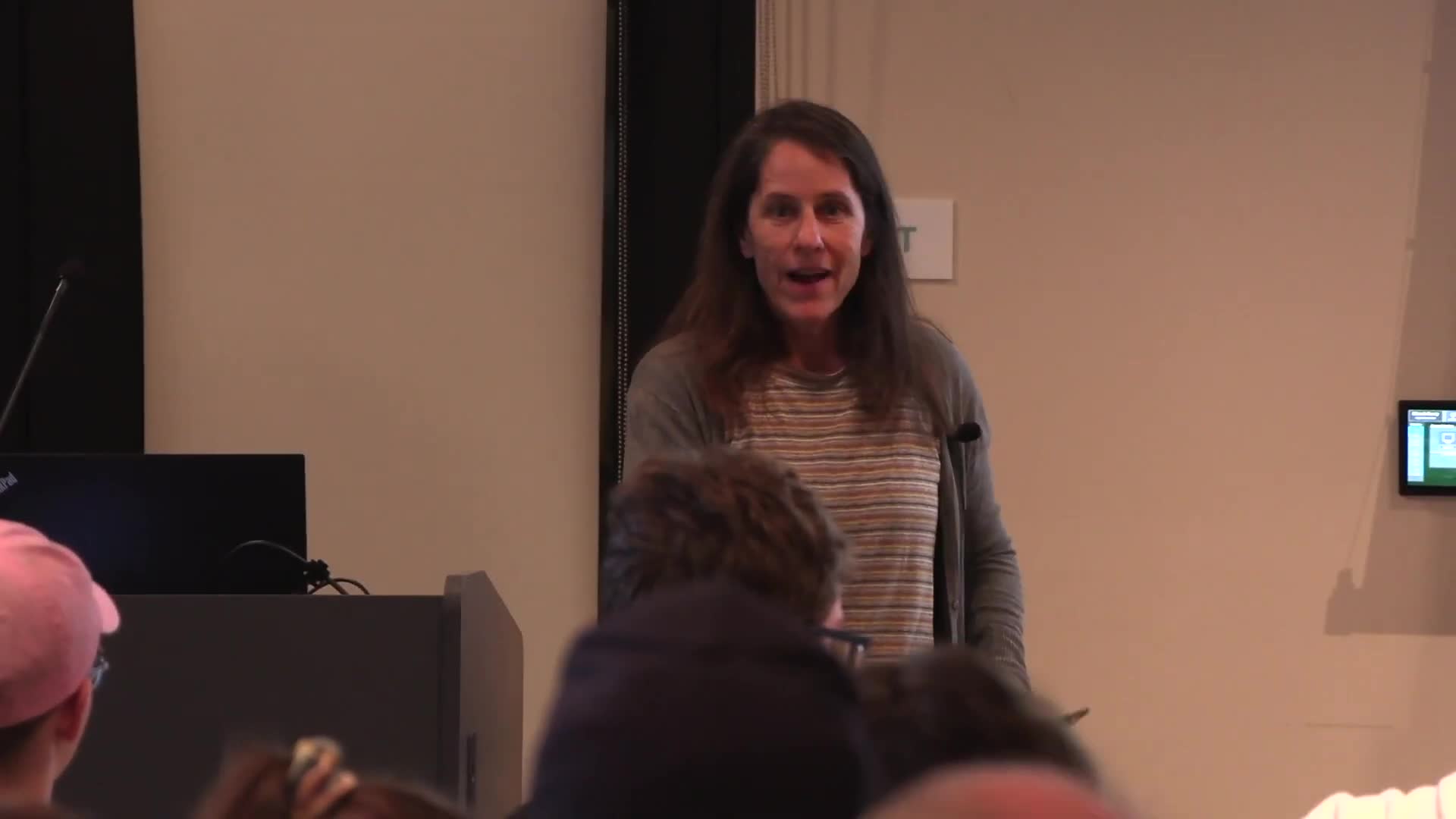
Summary
At a Bugs and Brews lecture in Missoula, Dalit Gucio described Ripple's hands-on program that teaches fifth graders to collect and analyze aquatic macroinvertebrates as a proxy for watershed health, including a 12-hour in-school curriculum, field trips and a biotic-index exercise with demonstrated knowledge retention.
Dalit Gucio, a program manager with Ripple (formerly the Clark Fork Watershed Education Program), told an audience at the Azulobar Gliocin Insectarium that her organization uses aquatic macroinvertebrates to teach watershed science to elementary students in Missoula.
Gucio said the in-school program for fifth graders runs about 12 hours — five 60-minute classroom sessions plus a full field trip — and is place-based, so lessons focus on local waterways. "Aquatic macroinvertebrates are big enough to see with your naked eye, animal without a backbone, that live at least part of their time in water," she said, explaining that student teams collect and sort specimens at an aquatic macroinvertebrate station and record results on data cards.
The program combines three field stations — macroinvertebrates, water-quality measurements and riparian assessment — and teaches students to use a simplified dichotomous key to group organisms. Gucio described pollution-intolerant groups (mayfly, stonefly and caddisfly larvae) versus pollution-tolerant groups (black fly, midge larvae and leeches) and how the relative abundance of those groups informs a classroom biotic index.
Students calculate a classroom biotic index (Gucio described columns A–D where C = A×B and the class computes averages) and compare their results to example bands. She said student-collected scores are primarily pedagogical; she gave an example value of about 2.25 in an in-class exercise that falls in an impacted range by the standards she showed.
Gucio also described a pilot assessment in which some students were reassessed a year later and the program observed about 50% retention in documented watershed knowledge. "I go to bed and feel good about what I do even when I'm exhausted," she said, noting that the goal is improving community environmental literacy as well as student understanding.
She acknowledged limitations of short-term student sampling and urged comparing classroom results to longer-term monitoring datasets when possible; she referenced older pre-cleanup data from a local creek (transcript: "Silverblue Creek") as an example of historical comparison. Gucio said repeated visits to the Confluence site in recent years have shown noticeable increases in worms and snails at low flows, a change she described as "striking" but not yet traced to a specific cause.
The presentation highlighted Ripple's statewide reach — Gucio said the program has served "over 80,000 students" and trained about "1,000 teachers" — and emphasized that hands-on sorting, use of keys, and simple arithmetic to compute indices are accessible ways to introduce scientific inquiry to elementary students.
The event concluded with brief audience questions about local trout populations and with Gucio offering contact information for volunteers and more information about Ripple's programs.