
District court handles pleas, revocations and deferred adjudications in multi-defendant docket
Get AI-powered insights, summaries, and transcripts
Subscribe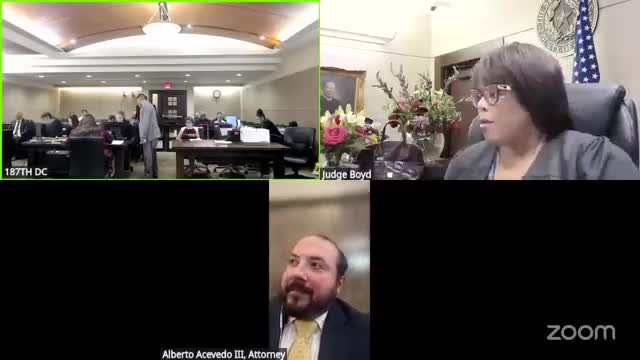
Summary
A district court session heard pleas, motions to revoke community supervision, bond requests and scheduling matters for multiple defendants; several pleas were accepted with deferred adjudication or probation conditions and the court set follow-up dates for evaluations and contested hearings.
A district court session convened remotely and proceeded through a long criminal docket, taking pleas, resolving motions to revoke community supervision and setting future dates for sentencing, evaluations and contested hearings.
The judge (unnamed in the transcript) accepted several pleas and applied court-ordered conditions in a series of cases. In State v. Kira Henry the defendant signed a consent to plea by video and applied for deferred adjudication; the court confirmed the defendant’s understanding of the charge (fraudulent use/possession of identifying information, state-jail felony) and noted a missing electronic signature on a waiver paragraph that parties agreed would be corrected. The state indicated it opposed community supervision and recommended restitution; the court deferred sentencing steps and set a PSI/TAP scheduling process.
In a separate case, Jorge Alberto Pollard Guevara acknowledged his plea to an offense the court described as online solicitation of a minor; the court accepted the plea, imposed a three-year sentence under the plea terms and a $1,000 fine (as stated in court), and emphasized the defendant’s waiver of the right to appeal and restrictions including no residing in households with minors and no unsupervised contact with minors.
The court also addressed multiple motions to revoke probation. In the matter of David Allen Hernandez, the defendant pleaded true to failure-to-report violations. After discussion and a proposed agreement from the parties, the court denied the state’s motion to revoke and amended conditions to include an ISF cognitive placement and referrals for housing and employment resources, noting credit for successful inpatient treatment if completed.
Other docketed matters included pleas and deferred adjudication in multiple cases: Alfonso Lopez (theft-related charge; plea accepted with scheduling for sentencing and options for PSI), Julius Martinez (assault on a public servant-related charge; deferred adjudication with TAP evaluation and program conditions), Bailey Corley (unauthorized use of a vehicle; sentence terms to run concurrent with an earlier case), Carissa Brooke Ramos (plea to a lesser-included assault offense with probation conditions and parenting-course requirements), and Willie Phillips (deferred adjudication for a possession charge with TAP evaluation and UAs).
The court repeatedly explained penalties and rights before accepting pleas, read admonishments about jury rights and immigration consequences where applicable, and instructed probation departments to provide referrals for services such as TAP evaluations, mental-health assessments and housing assistance. Scheduling items included sentencing resets (e.g., December 9 for several matters), contested hearing dates (e.g., December 1) and jury-trial settings where plea deadlines had expired.
Throughout the hearing the judge emphasized two clear outcomes in motion-to-revoke contexts: either revoke and impose sentence or continue supervision with treatment conditions. To one defendant the judge framed the choice succinctly: “I can revoke you. I’ll sentence you to 3 years in the prison … Or I can continue you, and you’re going to ISF.” The court also repeatedly reminded defendants and counsel to maintain communication with probation and to complete ordered evaluations and community-service components.
Next steps: the docket produced specific future dates for PSI/TAP evaluations, sentencing and contested hearings; several matters remain set for December and January return dates. The court adjourned after completing the listed matters and gave administrative reminders about upcoming mental-health court sessions and calendar logistics.