Community-science team expands snowy plover monitoring on Great Salt Lake’s South Shore
Loading...
Summary
Researchers reported expanded camera coverage and volunteer surveys for snowy plovers at Great Salt Lake’s South Shore, finding higher nest-detection rates with cameras and frequent human and aerial disturbances; teams plan visitor-intercept surveys this fall to inform mitigation.
Community-science researchers on Wednesday described a pilot monitoring program for the western snowy plover along the Great Salt Lake’s South Shore aimed at measuring nest success and the effects of recreation.
Chelsea Cameron, a project lead working with volunteers and partners including the National Audubon Society and Tracy Aviary, said the program expanded camera coverage this season from 26 to about 50 devices and added an observational recreational-use survey. "Great Salt Lake is one of the most important breeding areas for the interior population," Cameron said, framing the program’s urgency.
The project runs nest surveys three times weekly from late April into August, installs time-lapse and motion-capture cameras near nests, and maps recreational activity at access pinch points. Presenters reported camera-assisted nest-success detection improved substantially: they observed roughly 78.3% success rates for nests with cameras versus about 30% without cameras in prior seasons. Cameras also provided timestamps for predation events and disturbance incidents.
Researchers showed footage of predation by coyotes and an instance of a snake consuming eggs; they also showed examples of human-caused losses, including a person inadvertently stepping on a nest, and aerial disturbance by a paramotorist that flushed incubating plovers. Cameron said the team added signs at camera locations to route people around equipment and reduce accidental disturbance.
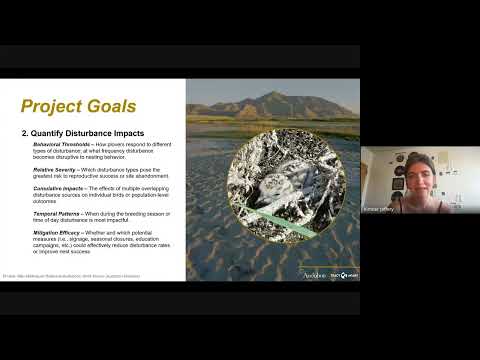
To better understand recreation as a driver, the team introduced a two-part recreational survey this year: short observational counts in midshore and foreshore zones at specific access points, and a planned visitor-intercept (interview) survey this fall to collect demographic data and public views on possible mitigation such as seasonally restricted access or additional signage.
Project leaders said volunteers are essential to data collection and that the group intends to publish their results and share data with managers to inform targeted mitigation. The presentation emphasized continued equipment needs and partner coordination as the program scales.
Next steps include the visitor-intercept pilot this fall and continued expansion of the volunteer network to sustain camera and survey coverage.