Buckeye outlines proposed water-rate increases, citing aging infrastructure and treatment investments
Loading...
Summary
City officials said proposed water and sewer rate changes — to be presented to City Council in January — are aimed at funding infrastructure repairs, treatment upgrades and operations; staff estimates most residents would see bills rise about $8 a month (heavier users up to $15).
Buckeye officials on a city podcast said proposed increases to water and wastewater rates are intended to pay for existing infrastructure, treatment upgrades and ongoing operations — not to pay for a recent bulk water purchase.
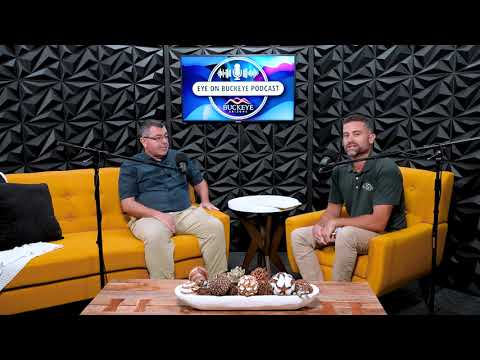
"These are proposed rates," John O'Halloran, the city's deputy director for communications, said during the Eye on Buckeye episode. "Nothing set in stone yet." He introduced Bobby Anastasov, the city’s water resources environmental manager, who explained the rationale and answered residents' questions drawn from social media and recent public meetings.
Anastasov said a citizen water and wastewater rate committee — seven voting members and two alternates, all Buckeye residents except one developer — worked with staff from July through October to review expenditures, manpower and asset-management needs. He said staff will present proposed rates to the City Council in January.
"We really looked at this as a comprehensive rate proposal," Anastasov said, adding that the proposal is intended to be equitable across customer classes. "Whether you were a commercial business, a residential business, or utilizing landscape meters, you were going to be paying for the service, the amount of water that was delivered to you."
Officials said the city operates Buckeye Water Resources as an enterprise fund and cannot use property-tax revenue to pay utility infrastructure. Anastasov said that while new development brings customers and revenue, it also brings costs — new wells, piping and treatment capacity — and developers are required to build and transfer much of that infrastructure to the city.
On water quality, Anastasov said complaints about taste or odor often reflect naturally occurring total dissolved solids (TDS) in groundwater and are not regulated as health threats under the Safe Drinking Water Act's maximum contaminant levels (MCLs). He said advanced treatments for TDS, such as reverse osmosis, are expensive largely because of brine disposal, so the city is pursuing lower-TDS wells to blend supplies and may add treatment as revenues allow.
Officials outlined near-term capital work they say the rates would support. Anastasov cited about $9 million planned for treatment upgrades at the Tartesso Water Reclamation Facility to address rising arsenic and nitrate, and roughly $18 million to rehabilitate the 23-year-old Sundance Wastewater Reclamation Facility. He said the utility had not raised rates since 2013 and that inflation and higher fuel and chemical costs have strained operations.
A neighborhood-scale planning question raised at public meetings concerned a large planned development west of Buckeye Airport — the Cipriani project — and whether possible future data-center uses would change water demand. Anastasov said the original Cipriani water estimate was about 4,500 acre-feet per year for roughly 9,700 residential units; a data-center scenario discussed with developers would cut that site’s projected water need to about 2,000 acre-feet per year because many data centers are shifting to air cooling.
John O'Halloran also asked about an earlier city investment of roughly $80 million for additional water resources, which the podcast referenced as about 600,000 acre-feet. Anastasov said that purchase is a long-term portfolio asset and that the proposed rates are intended to fund existing assets and service delivery rather than to pay for that purchased water. He said the city has roughly a 10-year window to decide how to phase the purchased supply into service and is evaluating logistics.
On customer impacts, Anastasov estimated that customers served by a typical 1-inch meter — representing the majority of households — could see bills rise about $8 a month under the proposal, with higher-use customers facing increases nearer $15 a month. He said taxes are not increasing and that an earlier small repair-and-replacement fee has been removed because those costs are being folded into the proposed rates.
Anastasov said the city is scheduling meetings with homeowners associations to discuss potential HOA cost impacts and conservation programs; he noted the city has used a federal grant to support turf removal programs in some neighborhoods to reduce outdoor water use.
The city emphasized the proposals remain under review. O'Halloran directed residents to buckeyeaz.gov/waterrates for FAQs, prior presentations and potential rate charts and invited further public comment before any council action.
The proposals will be presented to the City Council in January; no final vote or ordinance was announced on the podcast.