
Monterey 1 Water presents Pure Water Monterey and stormwater diversion lessons
Get AI-powered insights, summaries, and transcripts
Sign Up Free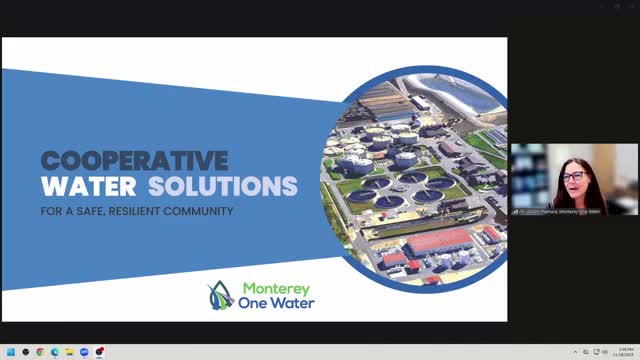
Summary
Monterey 1 Water described how stormwater and dry‑weather diversions feed the Pure Water Monterey indirect potable reuse system, citing reduced nitrogen loads (~800,000 lb) and increased reuse yield (~4,000 acre‑feet); presenters flagged seasonal storage and varied source‑water quality as major implementation challenges.
Monterey 1 Water told the State Water Resources Control Board about regional efforts to divert urban and agricultural runoff into the Pure Water Monterey treatment and groundwater recharge system.
Principal engineer Lisonbee Imamura described the region’s constraints — no federal/state supplies, no snowpack, critically overdrafted aquifers — and how state grants and cooperative agreements made diversion projects possible. Pure Water Monterey leveraged a state water board stormwater grant ($10,000,000) and other local funding to implement dry‑weather and first‑flush diversions that feed the regional treatment plant and the advanced purification facility.
Monterey 1 Water reported operational outcomes since source‑water collection systems came online in 2020: a reduction of nitrogen loads to Salinas Valley surface waters by about 800,000 pounds and an increase in reuse yield of about 4,000 acre‑feet. The agency emphasized that converting winter storm flows to summer recycled supplies depends on seasonal storage strategies and coordinated regional infrastructure — including using industrial wastewater facilities conjunctively and adapting plant operations to variable influent quality.
Challenges identified included complex permitting and multi‑stakeholder negotiations (US Fish & Wildlife, NOAA Fisheries, CDFW, regional boards), higher O&M costs relative to capital, difficulties quantifying fair‑share costs among beneficiaries, and the need for capacity investments in secondary treatment to handle variable flows. Monterey 1 Water said ongoing monitoring and operator vigilance have helped avoid permit violations.
The presentation did not propose any immediate regulatory action; principals highlighted lessons learned for other regions considering diversions and indirect potable reuse.