
Bethlehem presents grant‑driven 2026 community and economic development budget; ARPA civic accounts remain central
Get AI-powered insights, summaries, and transcripts
Subscribe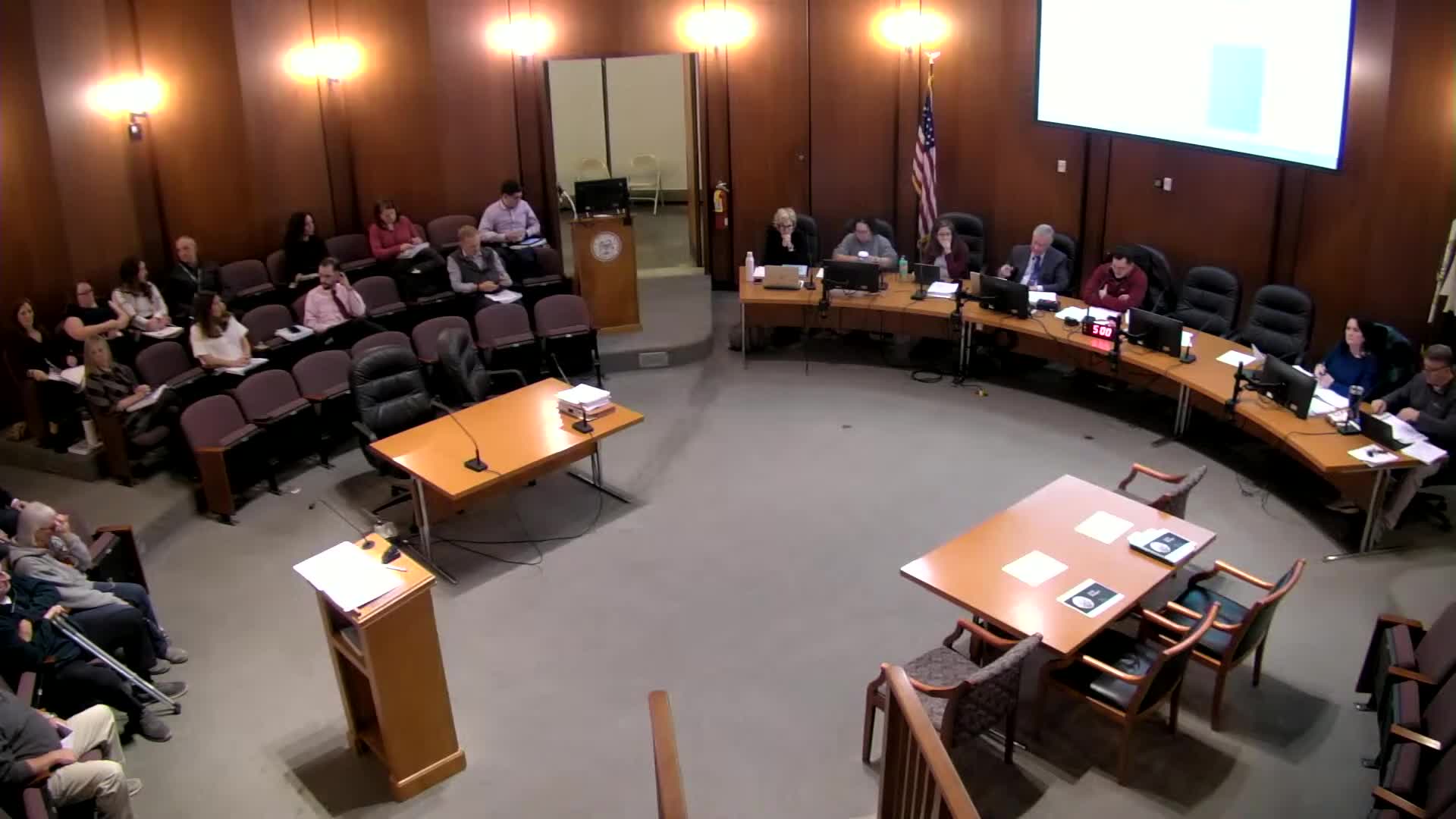
Summary
Director Collins told council the department’s $16M‑plus proposed budget is driven by grants and fees (about 96%), highlighted programs for public health, homelessness prevention, and economic revitalization, and described ARPA‑funded civic expense accounts that continue to underwrite affordable housing, homelessness projects and the Community Recovery Fund.
Miss Collins, director of the City of Bethlehem’s Department of Community and Economic Development, presented the department’s proposed 2026 budget and a multi‑bureau tour of programs the department runs or supports. The presentation, given to the full council on Nov. 27, emphasized that the department’s operating budget is largely grant‑funded and fee‑supported, limiting its impact on the general fund.
Collins said the department’s total budget exceeds $16 million but stressed that roughly 96% of that funding comes from grants or program revenue rather than property tax dollars. She highlighted the Health Bureau’s Community Connections program (523 referrals in 2025), the Family Planning/STD clinic (about 350 clients served), and HUD‑funded Lead & Healthy Homes assistance (52 homes remediated this year). Collins also described the code bureau’s workload amid more than $1.4 billion in recent private construction investment and explained that a recent council vote to raise permit fees will fund two new positions: a plan reviewer and a clerical support position to help process increasing permit volume.
The department also reviewed larger planning and grant successes that intersect citywide priorities. Collins said the city secured a $10 million Safe Streets for All construction award for East and West Broad Street improvements and additional planning dollars to develop a complete‑streets and bicycle infrastructure plan. Economic development programs administered through BEDCO, the RDA and BRIA were credited with directing more than $9 million to small business assistance, downtown activation and major redevelopment projects, and the city is administering $35 million in RCAP grants for multiple revitalization efforts.
Collins reviewed the civic expense accounts created with ARPA funds in 2023 — initially $5 million for affordable housing, $2 million for homelessness initiatives, and $3 million for a Community Recovery Fund — and explained how those dollars have been used and leveraged as match to secure other grants. She said approximately $1 million of the affordable housing allocation has been spent on early implementation of the Opening Doors housing plan and match for a Pembroke Choice Neighborhoods planning grant; a remaining committed balance is reserved for projects including Gateway on Fourth and eviction prevention strategies. The Bethlehem Emergency Shelter rehab at Christ UCC has been designated as the primary homelessness‑initiative commitment and the administration is coordinating fundraising and grant applications to close an estimated $4 million gap for the full project.
Council members pressed staff for additional details. Kwiatek asked about a $305,000 workforce development line in the Health Bureau; Health staff said the line is supported by a flexible five‑year CDC grant that runs through 2027 and is currently being used to help pay for personnel as other federal funding streams shift. Council members also sought specifics on the Community Recovery Fund’s process; Collins described a rubric‑based, multi‑department review and said awardees for program years 2023–24 are posted on the city’s We Build Bethlehem site, and that 72 applications were received in the 2025 round with awards to be announced before year‑end.
Collins’ presentation underscored the department’s reliance on external dollars — from federal HUD CDBG/HOME allocations to state and philanthropic grants — and framed the civic expense accounts as tools that have leveraged significant additional investment. She told the council that, while some program lines are drawn down or committed, the city has used those funds to win roughly $7 million in additional grant awards and to position projects for larger federal capital investments.
Council next reviews the police and fire budgets. The administration said the DCED presentation and the civic account proposals are the product of multi‑year planning and that specific award decisions from the Community Recovery Fund are made through published guidelines and scoring rubrics.