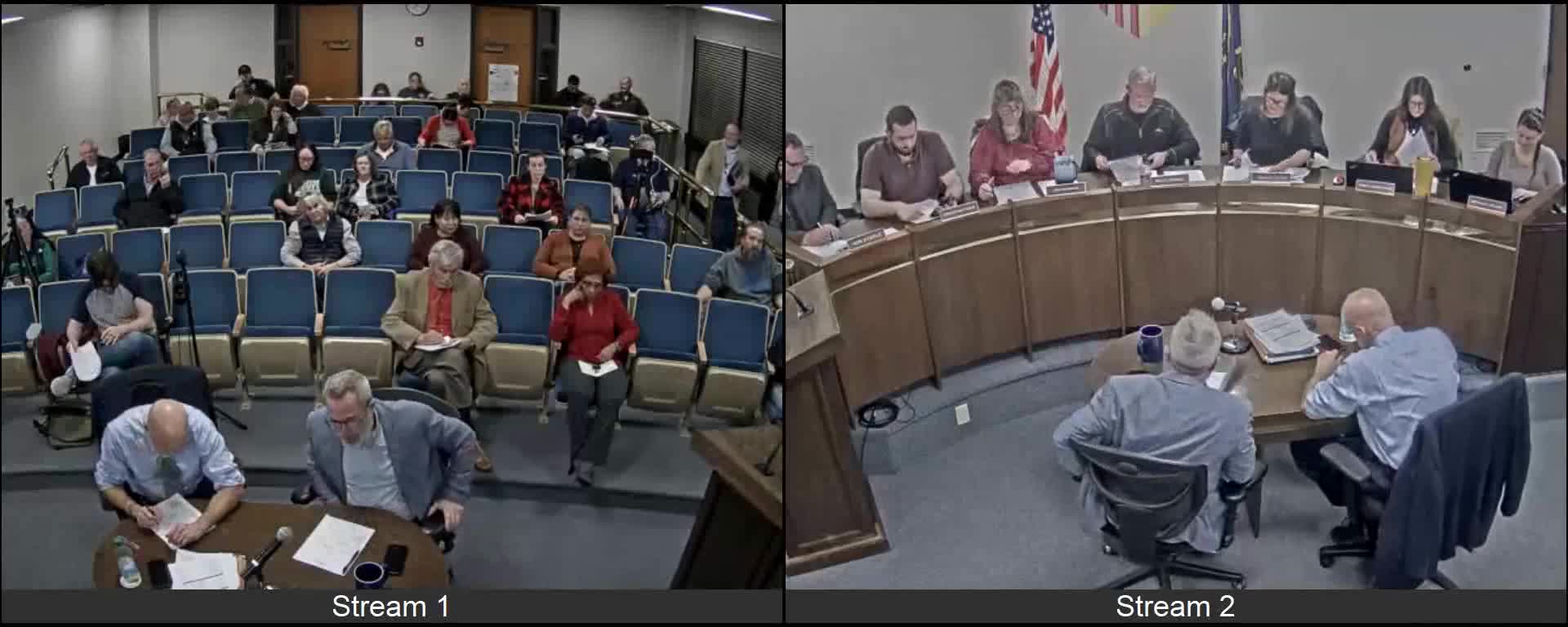
Madison County Council backs JRAC jail build‑out plan, asks for detailed financing by January
Loading...
Summary
Judge Angela Warner Sims asked the council to support a multi‑phase jail build‑out and a jail‑based treatment model; the council voted to support the proposal and asked staff to return in January with a specific financing plan covering estimated $10–12 million construction and program costs.
Judge Angela Warner Sims, who presides over Madison County Circuit Court Division 1, asked the council to support a Justice Reinvestment Advisory Council plan to build out additional jail capacity and embed treatment services in the new facility. The council voted to support the proposal and directed staff to develop a detailed financing plan for the January meeting.
Sims told the council the county’s current jail is antiquated and that housing inmates across multiple locations prevents coordinated treatment and supervision. ‘‘The opportunity is before us right now with the building of the new jail,’’ she said, urging the county to act while construction activity and vendor availability could lower costs. She estimated the initial build‑out at roughly $10 million to $12 million and proposed funding mixes that could include bonding, capital asset funds and interest earned from bond proceeds.
The JRAC recommendations include consolidating inmates into a single county facility, repurposing the Madison County Correctional Complex to a short‑stay (10‑bed) facility for select cases, shifting work‑release and probation operations to create efficiencies, and adding non‑officer jail navigators and a mental‑health facilitator to deliver evidence‑based treatment inside the jail. Sims said opioid‑settlement funds could cover the recurring costs of the proposed treatment staff and programming while capital sources would be used for construction and remodeling.
Councilors asked for specifics on who would pay which costs and whether savings from reducing out‑of‑county housing would offset debt service. Financial advisers previously provided preliminary options showing the county could bond part of the project and use a combination of restricted and unrestricted funds; the council’s motion asked staff to bring a specific financing recommendation to the January meeting for appropriation consideration. The motion carried after a second.
The council’s endorsement is a procedural vote of support, not an appropriation; members emphasized that final funding decisions and formal appropriations will return to the council once the financing plan is prepared.