Get Full Government Meeting Transcripts, Videos, & Alerts Forever!
Get email alerts on the Action Plan Funding topic
No spam. Unsubscribe anytime.
Committee previews draft 2026 action plan, proposes major share for affordable housing
Summary
Evanston staff presented a draft 2026 Action Plan that estimates CDBG at about $1.69 million and proposes roughly 46–47% of grant dollars be allocated to affordable‑housing activities; the committee will vote on allocation percentages and the plan in December.
Marianne Johnson, the city’s housing and grant supervisor, told the Housing and Community Development Committee on Nov. 18 that staff are presenting a draft 2026 Action Plan and seeking committee feedback ahead of December votes on allocation by goal and final plan approval. "We're at the November meeting for, the draft action plan," Johnson said, describing the schedule that will allow staff to finalize a plan once federal allocations are known.
The draft assumes a Community Development Block Grant (CDBG) estimate of about $1.69 million and a HOME estimate near $275,000 plus roughly $25,000 in program income, for a rounded $300,000 HOME total. Johnson said staff were not planning for an Emergency Solutions Grant (ESG) in the base scenario. "We think it's 1.69 is probably closer to what we could potentially get," she said about the CDBG projection, adding that a spring substantial amendment could be required if Congress or HUD changes allocations.
Under the proposal, nearly half of the total grant funding would be steered toward affordable‑housing activities. Johnson described the consolidated plan goals that drive the allocations—affordable housing and homelessness, creating livable communities (public infrastructure), public services and administration—and explained allowable activities tied to each source. For example, HOME is shown primarily funding tenant‑based rental assistance (TBRA) and acquisition/rehab work, while CDBG can be used for housing rehab and eligible public infrastructure in CDBG target areas.
The committee spent substantial time on program mechanics and constraints. Johnson said TBRA is designed to provide up to 24 months of rental assistance for households at or below 60% area median income, but the program is constrained by the limited supply of units that meet HUD market rent and eligibility thresholds and by administrative capacity. She explained that some tenant‑based subsidies are administered through a local partner (Connexion/Connection for the Homeless) and the committee discussed whether to fund additional administrative capacity or complementary short‑term emergency subsistence payments under the CDBG public‑services cap.
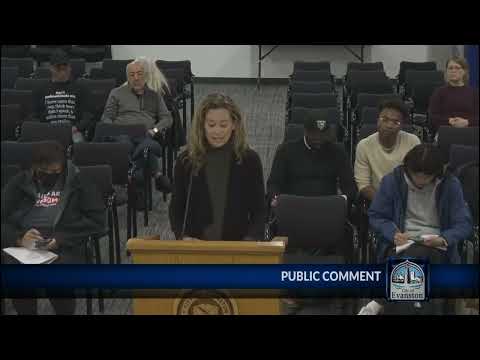
Committee members asked for further detail and for maps showing CDBG target areas; Johnson said those maps and the detailed funding request applications (for example, public‑works sidewalk projects) will be presented at the December meeting, when members will vote on allocations by goal and the final 2026 Action Plan. "This is the opening of public comment" and "you will be voting next month," Johnson said, summarizing the schedule. If approved in December, staff said programs could begin spending on Jan. 1 when feasible.
Background: staff noted prior investments—such as a recent $4 million city contribution to a 33‑unit affordable housing project—as context for how the city combines grant funds, program income and other local sources when funding projects.