
County health‑care plan and opioid settlement funds highlighted as resources for survivors
Get AI-powered insights, summaries, and transcripts
Subscribe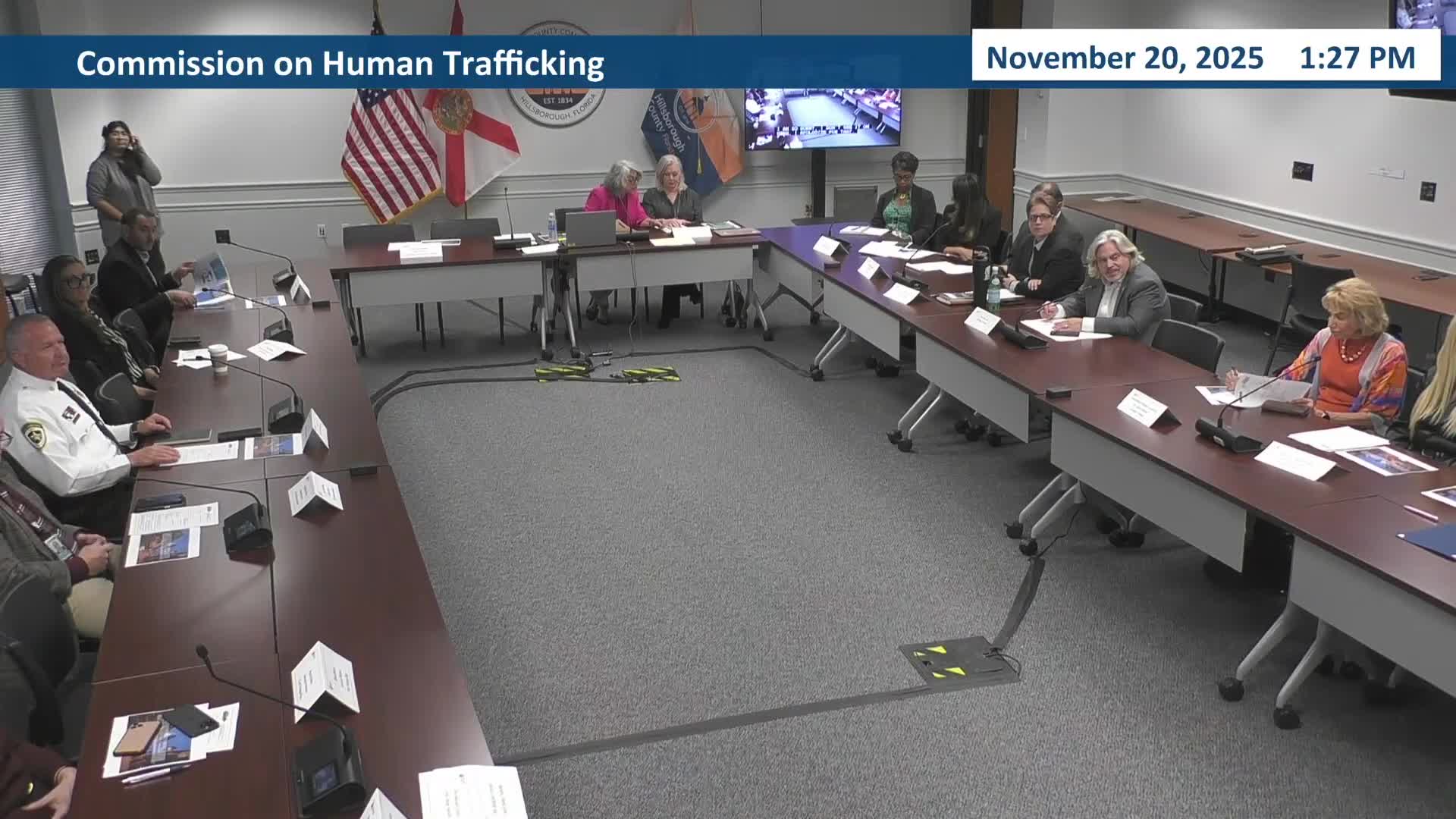
Summary
County health‑care services staff described the Hillsborough County health-care plan (no‑cost program for low‑income uninsured residents) and outlined $126.5 million in opioid‑settlement funds to be allocated for prevention, treatment and recovery over 18 years; staff urged outreach to connect trafficking survivors to services.
Kevin Wagner, director in Hillsborough County Health Care Services, presented an overview of the county health‑care plan and how it can serve survivors of human trafficking.
Wagner described the county program—operating since 1991—as a no‑cost integrated primary‑care model that serves roughly 23,000–24,000 unique individuals annually through a network of about 30 primary‑care locations and partnerships with hospitals and community health centers. Eligibility requires documented Hillsborough County residency, U.S. citizenship, income below 175% of the federal poverty level, asset screening and lack of other health insurance.
Wagner also briefed the commission on opioid‑settlement funds: Hillsborough County is expected to receive about $126.5 million over 18 years, distributed in multiple 'buckets.' An initial request for applications covered roughly $25 million in received funds; staff plan to bring approximately $21 million in recommended contracts to the Board of County Commissioners for approval in December. Wagner framed those funds as supporting prevention, treatment and recovery activities that could align with services for trafficking survivors.
Commissioners asked what prevents survivors from enrolling in the health‑care plan. Wagner and Phil Conte (certification unit manager) said the biggest barriers are awareness and eligibility (for example, if an individual has Medicaid/Medicare or other coverage they may not qualify), plus the practical challenge of identifying survivors. Staff pointed to an online portal and county outreach teams as enrollment and referral pathways.
Next steps: staff invited commissioners and partner agencies to help publicize eligibility and referral routes, and to pursue grant and RFA opportunities for organizations that serve survivors.