
Council approves wastewater rate increase after resident plea and staff explanation
Get AI-powered insights, summaries, and transcripts
Subscribe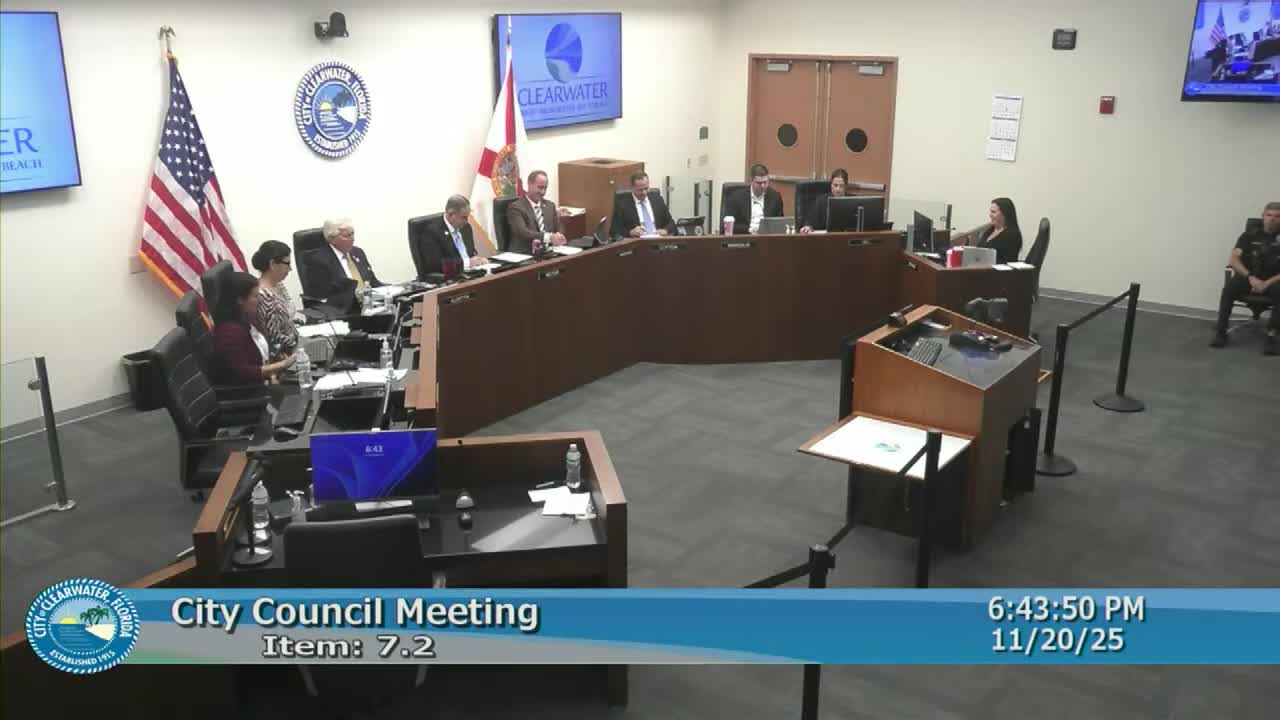
Summary
Council passed the second reading of an ordinance to raise wastewater collection rates; a resident urged a longer grace period and better communications, while staff said the increase funds major projects and that they are pursuing grants.
The Clearwater City Council on Nov. 20 approved the second reading of Ordinance 98-54-25 to amend wastewater collection rates.
A resident who said a $6.01 increase would be unaffordable urged the council to add a five-day grace period and improve billing notifications. "I can't afford $6.01," the resident said, asking the city to provide text message alerts and expanded outreach for customers who struggle to pay.
City Manager Jennifer Clark said staff would have someone from the team follow up personally with the resident and review communications. "We'll make sure that we have someone from our team reach out to him personally," Clark said.
Interim Public Utilities Director Mike Flanagan said staff is aggressively pursuing grant funding to offset rates. Flanagan and other staff explained the rates support large capital work, including a multi-year plan to consolidate three wastewater treatment plants into one. The project was discussed in the meeting with staff referencing a planning estimate of about $1,000,000,000 over seven to eight years, which city leaders said motivates the need for rate revenue and continued pursuit of grant assistance.
Council members acknowledged residents' concerns about affordability while emphasizing the need to maintain and upgrade aging infrastructure. Council unanimously approved the ordinance on second reading.
The city said it will follow up with the resident who spoke and continue seeking grant funding to reduce the local rate burden where possible.