
Board hears resident concerns about towing and notice in parking policy review
Get AI-powered insights, summaries, and transcripts
Subscribe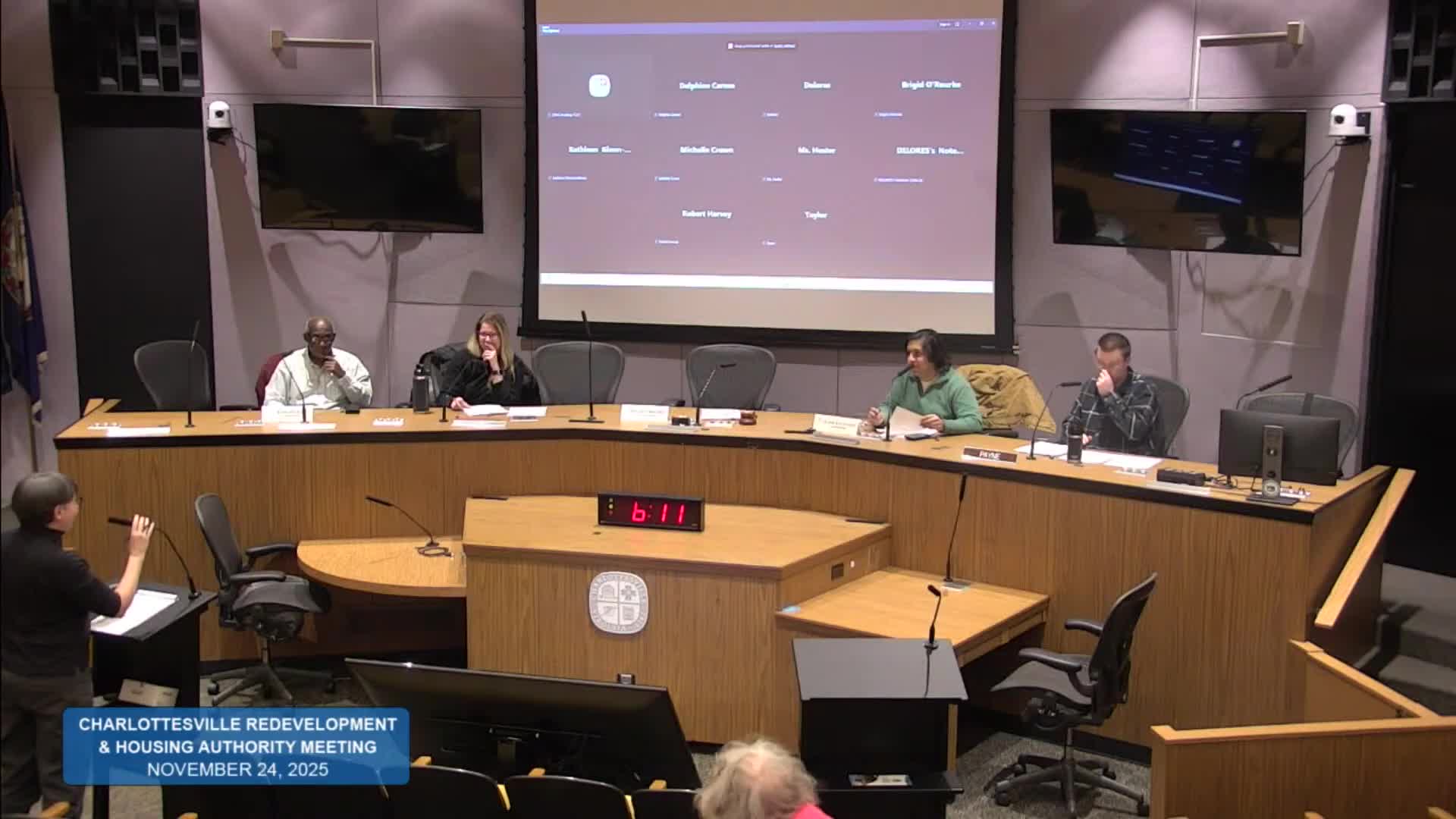
Summary
CRHA presented a draft parking and towing policy for discussion; residents and board members urged longer notice windows, door notices and clearer language on inoperable vehicles and inspection stickers; counsel said expired inspection stickers alone are not a legal obligation to tow.
CRHA staff presented a draft parking policy for discussion at the Nov. 24 meeting; no vote was taken.
Public commenters and board members raised multiple concerns about towing practices, short notice windows and the impact on residents who rely on cars for work and care. Emily Dreyfus and FAR interns recommended a longer comment period and proposed changes including requiring CRHA to assume liability in cases of wrongful towing, extending notice periods for unattended/inoperable vehicles to 30 days, placing door notices in addition to stickers on vehicles, requiring language access in notices and clarifying truck/axle definitions.
Staff described operational elements of the draft policy: the authority has moved towing services to a new vendor (Small Town Towing), policy currently requires a sticker and follow-up notice and offers a 72‑hour notice period with tenant ability to request extensions. Staff said towing companies patrol after hours and will send photos to CRHA when placing a sticker; CRHA staff then send notices the following day. Counsel clarified that an expired state inspection sticker is not, on its own, a legal obligation for the housing authority to tow a vehicle, though unregistered vehicles or vehicles left immobile for months raise different issues.
Board discussion touched on ADA constraints for assigned parking, the cost burden of towing (impound and storage fees set by the state), and how CRHA can increase communication and extension options to prevent involuntary tows. Staff acknowledged comments and said they would review suggested changes and return with revised policy language for board consideration.
Representative quotes: "Towing puts a real hardship on residents... Getting towed can cause people to lose their jobs," — Emily Dreyfus reading FAR interns’ concerns. "There's no legal obligation for a housing authority to tow for an expired inspection sticker," — Delphine (CRHA counsel).
Next steps: staff will review written comments from residents and community partners, consider extended notice and door‑notice proposals, and return revised policy language for a future board vote.