County agencies outline scale and gaps in after‑school and summer programs
Loading...
Summary
Presenters from MCPS, HHS, Recreation and the Collaboration Council described the county’s OST program portfolio — Excel Beyond the Bell, community schools, rec camps and nonprofit providers — and flagged workforce shortages, inconsistent data and acute summer and middle‑school gaps.
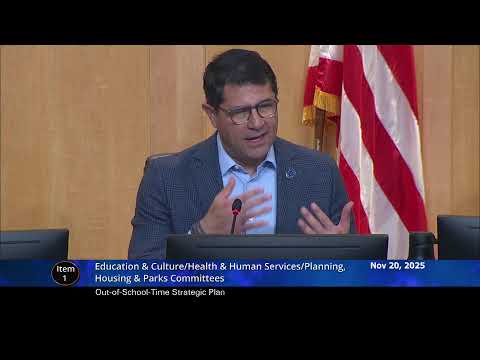
Montgomery County officials used a joint committee work session to describe the current landscape of out‑of‑school‑time programs and to identify where services, staffing and funding fall short.
MCPS representatives described a district inventory and an interactive district‑level map that shows community school sites, 21st Century Community Learning Center programs and other OST offerings. "We organized by school and by program, where we were located," Dr. Lakeisha Lashley of the George B. Thomas Learning Academy said, inviting council members to review district maps that indicate where students are served and where gaps remain.
Laurie Garabe Aquino, chief of children, youth and family services in DHHS, said CYF currently oversees 27 OST programs and contracts across several program areas, with a combined budget of "a little under $13,000,000" funded by county dollars. Aquino highlighted recent administrative changes meant to ease provider burdens, including removing a fee on childcare licenses and extending license renewal terms from three years to five.
Recreation officials described a broad menu of county services — Excel Beyond the Bell at elementary and middle levels, Rec Extra, Rec Zone high‑school programming, summer camps and Teamworks youth workforce supports. Acting Recreation Director Adrian Clutter said Recreation and its partners serve "over 25,000 young people on an annual basis," operate at more than 100 locations, and run workforce initiatives that employ more than 1,600 young people.
Several presenters emphasized quality supports: use of youth program quality tools, training (advancing youth development), CountyStat and the Office of Shared Accountability to measure attendance, academic outcomes and participant experience. Recreation and MCPS also noted inclusion supports, transportation and meal partnerships that reduce barriers to participation.
But presenters and councilmembers identified persistent gaps: staffing shortages that undermine consistent adult presence; limited middle‑school and pre‑K summer camp capacity; rising demand that outpaces supply; and an inconsistent approach to measuring outcomes across hundreds of contracts. Councilmembers urged greater philanthropy engagement and technical assistance to help small nonprofits scale up and meet standardized performance requirements.
Examples of local innovations included a pilot with the University of Maryland combining robotics and social‑emotional learning in five schools and community‑based models deployed to target youth violence hot spots. Staff said these localized, community‑embedded efforts show promise but need better evaluation and sustainable funding to scale.
Officials closed with a shared ask to return with a consolidated view of program capacity, clarified metrics for measuring program quality and outcomes, and a plan to address immediate gaps such as middle‑school summer options and inclusion supports.