
Utilities director reports drought stress, water usage trends and $22.8M in SRF principal forgiveness
Get AI-powered insights, summaries, and transcripts
Subscribe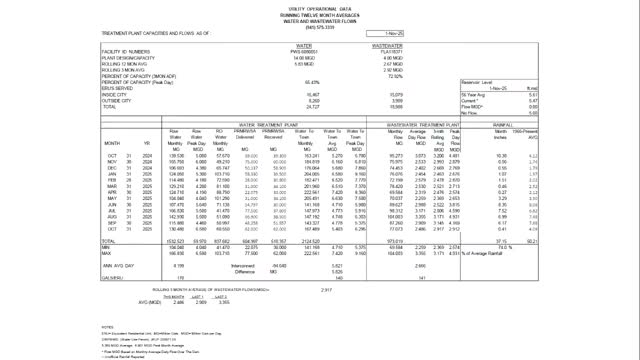
Summary
Utilities Director Tom Spencer reported lower‑than‑average rainfall, reservoir declines and block‑1 restrictions, explained the city’s watering policy changes tied to Chapter 17, and said Punta Gorda was awarded $22.8 million in principal forgiveness from a $66.3 million state revolving fund loan application for water and wastewater projects.
Utilities Director Tom Spencer updated the Utility Advisory Board on Nov. 24 about water demand, reservoir levels and recent funding awards. Spencer said October rainfall totaled about 0.41 inches compared with a historical October average near 4.09 inches; Charlotte County is in "moderate drought" and the Southwest Florida Water Management District has reinstated Phase 1 watering restrictions.
Spencer reported town average daily use last month of about 5.4 million gallons, a town peak figure listed as "6.3" (units not specified in the transcript), and stated the city's current reservoir withdrawal cap in block 1 is 4,420,000 gallons per day. He noted combined service water and reverse‑osmosis production capacity was reported as "8.48" (units were not specified in the transcript). Board members and staff discussed the trade‑offs between conservation and revenue, noting that sustained once‑a‑week watering year‑round would reduce sales but could be offset either by rate adjustments or seasonal variation.
Spencer also announced a successful award in the State Revolving Fund supplemental package for hurricanes Helene and Milton: Punta Gorda applied for $66.3 million in loan funding for multiple water and wastewater projects and received $22.8 million in principal forgiveness. He said staff will continue to plan how to leverage those funds and remain on waiting lists for additional grant or forgiveness opportunities.
Theresa Carlisle, finance manager, reviewed October as the first month of the fiscal year: the city is 8.3% through the fiscal year, payroll timing (a three‑paycheck month) makes October actuals appear high relative to a straight 1/12 projection, and encumbrances from year‑end rollovers will appear in the next update. Spencer and Carlisle both offered to provide more detailed breakout numbers—particularly total contractor spending across utilities for FY25—at the board’s request.
The board requested staff provide clearer breakdowns of contractual services, clarification on unit conventions used in some capacity metrics, and continued outreach on water conservation and revenue impacts.
Next steps: staff to provide contractor spend figures for FY25, clarify capacity units in future materials, and proceed with Chapter 17 second reading on Dec. 3.