
Fall River council receives special charter review report, debates cooling-off rules and ballot timing
Get AI-powered insights, summaries, and transcripts
Subscribe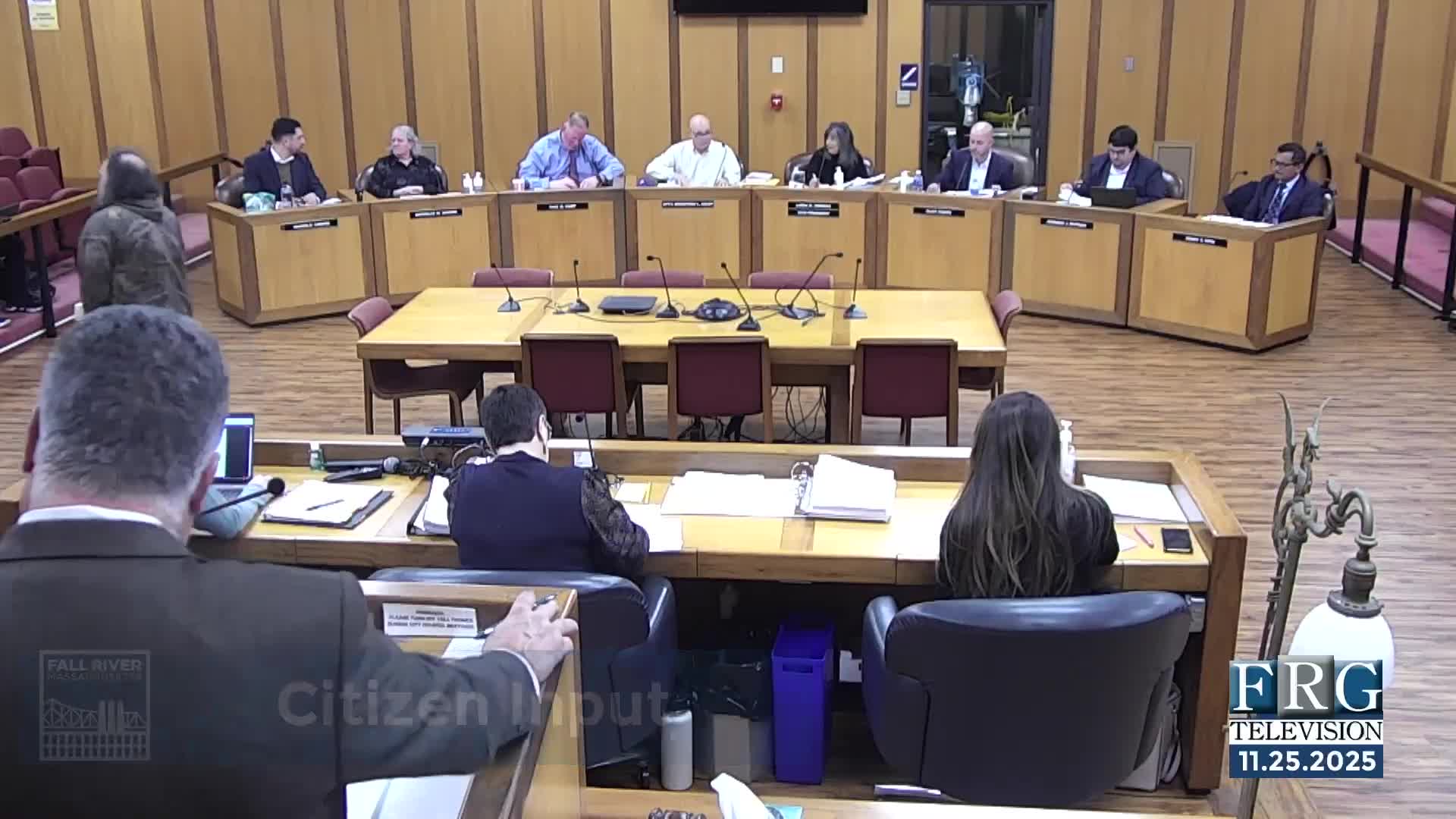
Summary
The special charter review committee presented recommended changes including recall procedure revisions, a reduced signature threshold for ballot access and removal of a contested 'cooling-off' prohibition; councilors discussed Attorney General review and whether to wait until 2027 for a ballot placement.
The Fall River City Council on Nov. 25 received the report of the special charter review committee and voted to file the committee’s recommendations with the city clerk and post them on the city website. The committee presented suggested edits intended to bring the charter into closer alignment with state law and to reduce future litigation risks.
Bridal Brown, chair of the special charter review committee, said the group sought to make the charter more user-friendly and to address provisions previously subject to court challenge. "We changed it to 2 elections, and we changed the language," Brown said, describing amendments to the recall process so there would be an initial ballot question on removal followed by a special election for the vacant seat. The committee also reported lowering the signature requirement for ballot access from 150 to 100 signatures to ease access for candidates.
Tim Campos, the committee’s charter clerk, advised councilors about the next steps: the council could vote to send the recommendations to the Attorney General’s municipal law division for a conflict-of-law review, and the committee recommended holding the public referendum on any charter changes at the November 2027 municipal election rather than the crowded 2026 state ballot. "For maximum visibility to the voters would be to wait until 2027," Campos said.
Councilors raised several detailed questions. Some sought to align the charter’s cooling-off language (the period an elected official must wait before taking a compensated appointed city position) with state ethics rules, which were described in the meeting as a six-month standard in contrast with a one-year period in the proposed charter language. Committee members said they had removed or revised prohibitions that a superior court had found problematic, but they recommended the council ask for a legal review and consider clarifying the cooling-off period.
Several councilors also questioned the committee’s timing and process: the committee members acknowledged they were appointed late and missed a scheduled five-year review, which contributed to legal and operational issues that followed. The council voted to file the report with the city clerk and to post the recommendations on the city website, a procedural move that preserves the committee’s work and allows future councils or the 10‑year review committee to take up suggested revisions.
What happens next: Councilors were advised that sending the recommendations to the Attorney General’s municipal law division is an optional but customary step to identify conflicts with state law before a final vote on placing charter changes before voters. The committee’s members said they were available for follow-up and that their recommendations were intended as a starting point for future action rather than an immediate rewrite of the charter.