
Lacey advances RACK 30% designs, staff says $12.5M bond capacity could fund first phase
Get AI-powered insights, summaries, and transcripts
Subscribe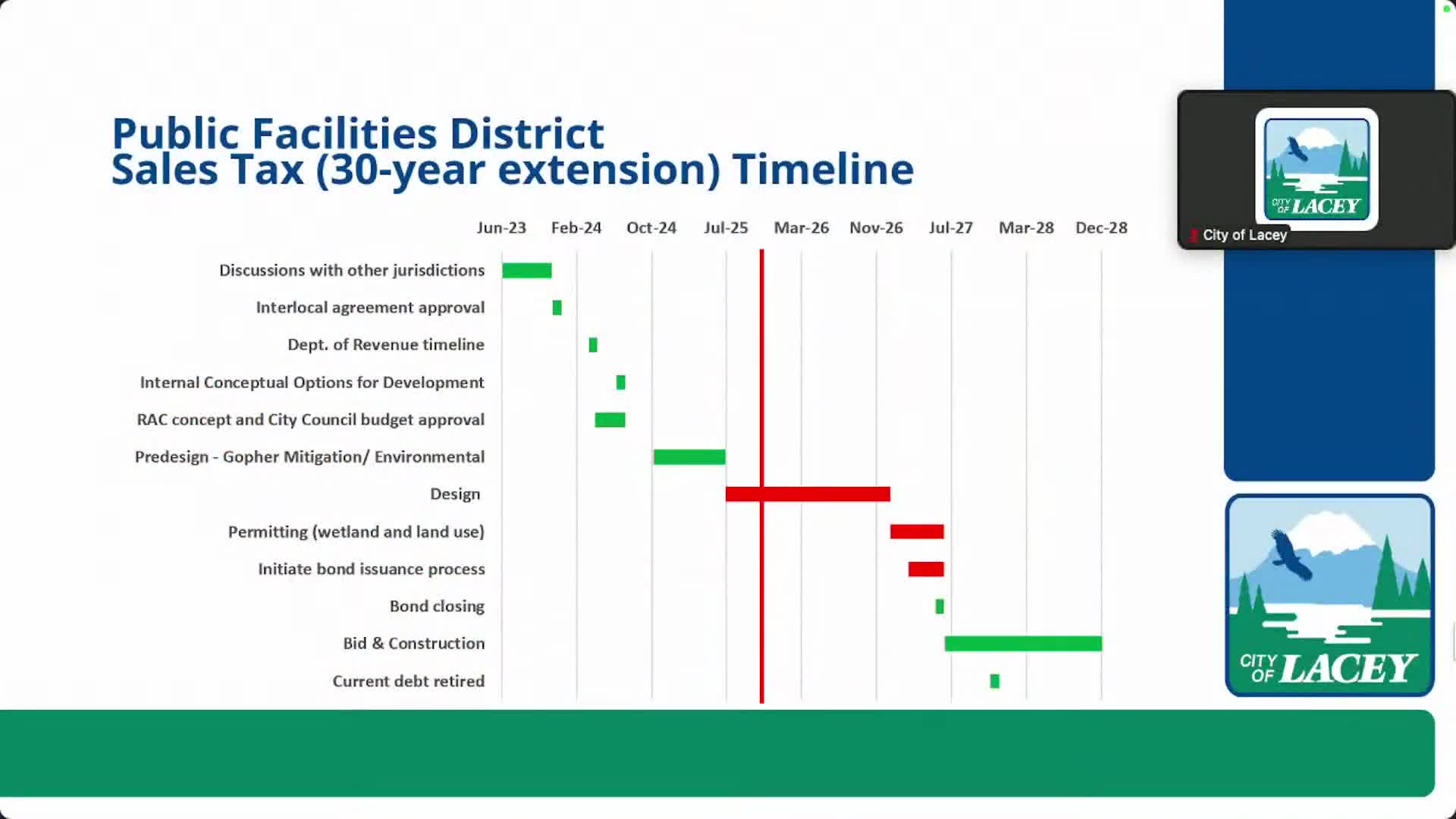
Summary
City staff presented 30% designs for the Regional Athletic Complex (RACK) Phase 3 and said a 15-year bond could yield about $12.5 million for a base project that includes converting a grass field to synthetic turf, adding lights and seating, and safety netting; larger stadium elements would require outside partners or later phases.
Lacey staff presented 30% design concepts and preliminary cost estimates for Phase 3 of the Regional Athletic Complex at a Nov. 25 work session, recommending the council proceed to 60% design to preserve an opportunity to issue bonds in 2027 tied to an extension of the Capital Area Regional Public Facilities District (PFD).
Design staff said the base bid for the first phase is estimated at about $7.4 million and would include converting the existing natural-grass Field 2 to synthetic turf, adding light fixtures to extend use hours, installing additional seating (about 500 for the field shown) and completing safety netting and fencing work. A set of base‑bid alternatives (Wi-Fi upgrades, hardscape and additional fencing) adds roughly $3.5 million. Staff identified further future improvements (locker rooms, covered stadium seating, press box) estimated at about $21.7 million that would require partner funding.
Troy, the finance staff member who reviewed long-term models, said a 15-year bond scenario aligned with the city's proposed 2026 budget would support roughly $12.5 million of projects with an annual debt payment of about $1.2 million. "That 1,200,000.0 in the 15 year scenario is the amount that's available for debt throughout that 15 year period," Troy said, explaining the model allows flexibility for maintenance and later phases.
Council members questioned sequencing, seating levels required for higher-level competition (several speakers noted 1,500 seats are typical for competitive soccer), and how concessions and restrooms would affect infrastructure needs. Staff said many of the larger stadium elements depend on private or partner contributions and that the phased approach aims to deliver high-priority usability improvements sooner while preserving the ability to expand later.
Next steps: staff will proceed to 60% design, target construction documents in 2026 and plan for bond issuance in early 2027 to maintain PFD crediting and meet the extension deadline.