
HCOG hears public concerns as HCD flags RHNA method for fair-housing metric
Get AI-powered insights, summaries, and transcripts
Subscribe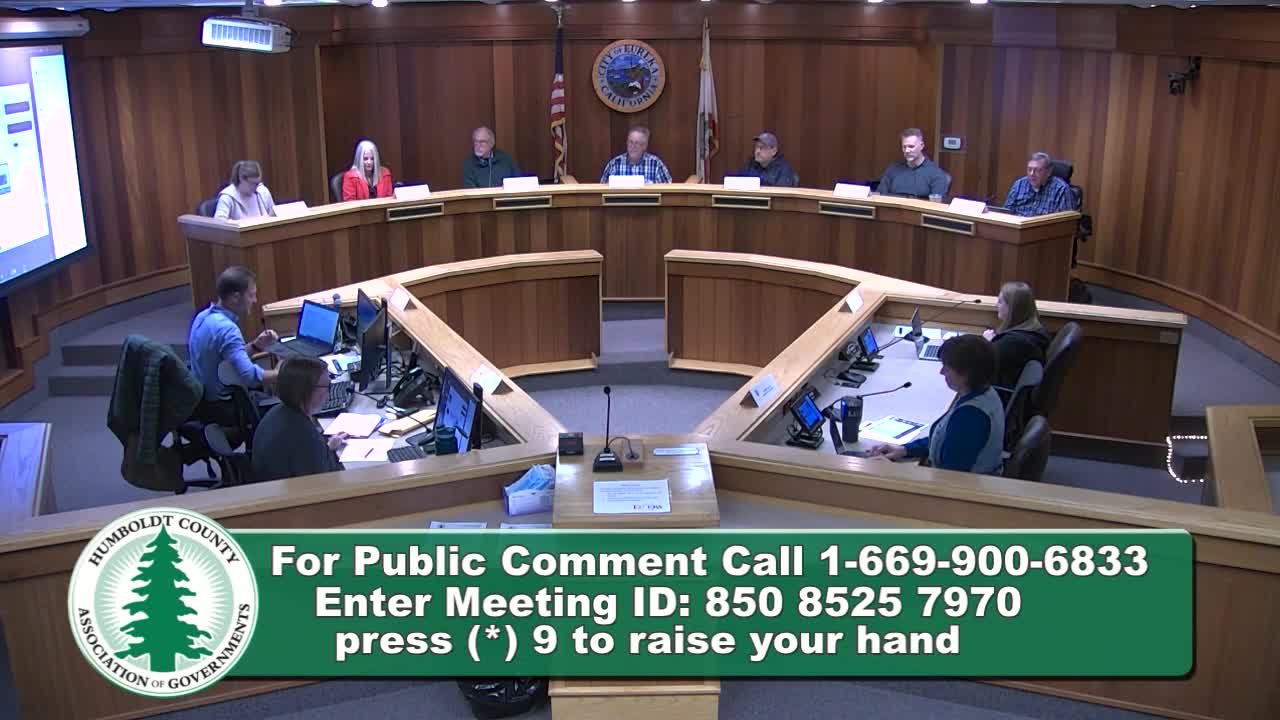
Summary
At a Nov. 20 hearing, HCOG staff presented a proposed 50/50 RHNA allocation (5,962 units) and said HCD may take exception because the method lacks a direct metric to affirmatively further fair housing (AFFH). Board directed staff to explore minor adjustments and return options in December.
Humboldt County Association of Governments staff on Nov. 20 outlined a proposed RHNA (Regional Housing Needs Allocation) methodology that would split the region’s Cycle 7 allocation of 5,962 units 50/50 between a jurisdiction’s share of regional population and its share of regional jobs. The board opened a public hearing and received oral comments from residents and advocacy groups before directing staff to return with options in December.
The HCOG presenter told the board the 50/50 split and a 20% adjustment factor aimed to diversify allocations across six income categories, but said Housing and Community Development (HCD) provided informal feedback suggesting the method may not demonstrably address RHNA Objective 5—affirmatively furthering fair housing (AFFH). HCD suggested inclusion of an "opportunity score" or similar measure that allocates units toward areas with higher housing opportunity.
Colin Fisk of the Coalition of Responsible Transportation Priorities urged HCOG to revise the method to encourage infill and discourage sprawl, saying heavier weighting toward jobs- or opportunity-based metrics can reduce vehicle miles traveled. Retired public-health physician Wendy Ring argued the 50/50 method could worsen driving-dependent development, harming public health and climate outcomes.
HCOG staff explained the opportunity score is a census-tract metric that aggregates economic, educational and environmental indicators and noted it tends to award more units to smaller jurisdictions with high opportunity scores (for example, Blue Lake, Trinidad, Ferndale). Staff said directly adopting that score without normalization could shift many units to jurisdictions lacking infrastructure and development capacity.
Board members debated trade-offs: some favored resubmitting the current proposal with stronger justification to HCD, while others urged a modest adjustment (for example, a small percentage weighting for opportunity) to reduce the risk HCD would take exception. Staff said HCD will not perform a formal review until the board adopts an allocation method; once submitted HCD has up to 60 days to respond, and a formal exception could delay adoption by roughly two to three months.
Rather than vote on a final methodology, the board gave staff direction to explore alternatives and bring back more concrete, weighted options for the Dec. 18 meeting so members could consider revisions prior to formal adoption. Staff reiterated the goal of finalizing numbers that meet statutory objectives while avoiding unintended sprawl and infrastructure strain.
The hearing record includes written comments from local groups (350 Humboldt, Environmental Protection Information Center) and letters of support for the 50/50 method from the cities of Arcadia and Fortuna. The RHNA allocation and final housing-needs plan remain subject to HCD review and potential concurrence or exception after adoption.