
Planning commission debates tiny-home ordinance, directs staff to study R3 and MU‑1 districts
Get AI-powered insights, summaries, and transcripts
Subscribe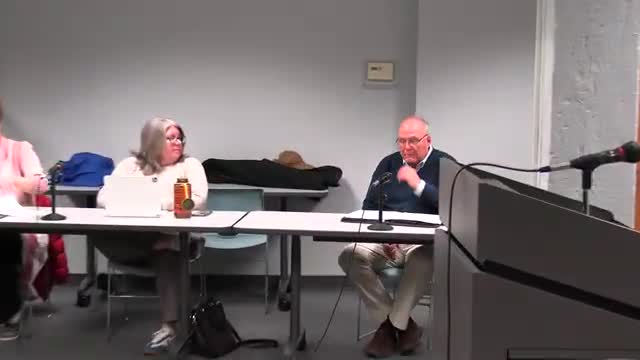
Summary
Commissioners debated whether micro-dwelling (tiny) homes should be permitted in R1/R2 single‑family neighborhoods or limited to clusters and other districts. After motions and debate, the commission voted to continue the ordinance process and asked staff to analyze R3 and MU‑1 as candidate districts for clusters.
The Saginaw City Planning Commission spent the bulk of its meeting debating a proposed ordinance that would permit micro-dwelling (tiny) homes under defined conditions. Commissioners and staff discussed policy goals, neighborhood compatibility tests, minimum-size thresholds and whether individual homeowners should be able to build tiny units or whether units should be allowed only as part of planned clusters or special land uses.
Commissioner (speaker 7) reviewed the zoning rewrite’s changes — including form-based code options, a proposed MU1 mixed-use district and a proposed minimum size framework that would permit smaller dwellings only where they fit the block’s character. Staff and consultants cited financing and market considerations: tiny homes often do not qualify for traditional mortgages and may use chattel or builder loans, and construction costs were estimated in the discussion at $150–$250 per square foot. Commissioners raised concerns that very small homes may not appreciate like traditional houses and could depress surrounding property values, and they debated whether a 20-foot frontage requirement and a test comparing proposed micro-dwellings to an average of surrounding homes (the ordinance’s "greater of 400 sq ft or 50%" rule) would effectively bar most individual-owner tiny homes.
A motion by Commissioner Clark to approve allowing 400-square-foot micro-dwellings (or no less than 50% of the neighborhood average) in R1 and R2 and to tweak cluster language so individuals could start clusters failed for lack of a second. Later, the commission voted to move forward with the ordinance as drafted with two minor edits discussed at the meeting and, separately, voted to direct staff to analyze R3 and MU1 districts (and other possible zones) for micro-dwelling clusters; staff will refine ordinance language and return with a cleaned-up draft for further review.
Commissioners also asked staff to review specific ordinance language: reduce the 200-foot neighborhood comparison to 100 feet where appropriate, clarify the pattern-of-window-and-door requirements (the ordinance currently references "three windows" as one compatibility element), and confirm that architectural-compatibility findings will come to the commission as part of special-use or site-review processes. The commission took no final adoption action; rather, it instructed staff to refine the draft and to focus subsequent analysis on R3 and MU1 candidate districts before returning to the commission.