
Commission weighs housing framework: neighbourhood character, walkability and incentives for 'missing middle'
Get AI-powered insights, summaries, and transcripts
Subscribe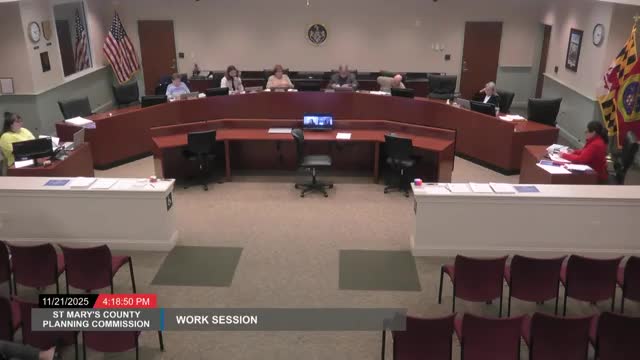
Summary
The Planning Commission reviewed the Housing Framework and Analysis element, debating notification tactics for projects, sidewalk and walkability audits, mixed-use design guidelines, and potential incentives to encourage 'missing middle' and enhanced-design housing types. Commissioners asked for cross-references with health and aging sections.
At the Nov. 21 work session, the Planning Commission discussed the Housing Framework and Analysis section of the draft Comprehensive Plan 2050, focusing on neighborhood character, public-notice practices, walkability improvements and incentives for middle-income housing.
Staff reintroduced Goal 4: enhance community character of existing neighborhoods and support quality design of new neighborhoods. Commissioners asked for more-effective public-notice approaches for proposed residential developments: instead of small on-site notices they suggested larger, visible signage at road entry points, letters to homeowners associations and developer-hosted community meetings. Staff said website improvements and PIO outreach are also being considered.
The commission recommended an audit of public-rights-of-way assets in older neighborhoods to catalogue sidewalks and other pedestrian infrastructure, and discussed funding options for neighborhood investments. Commissioners emphasized walkability as part of aging-in-place planning and urged concrete, measurable actions rather than aspirational language.
On design and housing types, staff proposed preparing design guidelines for mixed-use communities and town centers to create a stronger sense of place. Commissioners pressed the team to be precise about incentives: several suggested clarifying what counts as an "enhanced" design and cited potential tools such as lowered transfer-of-development ratios or targeted subsidies to support "missing middle" housing types (townhouses, duplexes and small multiplexes).
Staff agreed to add cross-references across plan elements (health, public safety, infrastructure) and to bring back clearer implementation language, including identification of lead departments for each action.
The Planning Commission recessed and planned follow-up sessions to continue growth-management and other required elements.