
Brighton council debates where to spend renewed streets millage, staff to pre‑engineer multi‑year plan
Get AI-powered insights, summaries, and transcripts
Subscribe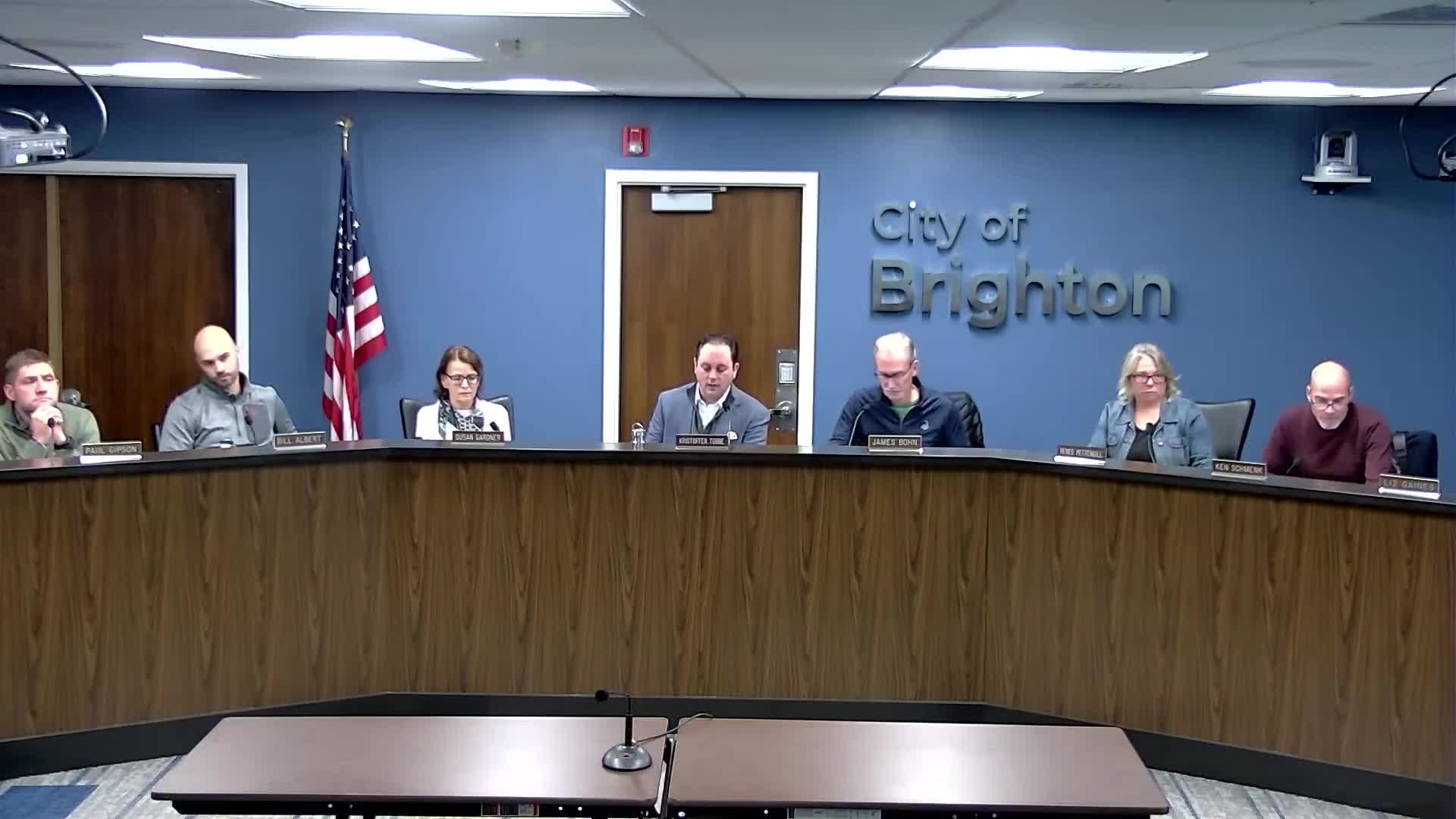
Summary
Council discussed candidate streets for a recently renewed 2.5‑mill, 10‑year streets millage and directed staff to queue engineering so projects can be bid and paired with grants; options included time‑sensitive 7th Street and the costly Woodlake concrete neighborhood.
Brighton City Council on Nov. 25 held an extended discussion on how to spend the city's renewed streets millage, focusing on a multi‑year, rolling engineering plan to sequence projects, leverage grant funding and reduce traffic impacts.
Manager Gamolka opened the discussion by thanking voters and outlining the process: "Again, we wanna thank all of the residents for, voting on the last election and approving the renewal of the street's millage 10 years at 2.5 mills," she said, and noted staff can immediately begin engineering with roughly $4.4 million available from prior collections while future millage receipts accrue.
Director Gotsch urged council to weigh tradeoffs between smaller mill‑and‑overlay candidates and larger reconstruction jobs. He called out 7th Street as a time‑sensitive project because of school traffic and a $200,000 grant for sidewalks, and described Woodlake as a major reconstruction: "Woodlake is not gonna get any cheaper and is gonna be drastically more expensive the longer we wait." Council members repeatedly urged staff to pre‑engineer projects years in advance so the city can apply for grants and keep a transparent schedule for residents.
Council debate centered on whether to prioritize visible thoroughfares or neighborhoods with rapidly deteriorating pavement. Several members proposed a mixed approach: advance engineering for the next two to three years, select a handful of mill‑and‑overlay streets in year one (comparable to the recent fall project of about $1.6 million), and reserve larger reconstruction candidates such as Woodlake for later years when more funds are available.
Residents and schools were recurring concerns in the discussion. Staff said the 7th Street estimate is roughly $1.5 million for construction and that the grant would pay up to $200,000 toward sidewalks. Council directed staff to return with engineering scopes, ballpark cost estimates, and a draft 2–3 year schedule they can publish to the public.
Next steps: staff will prioritize selections for engineering, bring back cost estimates and suggested sequencing, and post a rolling plan on the city website so residents can see when their neighborhood may be scheduled for work.