
Wheatley Heights residents urge Town of Babylon to reject Bristol Industrial Park
Get AI-powered insights, summaries, and transcripts
Subscribe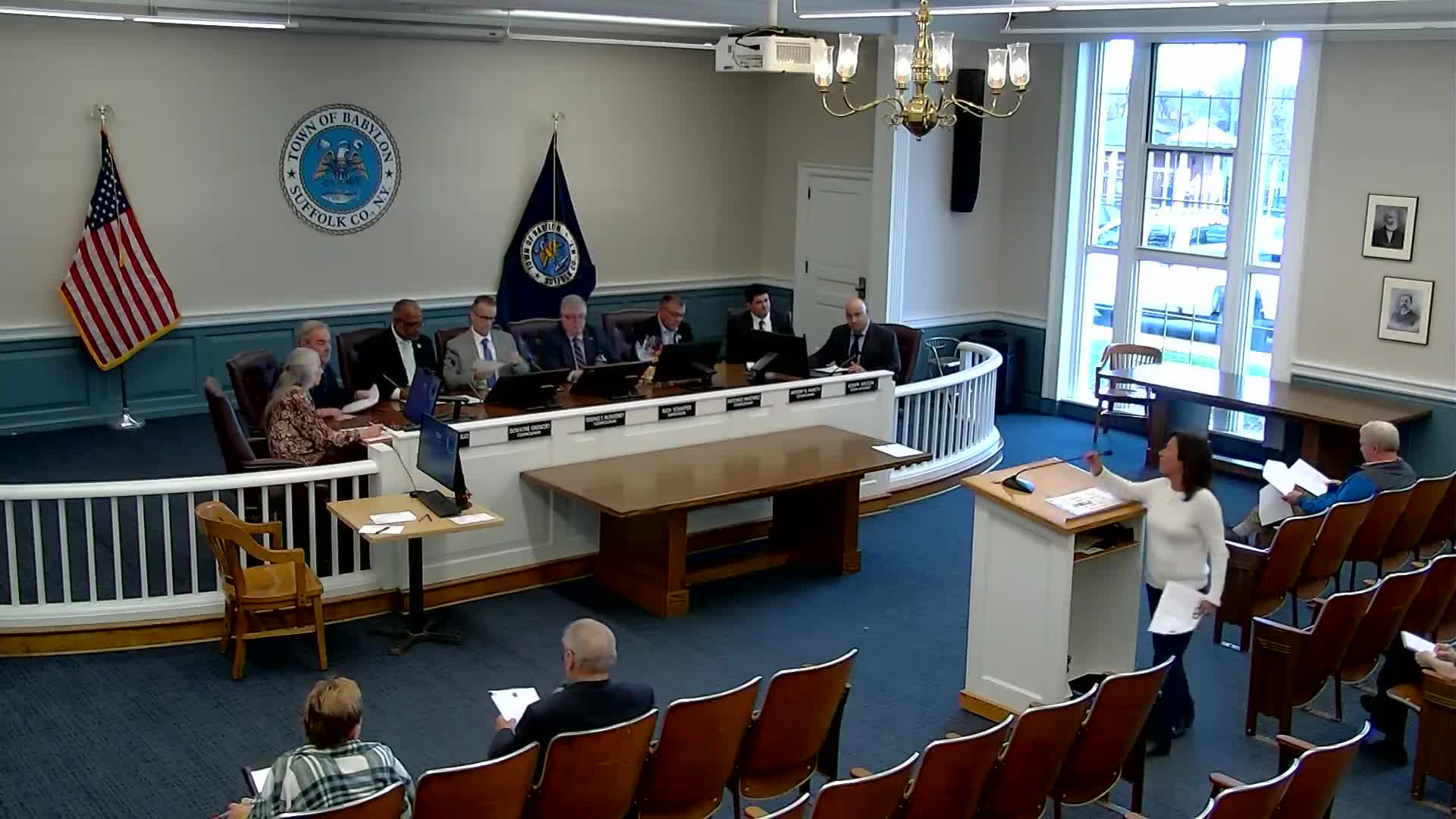
Summary
Dozens of residents told the Town of Babylon board on Nov. 19 they oppose rezoning for the proposed Bristol Industrial Park, raising concerns about heavy-truck traffic, air and water pollution, light and noise impacts, and loss of neighborhood character; several urged the board to vote no.
Dozens of Wheatley Heights residents told the Town of Babylon board on Nov. 19 they strongly oppose a proposed Bristol Industrial Park and rezoning that would site warehouses and truck facilities near residential streets.
Speakers during the open portion said the project would transform narrow local roads into truck routes and harm residents' health and property values. "We can't handle that," said Margaret Hermatah of 20 Circle Drive, who warned of noise, traffic and health risks and asked the board to "support our community, not developers." Alana Ostebe of Colonial Springs Road urged the board to "please kill this project. Please vote no," citing air, light and water pollution risks and saying the plan would eliminate trees and wildlife.
Residents repeatedly referenced large development metrics they said were in the proposal: "380 truck bays and 1,900 parking spaces," Ostebe said, and several speakers said warehouses and truck staging would bring constant traffic on Little East Neck Road and nearby single-lane residential streets. Ruthie Scheck said the developer's environmental materials misidentified Circle Drive as "Nichols Road," which she said undermined confidence in the project's study.
Speakers also proposed alternatives, ranging from job-training and scholarship programs to converting nearby Pinelawn acreage to a nature preserve. Gina Schecht, a resident and trained pharmacist, raised public-health concerns tied to pollution and questioned the net local employment benefits and sales-tax gains the town might receive.
The board did not vote on rezoning during the meeting; the comments were entered into the public record. The transcript shows no staff presentation defending the plan or providing a developer response during the session. Board members acknowledged receiving heavy public interest and will treat the submissions and public record as part of their deliberation process.
Next steps: the board will retain public-comments as part of the record while future planning or zoning procedures — including possible public hearings, planning-board review, or formal rezoning votes — move forward on a separate schedule.