Get Full Government Meeting Transcripts, Videos, & Alerts Forever!
Get email alerts on the Composting Programs topic
No spam. Unsubscribe anytime.
Council committee hears plan to expand Boston composting amid capacity and land constraints
Summary
City officials told the Boston City Council committee that curbside composting enrollments have reached about 27,547 households with 638 on the waitlist; program operating costs and limited local processing capacity mean expansion will require new funding, regional partnerships or land for facilities.
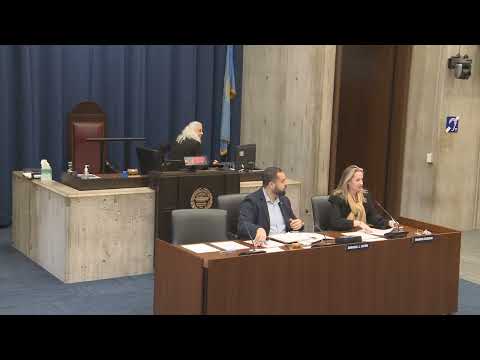
Boston City Council’s Committee on City Services and Innovation Technology on Nov. 20 heard updates on the city’s curbside and drop‑off composting programs and options to expand access as enrollment pressures and processing limits mount.
Councilor Sharon Durkin, the docket sponsor, opened the hearing by calling Project Oscar and curbside composting “incredibly popular with residents,” and said demand has outpaced capacity as the city paused further expansion because of cost and limited processing infrastructure. “We should be thinking ahead, exploring how we invest in composting and build long‑term infrastructure needed to eventually support composting citywide,” Durkin said.
Why it matters: City officials said the curbside program now serves roughly 27,547 households and 638 people remain on a wait list, but growth is constrained by operating budgets and nearby processing facilities. Without more capacity or funding, the city cannot immediately add all residents who want service, staff said.
Dennis Roche, superintendent of waste reduction for Boston Public Works, told the committee curbside collection is contracted to a vendor, Garbage to Garden, and the program’s current operating budget is roughly $3,300,000. He said Project Oscar — the city’s network of neighborhood drop‑off sites — operates on about $135,000 for the 20 locations cited in testimony.
Roche estimated collection and processing costs are “somewhere in the thousand dollar ton range,” and said fuller bin use and continued outreach are ways to lower per‑unit costs. “It is a very costly program to the city,” he said, adding that greater adoption over time can reduce average cost.
The committee discussed past funding and site efforts. Councilors noted that a prior $4,000,000 ARPA allocation intended for an anaerobic facility was redirected when the city could not identify suitable land. Roche said the primary obstacle to siting a new facility inside Boston has been a lack of available parcels and competition with housing and other priorities, and he urged exploring regional partnerships and state or federal grants to expand capacity near the city.
Processing and vendors: Staff described current processing pathways for curbside and drop‑off material. Montgomery said curbside loads can go to an anaerobic digestion facility in Charlestown and then to the Greater Lawrence Sanitary District water treatment plant, where methane is captured for energy; other material is taken to composting sites outside the city. Project Oscar collections are sent to a Black Earth facility in Manchester‑by‑the‑Sea, she said. Roche said private vendors are seeking grant funding and interest in building capacity closer to Boston if land and infrastructure can be identified.
Large buildings and commercial waste: Councilors asked whether curbside eligibility — currently limited to buildings of six units or fewer — could be extended. Roche said servicing large multi‑unit buildings is operationally challenging for municipal collection and that Project Oscar expansions are the current alternative. The committee also heard that city programs do not serve commercial entities. Roche and the chair cited MassDEP rules that require businesses producing more than about a half‑ton of food waste per week to manage that waste and noted the state is likely to tighten thresholds over time.
Schools and outreach: Montgomery said the city works closely with Boston Public Schools’ sustainability staff; more than 40 schools run back‑of‑house composting programs and some have front‑of‑house student separation. Councilors requested a list of participating schools to identify local opportunities to expand education and collection.
Public testimony: A Dorchester resident and former New York City sanitation staffer, Alex, recommended more centralized drop‑off hubs in community spaces, in‑city composting facilities, voucher incentives, and programs to incentivize food donations and reduce waste. “Since May, I have diverted over 500 pounds of food waste,” Alex told the committee, and submitted a 15‑page policy memo to staff for follow‑up.
Next steps: Staff told the committee they will return with budget requests in the next cycle and recommended pursuing grant funding and regional siting partnerships to increase processing capacity. The committee closed the hearing without a vote on policy or funding and kept the matter under review.
(Reporting based on the hearing on docket 1748 before the Boston City Council Committee on City Services and Innovation Technology on Nov. 20, 2025.)