
Mass. leaders unveil 'Go Higher' report showing graduates earn substantially more within five years
Get AI-powered insights, summaries, and transcripts
Sign Up Free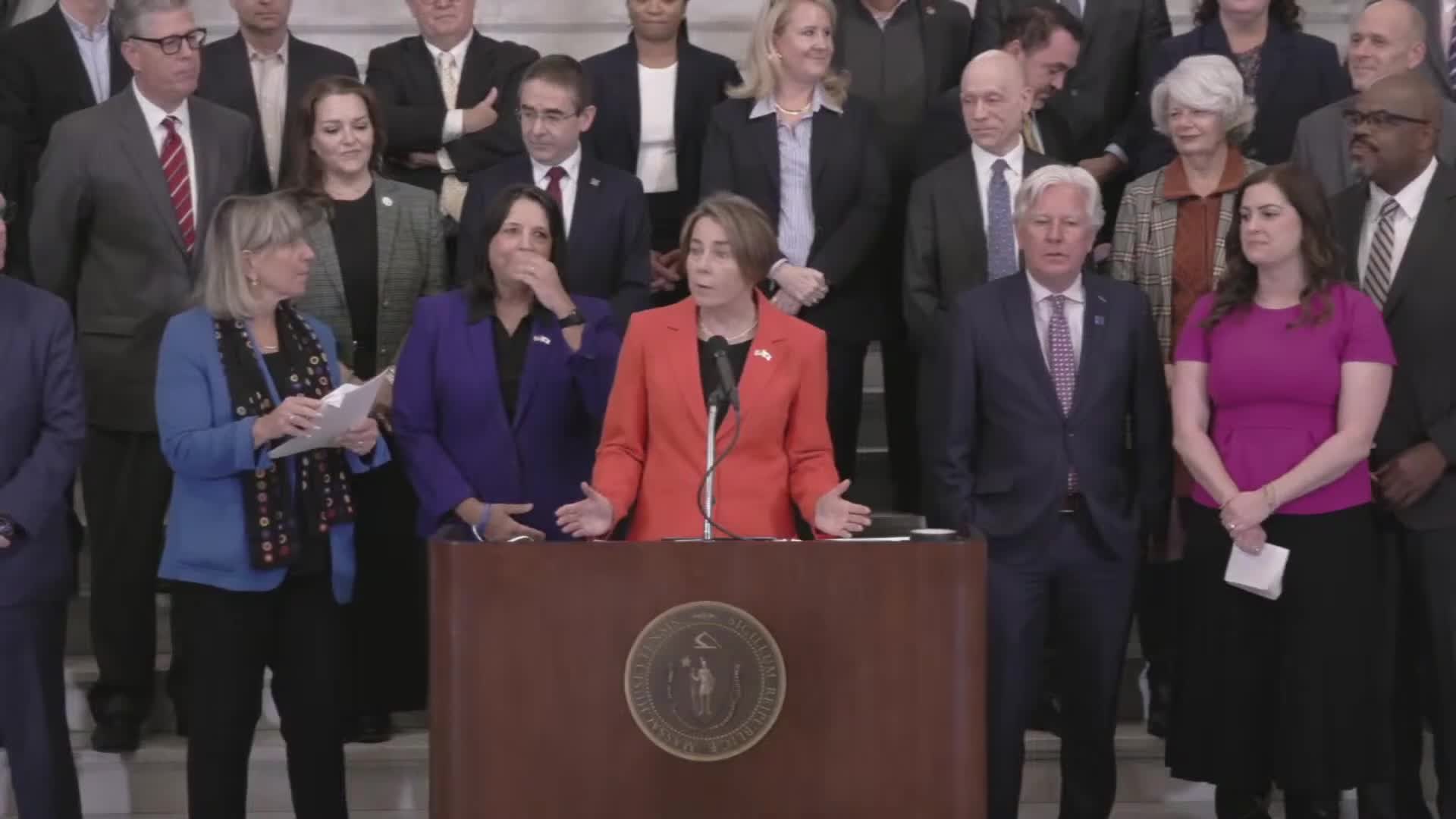
Summary
Governor Maura Healey and state higher-education leaders released the 'Go Higher' report, saying graduates of Massachusetts public colleges earn markedly higher wages five years after graduation and credit recent state investments in financial aid and affordability for improved enrollment and access.
BOSTON — Governor Maura Healey on Thursday announced the release of a new state report, "Go Higher: The earnings outcomes of public post-secondary education in Massachusetts," saying graduates of the state’s public colleges and universities earn substantially more within five years of finishing their degrees.
"The typical graduate with a two-year associate degree, five years later, is earning $20,000 more than they would have without that degree," Healey said. "The typical four-year bachelor's degree holder is earning $30,000 more after five years." She credited recent state investments — including a doubling of financial-aid funding since she took office — with expanding access and boosting enrollment back above pre-pandemic levels.
The Healey administration said investments in need-based aid have helped reduce costs for students. UMass President Marty Meehan said UMass now awards $422,000,000 in university-funded aid annually and cited a five-year median earnings figure for UMass alumni of more than $78,000, about $30,000 higher than the average high school graduate.
"College graduates make an average of $1,200,000 more than high school graduates over the course of their lifetime," Meehan said, arguing that financial aid and affordability programs improve both access and long-term economic outcomes.
Senate President Karen Spilka praised the "Healey-Driscoll" administration and the legislature’s work to expand affordability, citing programs such as Mass Educate, tuition-equity measures and an expansion of grants that, she said, make public higher education free or low-cost for many families with incomes at or below the thresholds the legislature set.
Salem State President John Keenan emphasized state universities’ role in serving first-generation and Pell-eligible students, noting Salem State’s work across gateway communities and its designation as a four-year public Hispanic-serving institution. An alum, Gaetano Guadalaro, described how scholarships and campus supports helped him attend law school and build a career in corporate tax.
Employers attending the announcement underscored employer-campus partnerships as pipeline programs. Ali Joyce, who manages emerging-talent programs at Ultragenyx, described internships and conversions to full-time roles, saying experiential learning helps bridge classroom training and industry needs.
Officials said the findings reinforce the state’s strategy of investing in financial aid, career-technical pathways and research opportunities on public campuses. The report’s authors and state officials did not propose new legislation during the announcement; officials said they will continue to publicize the study’s findings and use them to inform future policy and funding decisions.
The event concluded with Healey thanking higher-education leaders and staff and inviting reporters to ask questions on topic.