
Local fuel‑break projects show benefits but maintenance costs and timing present major challenges
Get AI-powered insights, summaries, and transcripts
Subscribe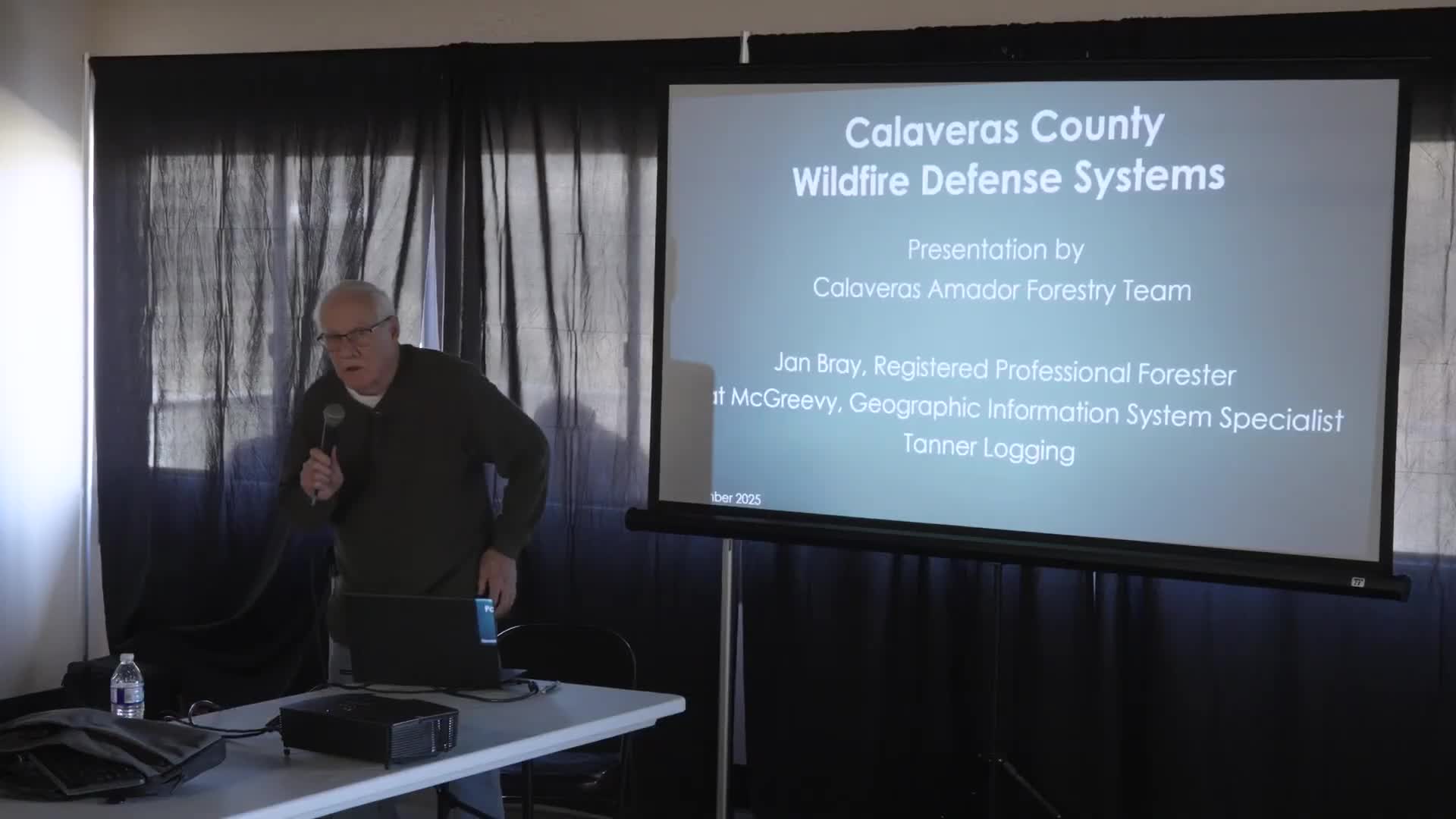
Summary
Volunteer and contractor groups described how initial-entry fuel breaks lessen fire intensity in Calaveras County, but presenters warned that lack of timely maintenance can erase benefits and estimated ongoing upkeep could cost roughly $1.5 million annually at build-out.
At the Firewise Calaveras Festival, Pat Ruby, a member of a local forest team, walked attendees through the county’s fuel‑break work since 2015 and explained why the long‑term maintenance question remains central to protecting communities.
Ruby showed before‑and‑after photos of treated corridors and cited specific project examples such as a BLM fuel break installed for $183,000 that had regrown after 12 years without retreatment. He said at planned build‑out the Highway 4 corridor work is expected to protect an estimated 8,500 structures, and he offered conservative maintenance math: if the county must retreat 1,000 acres per year at roughly $1,000 per acre, that implies a recurring maintenance budget of about $1,000,000 annually for those corridors; Ruby summarized a broader countywide maintenance need as about $1,500,000 per year.
Ruby described a practical maintenance prescription informed by local experience: initial heavy treatments (logging, mastication) followed within a year by spot herbicide treatment to prevent rapid weed regrowth, supplemented where feasible by grazing (the Tanner vineyard example used 145 goats to keep grass low and prevent fire spread). He contrasted large, slow grant cycles and environmental review timelines with the faster, iterative stewardship he said local landowners and contractors can achieve on privately managed parcels.
Ruby warned that deferred maintenance can erase prior investments: "If we don't maintain it, it's all gonna be gone in 2 years," he said, and he urged the county to consider pooled maintenance funding and more flexible prescriptions to sustain fuel breaks after initial entry.
The festival brought the operational trade‑offs into focus: fuel breaks can reduce fire intensity and buy time for initial attack crews, but sustaining those benefits beyond a few years requires predictable funding, annual monitoring and rapid follow‑up treatments. Organizers and volunteers said they will continue to press for funding and maintenance models that combine public grants, local county support and private stewardship to keep treated landscapes functional.