Get Full Government Meeting Transcripts, Videos, & Alerts Forever!
Get email alerts on the Governance Remote Participation topic
No spam. Unsubscribe anytime.
Neptune Beach council declines ordinance to bar remote voting; councilors weigh access versus accountability
Summary
A proposed ordinance requiring council members to be physically present for votes failed after a motion received no second. Residents at a town hall urged both in-person accountability and expanded remote access; councilors cited legal, fairness and operational concerns.
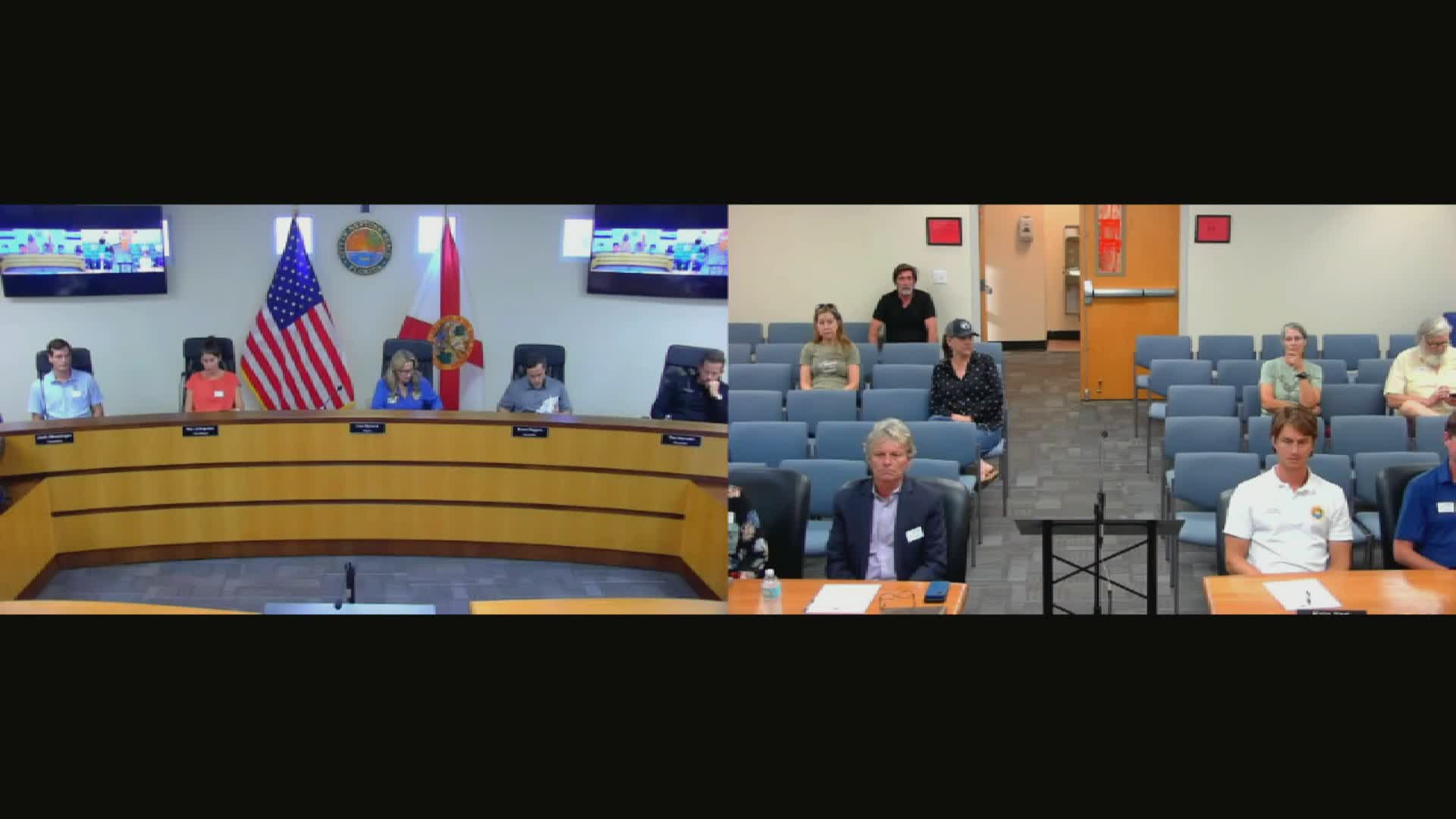
A first-reading ordinance that would have required members of the Neptune Beach City Council to be physically present for all official actions failed when a motion received no second during a public hearing.
The ordinance (No. 2025-17) was introduced as a change to the city code to require in-person attendance for official actions, deliberations and votes. City staff reported no initial sign-ups for public comment on the ordinance; residents later addressed the council during the hearing and at a subsequent town hall.
At the town hall, resident Shelley Tholl urged the council to consider the value of remote participation for residents and for council members with legitimate constraints. "I really would love to hear from everybody individually what the rub is about being present at a city council meeting and why that doesn't seem to be an important thing," Tholl said, arguing remote access expanded participation for people balancing work and family responsibilities.
Council discussion reflected competing priorities. Some members said the city code already requires an in-person quorum and expressed concern that permitting remote votes could undermine face-to-face accountability. Others cited guidance from state executive leadership encouraging municipalities to "leverage technology to promote efficiency and maximize productivity" and noted that neighboring beach cities do not bar remote appearances.
The ordinance received a motion for approval but did not receive a second, so the motion failed and the council did not advance the ordinance. Several council members said they were open to further study and to exploring limited remote options for public comment or participation that preserve in-person accountability while addressing access barriers.
What happens next: council members and staff agreed to review the legal guidance, consider options for electronic public comment and post follow-up materials for the public. No formal change to the city code was adopted during the meeting.