
PBSO leaders say Peacebuilding Fund is demand‑driven; urge care as peacekeeping drawdowns create local risks
Get AI-powered insights, summaries, and transcripts
Subscribe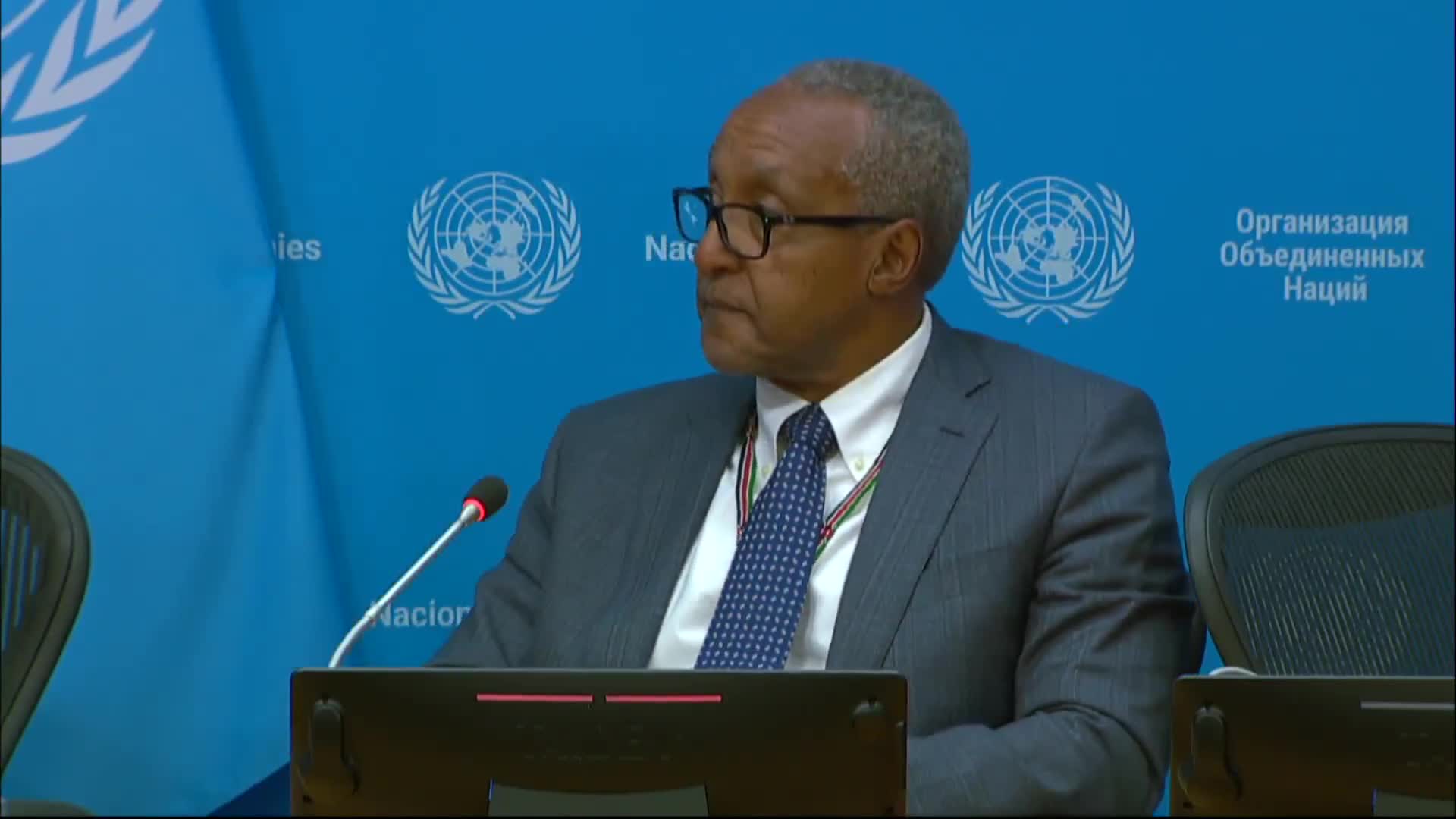
Summary
Speakers told reporters the Peacebuilding Fund requires a member‑state request to operate in a country like Syria and warned that peacekeeping withdrawals can create a vacuum that leaves vulnerable communities at risk, underscoring the need for partnerships and predictable funding.
During a question‑and‑answer segment, reporters asked how global financing pressure and reductions in UN peacekeeping personnel are affecting peacebuilding work and whether the Fund can play a role in Syria.
Elizabeth Spehar said the Fund is "demand driven" and requires a request from a member state and engagement through the UN resident coordinator system before resources can be mobilized: "if the the Syrian authorities are interested in peace building fund support, then, they should, be talking with the UN, through our resident coordinator, system... to bring, their peace building priorities to our attention." She added that the UN system is studying how best to support Syria and that the Fund "will be able to play its part, but we will wait for further analysis" and a formal request.
On the broader operational risk caused by peacekeeping withdrawals, Amb. Macharia Kamau emphasized that peacekeeping missions often provide logistical and coordination "backbone" in fragile settings. He warned that when missions "disappear in countries where there's been a breakdown of law and order... then what you get is this vacuum... you end up with nothing but crisis," saying those harmed most are women, children and poor communities. Both speakers argued that leveraging partnerships with IFIs and the private sector and securing predictable funding are ways to mitigate those risks.
Reporters pressed for detail on Syria's portfolio and whether there are targeted strategies for decentralizing groups; PBSO reiterated the demand‑driven nature of the Fund and that further analysis and an official request would be prerequisites for direct Fund engagement in Syria.