
UN officials point to Peacebuilding Fund projects in Liberia, CAR and Guatemala as examples of impact
Get AI-powered insights, summaries, and transcripts
Subscribe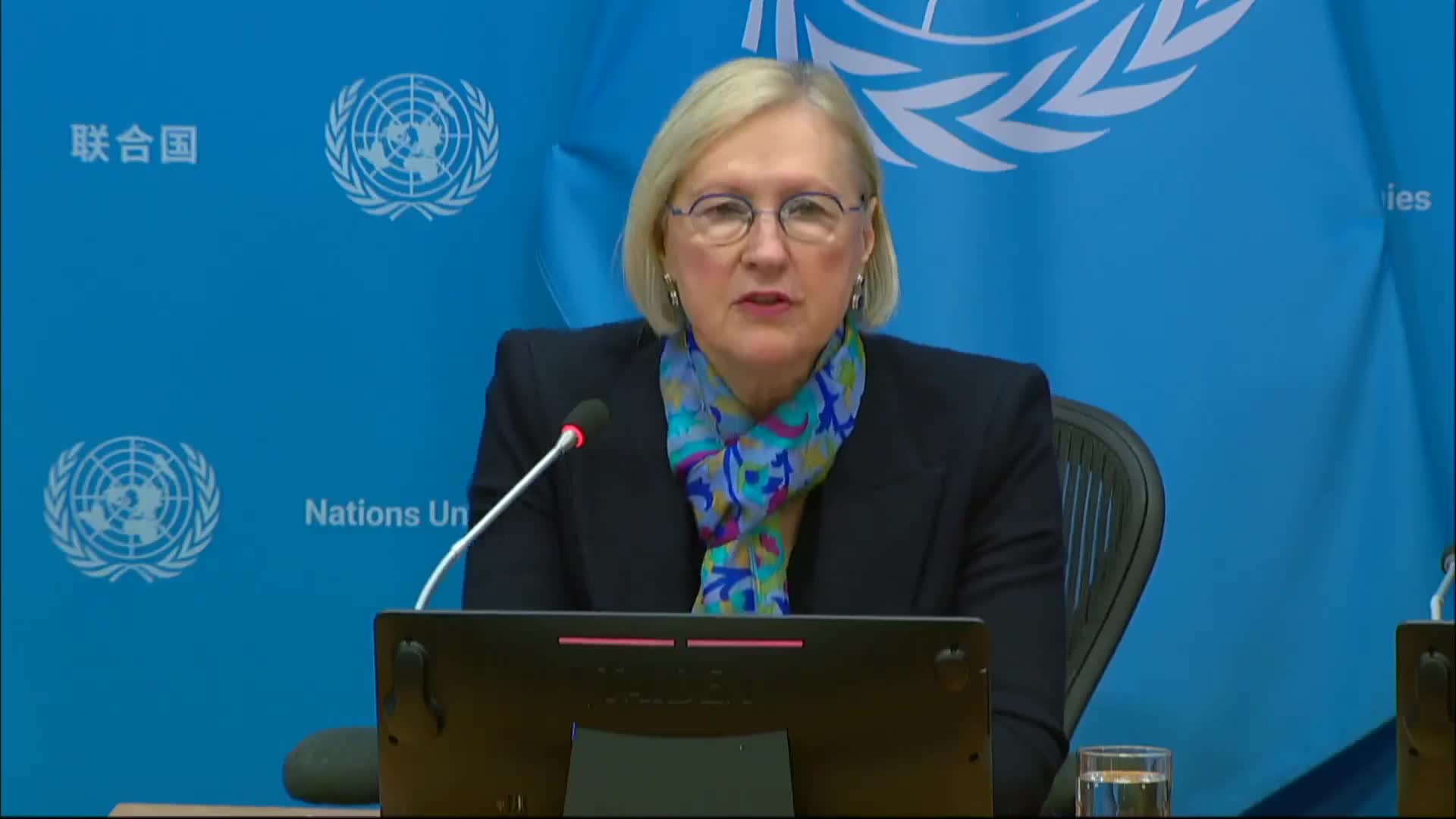
Summary
UN PBSO leaders described how Fund support has helped sustain transitions — including local reconciliation committees in the Central African Republic and an evaluation in Guatemala finding large reductions in land‑use conflict — and emphasized the Fund's focus on community‑level, last‑mile interventions.
At the briefing, officials described on‑the‑ground peacebuilding results supported by the Peacebuilding Fund in several countries and contexts.
Elizabeth Spehar cited Liberia as an example of long‑term engagement "20 plus years after their civil war," where the Fund has supported institutional strengthening and efforts to ensure "women and youth are fully involved" in conflict prevention and resolution. She said similar programming has taken place in Sierra Leone and The Gambia to support transitional justice and local dialogue mechanisms.
Spehar described activities in the Central African Republic that included cooperation with MINUSCA and national partners to "set up some local, peace and reconciliation committees around the country at the government's request" and to expand state presence at the local level ahead of elections.
Referencing an impact evaluation in Guatemala's Polochic Valley, Spehar said that the Fund‑supported work contributed to a marked decline in land disputes: "because of the work that was supported... as much as 80% of the conflicts around land use that typically would happen in that area, were actually, they didn't take place." She offered the Guatemala evaluation as an example of measurable local impact from Fund interventions.
Officials said these examples demonstrate the Fund’s role in bridging national processes and local, community‑level interventions that are not always covered by larger instruments. They stressed that the Fund’s agility in transition contexts — including mission‑to‑post‑mission handovers — aims to preserve gains and amplify local ownership.