Get Full Government Meeting Transcripts, Videos, & Alerts Forever!
Get email alerts on the Committee Governance topic
No spam. Unsubscribe anytime.
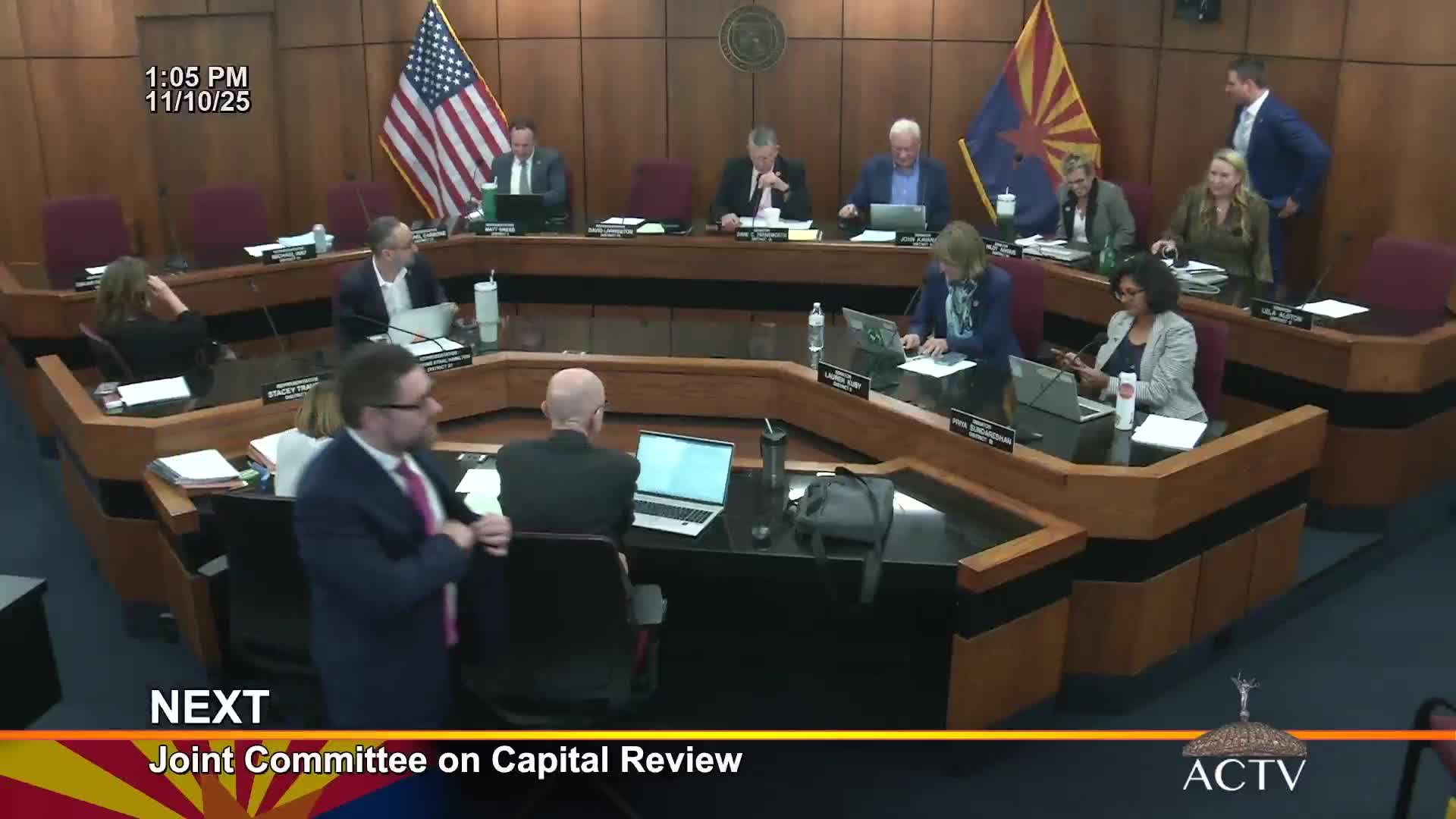
JCCR chair pushes to end consent calendars and executive sessions, urges proactive oversight
Summary
The Joint Committee on Capital Review chair opened the meeting by rejecting consent calendars and executive sessions, urging members to read statute and take an active, rather than rubber‑stamp, role overseeing state property and capital projects.
The Joint Committee on Capital Review opened with an extended statement from the chair emphasizing a change in how the committee will work.
The chair said the committee should not operate as a "rubber stamp" and that he did not want "an executive session" or "anything on the consent calendar," arguing those practices block public participation and limit scrutiny. He urged members to read the statute governing JCCR and called for the committee to be "proactive and not reactive" in overseeing state‑owned property across the three management systems—universities (ABOR), the Department of Transportation and the Arizona Department of Administration.
The remarks framed the rest of the meeting, with the chair asking members to help set meeting cadence, request more detailed project information from agencies and use roll‑call votes more frequently so members can record distinct positions on capital spending. He said he will serve as chair through January and invited members to participate in agenda setting.
The comments foreshadowed several moments of extended discussion later in the hearing, including votes in which members split over whether to approve full agency expenditure plans or to limit approvals pending further information or outreach to the executive branch.
The meeting proceeded through the published agenda with presentations from JLBC staff and agency witnesses on FY2025–FY2026 building renewal allocations.