
Council approves SDCI fee increases, clarifies short‑term rental revenue use and expands transit-security spending
Get AI-powered insights, summaries, and transcripts
Subscribe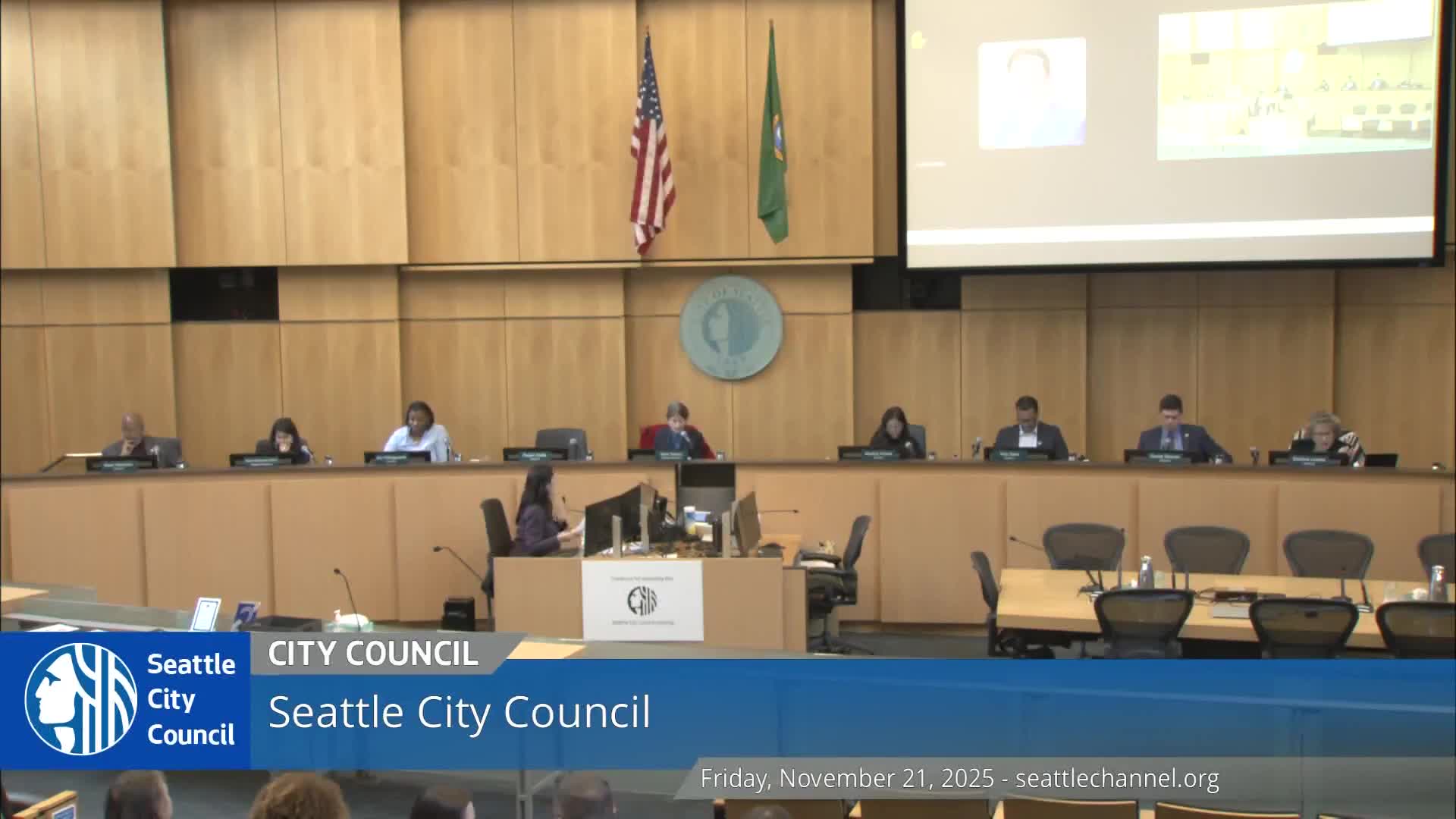
Summary
On Nov. 21 the council approved a set of budget-related bills: a change in short‑term rental tax revenue use, a package raising SDCI permitting fees (cited as an average 18% increase) to cover an $8 million gap, and an expansion allowing transit-security uses for a transportation benefit district measure; votes varied and several members voiced concerns about impacts on small projects and voter intent.
The Seattle City Council on Nov. 21 approved multiple budget-related ordinances: a bill specifying the use of short‑term rental tax revenue, a council bill increasing permitting fees for the Seattle Department of Construction and Inspections (SDCI), and an ordinance permitting material scope changes to the South Transportation Benefit District to expand revenue use to transit security.
Short‑term rental revenue: Council members heard the committee report and Chair Strauss described the measure as enacting prior budget choices. The roll-call sequence included a brief correction of a member’s recorded vote; the clerk concluded that the bill passed after the clarification.
Permitting fees (SDCI): The clerk read a bill authorizing changes to fees and charges for SDCI-related permits and activities. During floor debate Councilmember Rivera reiterated her opposition, saying the proposed 18% fee increase disproportionately burdens smaller projects such as townhouses and accessory dwelling units and risks discouraging homeowners and small developers: "18% is a lot, particularly in the context of these are the smaller projects like a townhouse or even a remodel of a home." Councilmember Solomon echoed concerns about increasing costs to build in the city. Chair Strauss countered the alternatives presented earlier in committee — drawing down reserves, layoffs, adding general fund support, or raising permit fees — and argued the fee change fills an $8,000,000 gap and enacts choices made in the budget process.
Transit-security funding: Councilmember Rink explained he pulled the South Transportation Benefit District item from consent to record a no vote, saying the district was a voter-approved measure intended for transit service and capital and that the city should first seek other partners for safety investments. Councilmember Kettle and others argued that funding transit security is necessary to preserve ridership and access.
Vote outcomes: The transcript records the ordinances as having passed on the record after roll-call votes (short‑term rental revenue bill recorded as passing after vote correction; SDCI fee schedule passed after a late vote change; the transportation benefit district change passed with 8 in favor and 1 opposed). Several members said they want these fee and policy choices revisited during 2026 committee work.
What to watch: Councilmembers asked for follow-up committee review and analysis of fee impacts on housing production and small projects. Staff implementation of fee schedules and any adjustments or mitigation strategies were flagged as follow-up items.