Get Full Government Meeting Transcripts, Videos, & Alerts Forever!
Get email alerts on the Economic Development topic
No spam. Unsubscribe anytime.
RDC discusses TIF creation and adopts 2026 TIF spending plan and meeting calendar
Summary
Commission staff outlined the multi-step process for creating TIF districts, citing SB 1’s property-tax changes as motivation; commissioners approved a 2026 meetings calendar and a $2,002,000 TIF annual spending plan.
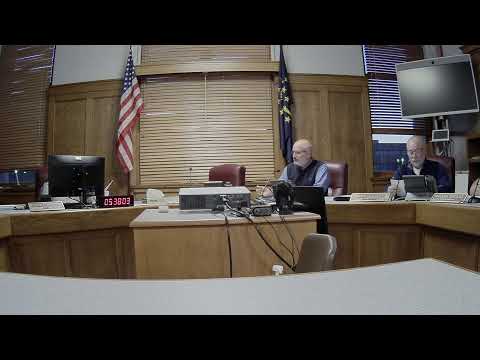
DeKalb County Redevelopment Commission members spent a portion of the Nov. 12 meeting discussing how the county would establish tax increment financing (TIF) districts and then approved a 2026 calendar and a TIF spending plan.
RDC staff explained that establishing a TIF typically begins with a declaratory resolution from this body, proceeds to the plan commission for a development plan and then requires county-commissioners’ approval; a confirming resolution would then create the TIF. Staff recommended engaging counsel (examples named: Baker Tilly, Frost Brown Todd, Barnes & Thornburg) and producing a tax-impact study before finalizing areas. "Sometimes we're setting up a TIF area because there is a project that is in the works," staff said, and noted that the tax base is backdated to Jan. 1 of the year in which the TIF is declared.
Staff also pointed to recent state action (SB 1) and property-tax changes as additional motivation for counties to consider TIFs to spur development. Commissioners agreed to identify candidate areas and seek planning and commissioners' buy-in before incurring consultant costs.
On calendar and spending actions, the commission approved a modified 2026 meeting calendar (moving the Nov. 11 meeting to Nov. 4, 2026) and adopted the TIF annual spending plan for 2026 totaling $2,002,000. Staff noted the spending plan does not have to match the formal budget and recommended conservative estimates for professional expenses tied to potential TIF work.