Get Full Government Meeting Transcripts, Videos, & Alerts Forever!
Get email alerts on the Housing Lhap topic
No spam. Unsubscribe anytime.
Highlands County delays vote on updated housing plan after debate over loan forgiveness
Summary
County staff presented a revised local housing assistance plan proposing new construction and replacement strategies and changes to loan forgiveness; commissioners debated repayment terms and unanimously continued the public hearing to Nov. 4 so staff can refine language and consult the state.
Highlands County commissioners on Oct. 21 postponed a decision on a proposed 2025' 2028 Local Housing Assistance Plan after hours of debate over whether down-payment and rehabilitation assistance should require repayment or be forgiven.
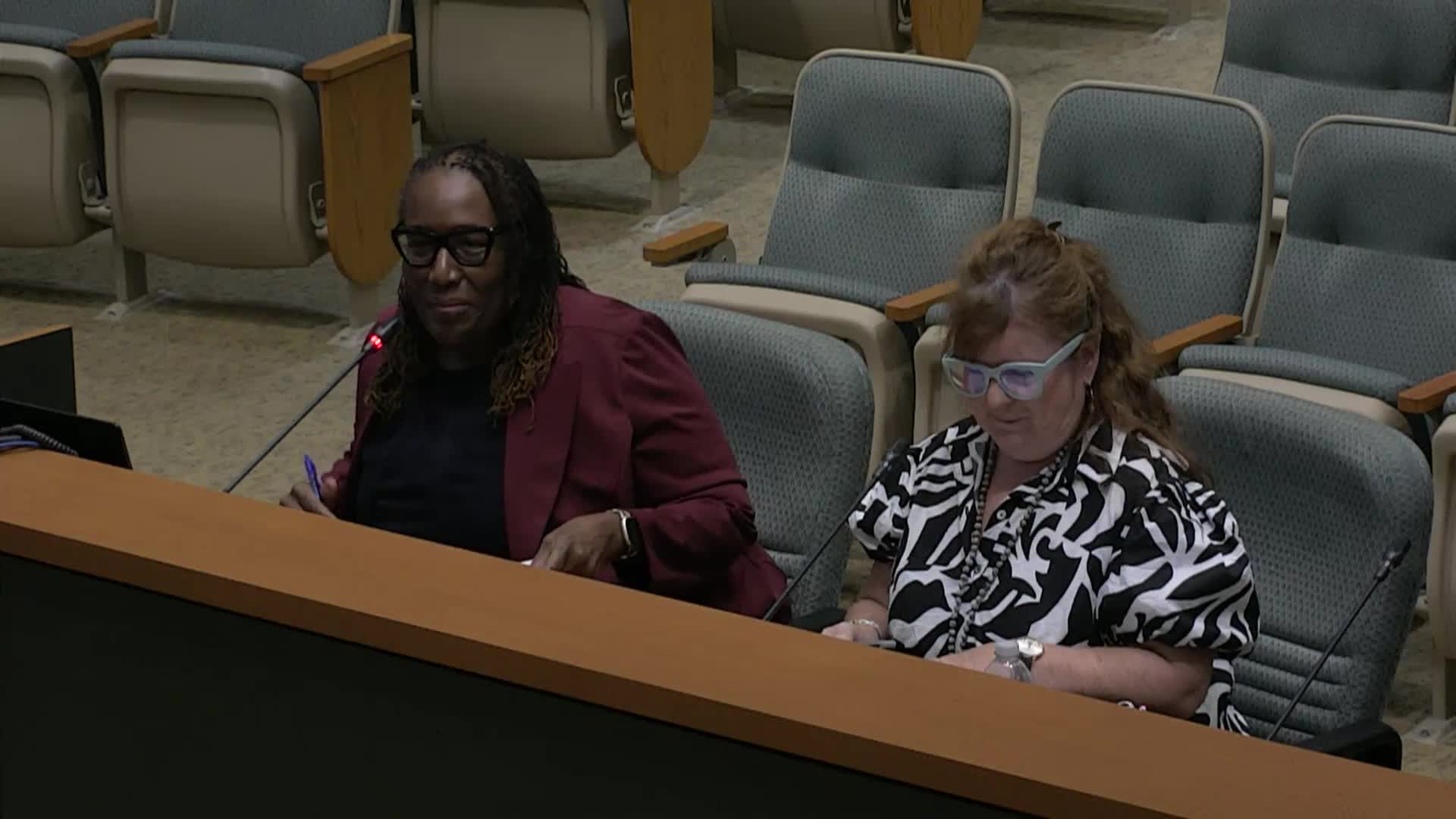
Ingrid Gardner, director of community programs, told the board the program is funded by documentary stamp taxes under the state's SHIP program and is intended to "increase affordable housing, preserve existing stock and reduce homelessness." "The key takeaway from all of this is that SHIP is more than a funding source. It's a lifeline that helps build stronger families, homes, and communities in Highlands County," Gardner said.
The draft LHAP adds two new strategies: partnering with nonprofit developers for construction and redevelopment for homeownership, and demolition and reconstruction or replacement of mobile and manufactured homes. Gardner said the plan prioritizes extremely low, very low and low income households and individuals with special needs, and reserves limited assistance for a small number of moderate- or workforce-income households.
The central point of contention at the hearing was how and when loans should be repaid or forgiven. Under the version presented, some strategies use a deferred, forgivable format with reductions over a multi-year term; for example, down-payment assistance was described as a deferred loan that can be amortized and reduced over a 20-year period if owners remain in the home and meet program conditions. Commissioners proposed alternatives including a full payback only on transfer or sale, shorter forgiveness windows (10 or 15 years) or keeping pro-rata reductions so funds return to the program sooner.
Several residents and housing advocates urged the board to make assistance accessible. "The SHIP program helped me with down payments to get my first house," said Dustin Fitch, a Highlands County resident, testifying that a 20-year term "seems like a pretty long time" compared with earlier 10-year models. Kirk Cron, deputy executive director of Florida Nonprofit Housing, urged support for changes that expand down-payment assistance and homeownership opportunities for low-income families.
Staff provided budget context: the county's SHIP allocation averages about $350,000 a year, with larger one-time COVID-era allocations in recent years; Gardner said the county currently generates roughly $320,000 annually from paybacks but lacks administrative capacity to aggressively enforce recapture (housing staff of three, including one housing specialist).
Multiple commissioners said they want clearer, implementable language that preserves program goals and avoids burdening low-income owners. The board voted unanimously to continue the public hearing to its Nov. 4 meeting so staff can revise the LHAP, clarify repayment language and consult with state reviewers before a final vote.
Next steps: staff will produce a draft with explicit repayment/forgiveness options (including the board's suggestions about 10/20-year structures and transfer-triggered repayment), seek state guidance where needed and return the item to the board at the Nov. 4 meeting.