Get Full Government Meeting Transcripts, Videos, & Alerts Forever!
Get email alerts on the Affordable Housing topic
No spam. Unsubscribe anytime.
Collier commissioners delay decision on zoning certification for 120-unit affordable housing application
Summary
Commissioners paused action on a developerled request to have the zoning director sign a state verification form needed to apply for housing tax credits for a proposed 120-unit project near Golden Gate Parkway, citing legal and vesting concerns and asking staff to negotiate clarifying language with the county attorney before reconvening.
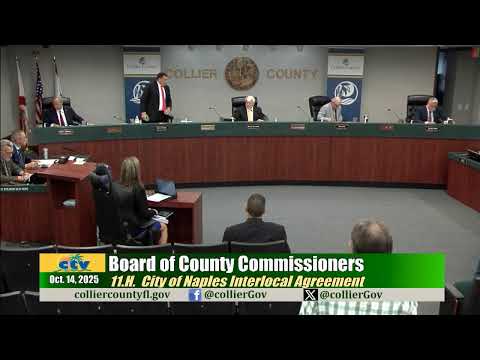
The Collier County Board of County Commissioners on Oct. 14 deferred a decision after a lengthy debate over whether to authorize the zoning director to sign a Florida Housing Finance Corporation local government verification form that would allow a developer to seek state tax-credit financing for up to 120 affordable housing units on a 2.03-acre site off Golden Gate Parkway. Developer representatives said the state application deadline is Oct. 27 and that the signature is necessary to keep the financing opportunity alive.
County staff outlined the legal framework under Florida Statute 125.01055, explaining the board has discretion to authorize development of affordable housing on nonresidentially zoned land if certain affordability commitments are met. The applicants attorney, Noel Davies, and client representative Alex Bellino said the project is planned as 100% affordable housing, with roughly 81% of units targeted below 80% of area median income and a 30-year affordability commitment.
Several commissioners questioned whether signing the state verification would effectively vest the countys approval for the maximum number of units and cited uncertainty in the certification wording. County planning director Mike Bosey and zoning director Mike Bozzi described the certification as stating the maximum density "is available" and said that operational and site plan constraints can later reduce a buildable unit count. Commissioners raised concerns about potential conflicts between the countys later site-plan review and the state financing applicationand whether the county could be bound to the numbers submitted to the state.
Public comment included city officials and residents who asked for clarity about traffic and neighborhood impacts. After extended discussion, the board asked the applicant and county staff to meet with the county attorney during a recess, to return later the same day with proposed clarifying language. The item was continued rather than being approved or denied.
What happens next: County staff and the applicant will work with the county attorney to determine whether the certification language can be amended or accompanied by a written agreement that preserves the boards discretion over final density and development standards. If the form cannot be altered to the commission's satisfaction, the application to the state will not proceed and the project team acknowledged it may lose the financing opportunity.
Speakers quoted in the meeting included developer attorney Noel Davies and planning staff; the applicant emphasized the affordability mix and necessity of the state financing to deliver the proposed AMI breakdown.