Get Full Government Meeting Transcripts, Videos, & Alerts Forever!
Get email alerts on the Labor topic
No spam. Unsubscribe anytime.
Union organizer links democratic worker control to internationalism and demilitarization
Summary
Mark Anderlich described democratic control of productive property, worker self‑management, job guarantees and the need to dismantle elements of the U.S. military‑industrial complex as part of a global socialist project.
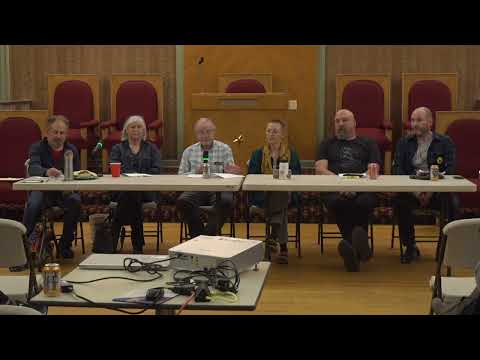
Mark Anderlich, a longtime union and community organizer and former president of the Missoula Area Central Labor Council AFL‑CIO, devoted his remarks to labor, democratized ownership and internationalism.
Anderlich outlined socialism as democratic control of the economy and government, including the conversion of privately exploitative property into public or commons ownership. He argued for worker self‑management, elected managers in enterprises, and a job‑guarantee policy funded by a currency‑issuing government to keep unemployment low while addressing inflation. He cautioned that socialism has ongoing risks (bureaucratization, suppression of dissent) that must be addressed through continued democratic practice.
In a later segment Anderlich discussed internationalism and called for dismantling imperial structures—the International Monetary Fund, World Bank, transnational military arrangements—and proposed truth and reconciliation processes and debt forgiveness. He argued the arms industry should be dismantled with just transitions for affected workers, and proposed 'social defense' models emphasizing nonviolent disruption, strikes and organized solidarity rather than conventional military approaches.
Audience questions pressed on historical U.S. interventions and national security risks; Anderlich answered by emphasizing organizing tactics and the dependence of capitalists on labor.