Missoula panelists outline varied visions for a post‑capitalist future
Loading...
Summary
Five panelists at a Western Montana DSA event in Missoula presented proposals spanning labor self‑management, eco‑socialism and degrowth, health as a commons, care work and housing alternatives, and called for organizing and democratic practices to implement them.
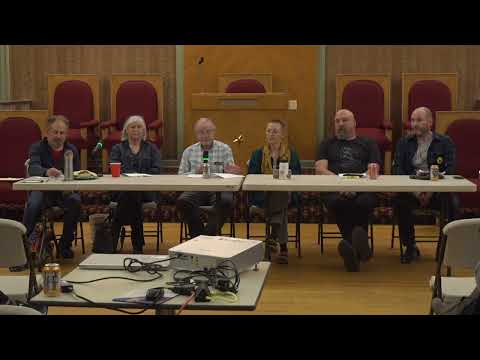
A panel hosted by Western Montana Democratic Socialists of America gathered in Missoula for the final installment of the 2025 Socialism Speaker Series to present visions for a post‑capitalist future.
The event opened with a framing speech that cast capitalism as a system that enables rent increases, environmental destruction and political capture "because they can," and asked the audience to imagine alternatives. Panelists then spoke in five focused presentations: Mark Anderlich on labor and internationalism; Justice York on environmental policy and degrowth; Dave Quattrucci on health care organized as a commons; Celia Winkler on kinship, care work and reflective solidarity; and Josh Decker on housing as a social good.
Each speaker proposed structural reforms rather than incremental fixes. Mark Anderlich urged democratic control of productive property and worker self‑management, including a job‑guarantee funded by a currency‑issuing government. Justice York detailed eco‑socialist measures such as land‑back transfers, regenerative agriculture, and investment in high‑speed rail as a lower‑emission alternative to short flights. Dave Quattrucci argued for removing billing, networks and denials from health care and centering social determinants like housing and food. Celia Winkler emphasized recognizing care work and redesigning decision structures to avoid new hierarchies; she cited Scandinavian parental‑leave practices as an example. Josh Decker framed housing as dignity, not commodity, and cited tenant unions, land trusts and co‑ownership as pathways toward equitable housing.
During audience Q&A, participants raised feasibility concerns ranging from historical U.S. interventions abroad to modern surveillance and potential reactionary violence. Panelists responded with a mix of tactics — nonviolent organizing, strikes, divestment campaigns and community‑level projects — and emphasized centering the most vulnerable in planning. Robbie, the event organizer, closed by inviting attendees to join the Missoula Tenants Union and the local DSA chapter and announced upcoming meetings.
The panel did not propose immediate legal measures or votes; rather, it presented a range of programmatic ideas and organizing strategies that participants were urged to pursue locally.