Get Full Government Meeting Transcripts, Videos, & Alerts Forever!
Get email alerts on the State Policy Subdivision topic
No spam. Unsubscribe anytime.
Planners warn new state laws shift some subdivision approvals to county administrator, reducing pre‑decision public input
Summary
Commissioners and staff discussed the effect of recent Florida laws (cited as SB 784 and SB 180) that allow a designated county official to approve certain subdivisions; staff said the law is in effect and Gadsden has designated interim administrator Reginald James to make such approvals but litigation is pending in other counties.
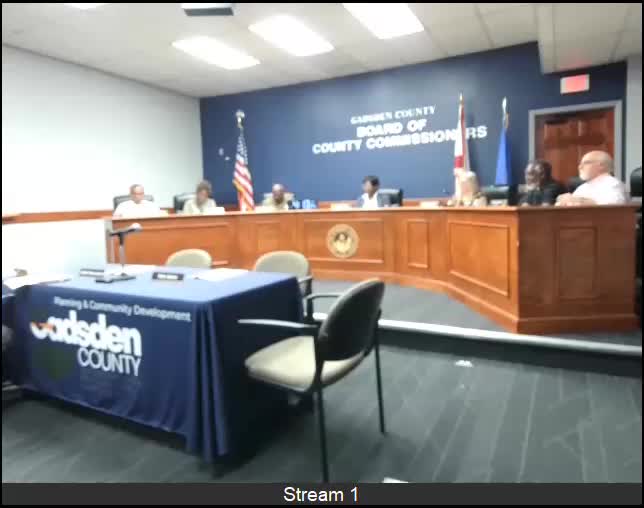
Commissioners at the Nov. 13 Gadsden County Planning Commission meeting raised concerns about recent state legislation that changes how certain subdivisions are approved and the impact on public participation.
Planning staff and the county attorney described two laws referenced in the meeting, SB 784 and SB 180, and said counties were required to designate a county official with authority to approve qualifying subdivisions at the staff level. Staff said several counties and municipalities have filed lawsuits challenging the laws and, as of the meeting, no court had entered a stay, so the provisions remain in effect. Gadsden County’s interim administrator, Reginald James, was identified in the meeting as the county official designated to make those approvals.
A staff representative explained how the Development Review Committee (DRC) will continue to review projects and provide recommendations to the administrator, but that the final decision for qualifying subdivisions would rest with the designated county official. The transcript records the shorthand clarification that DRC stands for Development Review Committee and lists typical DRC participants such as the sheriff’s office and fire chief.
Commissioners repeatedly asked how residents would exercise the right to be heard if decisions move away from the commission. One commissioner said transferring decision authority “just kinda bypasses the whole public’s input.” County counsel responded that under the statutory framework citizens do not have a mechanism to challenge the administrator’s approval before the decision is made; applicants denied by the administrator retain an appeal right to the county commission, and citizens may raise complaints after an approval is issued.
Officials noted the change applies specifically to subdivisions (the new process does not move permitting for other items such as waste‑disposal systems away from the commission) and that major commercial developments and items requiring bond approval would still come before the planning commission or county commission.
Commissioners asked staff to monitor litigation and to return with clarifying policy language where possible. No formal actions were taken on the statutory issue during the meeting.