
UNAIDS warns funding cuts imperil HIV progress; new injectable offers limited hope unless scaled
Get AI-powered insights, summaries, and transcripts
Subscribe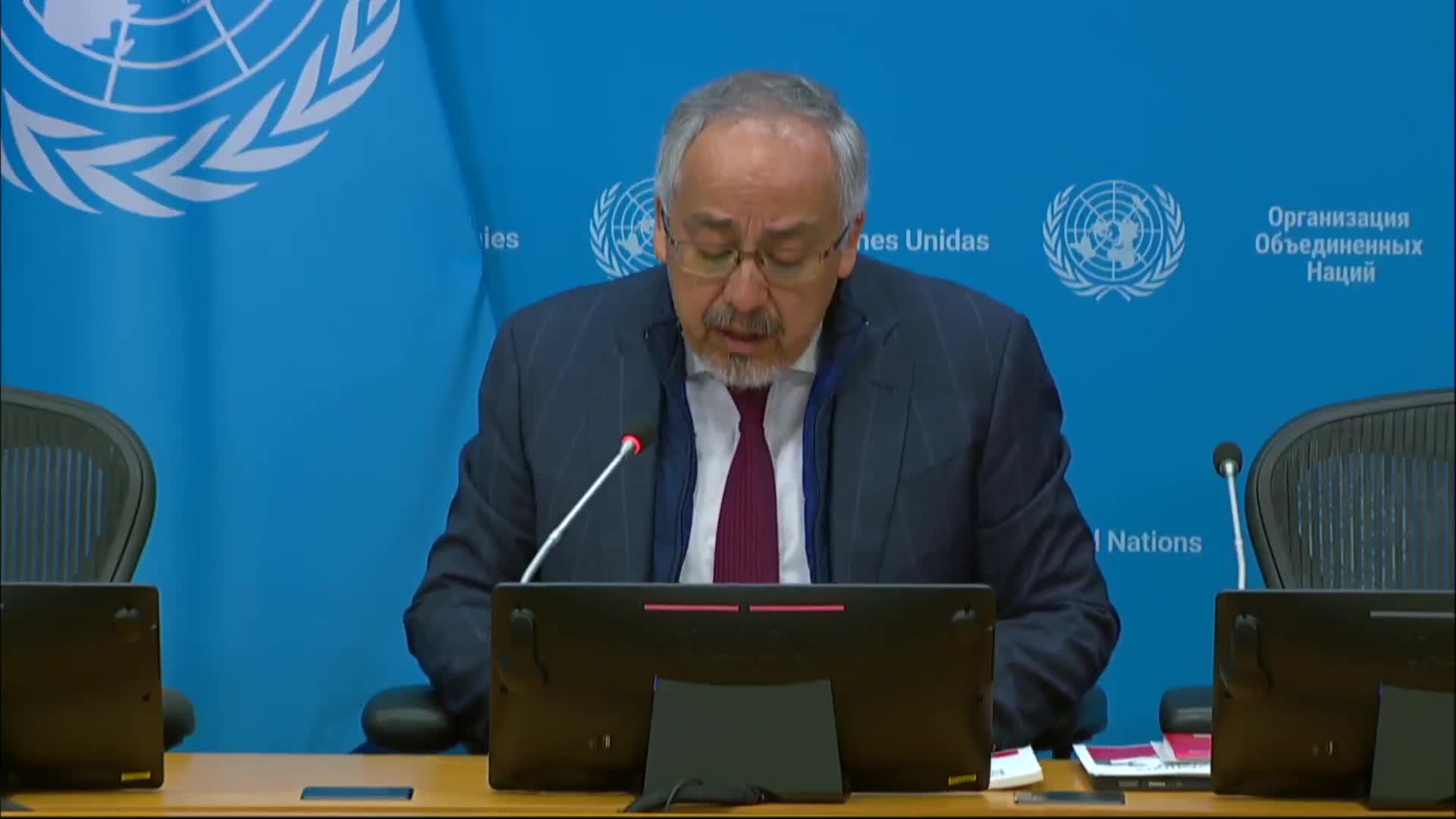
Summary
On World AIDS Day, the director of UNAIDS’ New York office warned that major reductions in external health aid threaten prior gains against HIV and said a new twice-yearly injectable, lenacapavir, is being rolled out to 2 million people but must scale to tens of millions to change the epidemic’s course.
On World AIDS Day, Cesar Nunez, director of the UNAIDS New York office, warned that "the HIV epidemic is not over" and that recent declines in external health assistance threaten gains made in prevention and treatment.
In a briefing announcing UNAIDS’ new report, "Overcoming disruption, transforming the AIDS response," Nunez said OECD projections show external health aid could fall "30 to 40% in 2025 compared to 2023," and that those reductions are already causing "immediate and severe disruption to health services in low and middle income countries." He cited UNAIDS analysis that, under current trends, roughly 1,400,000 additional annual new HIV infections could occur by 2030 and about 3,900,000 excess new infections by 2030 compared with an end-of-AIDS pathway.
Nunez said prevention and community-led services are being hit hardest. "Most of the community response has depended on foreign assistance, and that has currently been impacted," he said, and gave country examples of declines in pre-exposure prophylaxis (PrEP): a 31% drop in Uganda (Dec 2024–Sep 2025), 21% in Vietnam (Dec 2024–Jun 2025) and 64% in Burundi (Dec–Aug 2025).
The UNAIDS director urged country-level prioritization and regional leadership. He pointed to the African Union's roadmap to 2030 as a commitment to diversified and sustainable financing and said member states should complement donor contributions with domestic sustainability plans.
Nunez also highlighted a pharmaceutical advance: the long-acting injectable antiretroviral lenacapavir, given twice a year. "If we are able to provide lenacapavir to those people in need, that will help us really bring down the new infections at a much faster speed," he said. He added that an initial rollout is starting "today" in Zambia and Eswatini for about 2,000,000 people but that to realize a game-changing impact the product would need to reach on the order of 20,000,000 people.
On pricing, Nunez said lenacapavir had been valued in some markets at about $40,000, but following negotiations with WHO, Unitaid and the Gates Foundation, the manufacturer Gilead agreed to supply the product at cost for 77 low-income countries — "$20 per dose," he said.
In a question-and-answer period, reporters asked about the U.S. decision not to hold a World AIDS Day commemoration. Nunez said commemoration events are important but emphasized action by governments: he referenced the recently announced U.S. "America First" global health strategy and said State Department officials are consulting in several African countries on needs and sustainability. He also noted the Global Fund replenishment process in South Africa had raised $11,300,000,000 for the coming years.
Nunez cautioned that while some donors and pharmaceutical companies are taking steps to protect the response, "other actions will be important" and that countries must prioritize prevention and domestic financing to avoid backsliding toward higher infection rates.
The briefing closed with the moderator identifying Nunez as the director of the UNAIDS New York office and announcing the next briefing.