
Gardner committee backs ordinance to reinstate seasonal winter parking rules after hearing on towing increases
Get AI-powered insights, summaries, and transcripts
Subscribe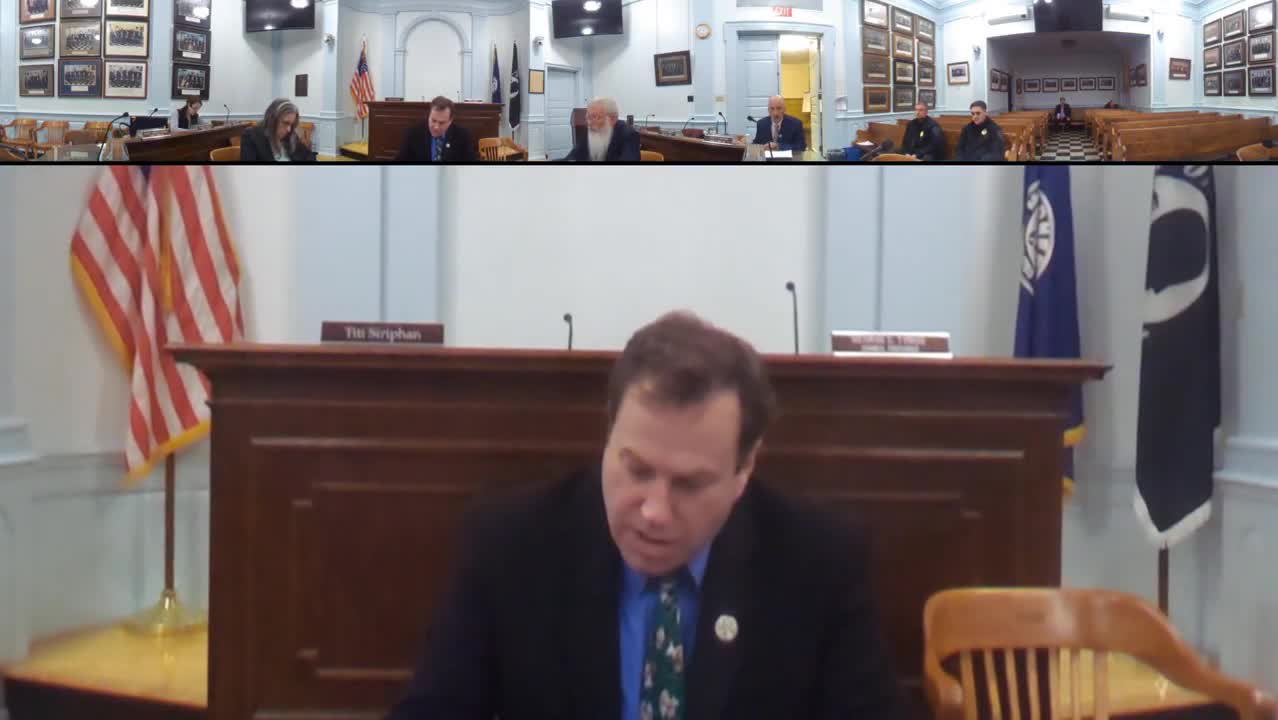
Summary
The Gardner City Public Safety Committee voted to recommend an ordinance amending the city's parking code to reinstate a seasonal winter parking ban approach, after the Department of Public Works and police officials cited higher towing counts under the Code Red system; the item moves to full council for first printing.
The Gardner City Public Safety Committee voted to recommend that the full council send an ordinance to first printing that would amend Gardner City Code chapter 600, section 24, to reintroduce a seasonal-style winter parking ban aimed at reducing tows and easing winter operations.
The committee opened a joint public hearing on item 11737 — the ordinance — and a related Traffic Commission communication (item 11552). An email from Dana Harlow, director of public works, was read into the record in support of the change. "Department of Public Works has consistently found winter operations to be safer, more efficient, and more cost effective under the former winter parking ban, which ran from November 1 to April 15," the email stated, and cited packet data that reported 264 vehicles towed over nine years under the old seasonal ban versus 824 vehicles towed in seven years under the Code Red approach (an average of about 30 tows per year under the old method compared with about 131 per year under the new system, excluding the COVID period).
Gardner Police Chief Eric McAfee testified in favor of returning to the seasonal model, saying his experience with both systems showed clearer roads when tagging began in November. "When we used to start tagging in November, the roads would be clear by the time the first snow event usually took place," McAfee said, arguing that Code Red alerts do not reach enough residents and that a shorter, targeted seasonal ban could be a reasonable compromise.
Deputy Chief Nick McAccording told the committee the operational burden on first responders and public works had grown under the current system, describing numerous door knocks and extra staff time spent moving vehicles during storms. "It's getting taxing on first responders," he said, urging a solution that would reduce repeated passes, towing, and staff workload.
Committee members discussed the balance between residents' parking needs and operational efficiency. Several councilors described the proposed hybrid or shortened seasonal approach as a compromise that could be revisited if it failed to reduce tows or staff burden. The committee first voted to place the Traffic Commission communication (item 11552) on file. It then approved the motion to recommend ordinance 11737 to the full council and send it to first printing; the chair recorded the motions as carried.
Next steps: the ordinance will proceed to the full council for first printing and further consideration. The committee did not adopt an immediate citywide enforcement change during the meeting; it recommended the ordinance move forward for council review.