
Port Hueneme council sends landlord‑harassment issue back to staff for further review after mixed testimony
Get AI-powered insights, summaries, and transcripts
Subscribe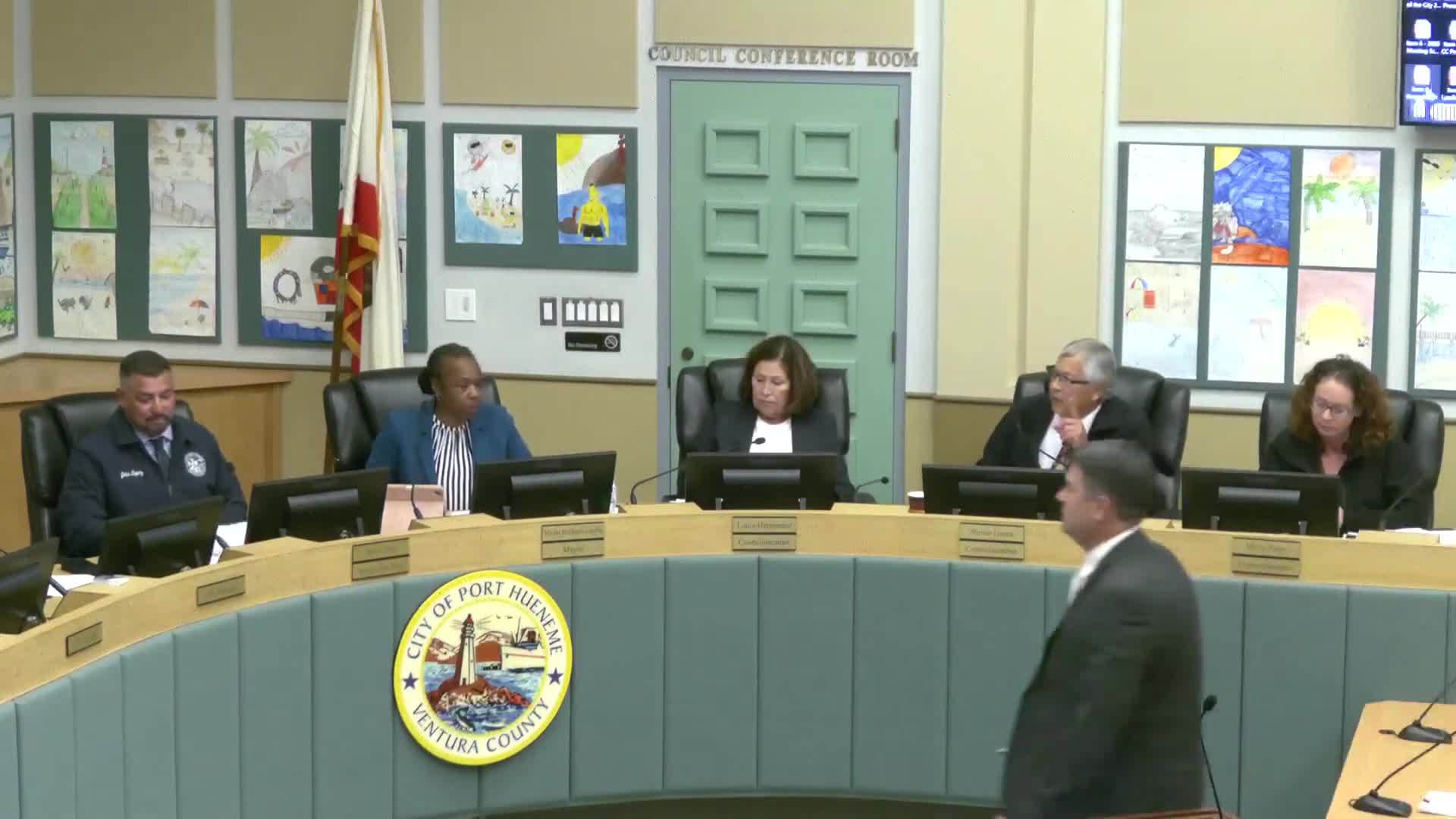
Summary
Council reviewed staff materials and resident input about landlord‑harassment ordinances, heard that existing state law provides protections and that local complaints have been infrequent, and directed staff to gather additional citywide information and report back so council can decide whether a local ordinance is needed.
The Port Hueneme City Council on Monday reviewed a staff report and community input about whether the city should pursue a local landlord‑harassment ordinance. Staff summarized state‑level protections under the California Civil Code and presented Oxnard’s recently adopted ordinance as an example of city‑level enforcement that adds local investigatory authority, civil penalties and potential criminal charges; Oxnard’s implementation plan referenced dedicated staffing and an estimated cost in the hundreds of thousands of dollars.
Housing Director Gabby Basua told the council the Port Hueneme Housing Authority handles Section 8 vouchers, operates more than 90 units, and mediates landlord‑tenant disputes; she said in her 22 years she had banned two landlords from the Section 8 program for repeated violations but had not seen a high volume of harassment complaints in Port Hueneme. “We do not have that information available” in public reports, she said when asked about complaint statistics, but added her staff resolves most reported cases and can refer residents to the Housing Rights Center and county resources.
Public comment urged the city to be creative and to use existing resources: one resident called for better outreach about tenant rights and county resources, and another (via written comment) alleged retaliatory eviction in a specific case; a council member read portions of that written comment aloud and other members cautioned about discussing individual cases in this forum. Council members voiced differing views: some said one complaint does not justify a costly program, while others urged staff to study the local need and report findings.
After extended discussion, the council voted on two related proposals. A motion (failed) to direct staff and the city attorney to prepare a comprehensive analysis of renter needs and options for an ordinance did not pass. The council then adopted a motion to receive and file the staff report and directed staff to return with more information to help determine whether harassment is a local problem warranting an ordinance; the final motion passed with a majority.
Council emphasized lower‑cost interim steps staff could pursue while the analysis proceeds, such as expanding education about renters’ rights, promoting county and nonprofit resources, and tracking verified complaints so the council can assess trends before committing to dedicated enforcement staff or budget allocations. The housing director said the housing office receives about one or two housing‑related complaints a month and resolves most without court action, and she encouraged residents with concerns to contact the housing office for referral and assistance.
Next steps: staff will compile a citywide picture of renter demographics, known complaint history, existing referral pathways, and potential budget impacts and will return to council with findings and recommendations.