Get Full Government Meeting Transcripts, Videos, & Alerts Forever!
Get email alerts on the Crowd Control Policy topic
No spam. Unsubscribe anytime.
Santa Ana police outline First Amendment assembly policy; commission presses for clarity on dispersal orders, media access and less-lethal reporting
Summary
SAPD presented Policy 4-29 on protests and assemblies, stressing respect for peaceful expression, training, and Accountability under AB 48; commissioners sought specifics on media credentialing, dispersal orders, chemical agents, documentation of less‑lethal munitions and past incidents. Staff pointed to AB 48 reports posted on the department website.
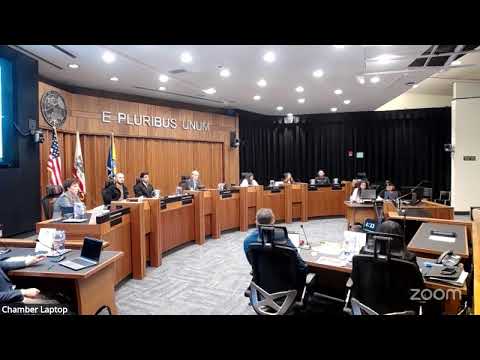
Santa Ana Police Department commanders told the Police Oversight Commission on Nov. 13 that officers are trained to protect peaceful First Amendment activity while preserving public safety, and described procedures for planned and unplanned demonstrations. Commissioners used the session to press for specifics about how the department applies dispersal orders, treats media at protest scenes, and documents use of less‑lethal munitions.
Commander Gary Cuso, who oversees field operations, said Policy 4-29 is taught in the academy and reinforced in roll call training. He described an emphasis on de-escalation, targeted arrest tactics to remove agitators, mobile field force training for supervisors, and after-action debriefs to correct tactics. Cuso said the department follows the criteria in Assembly Bill 48 as codified in state penal code provisions when considering less‑lethal chemical agents and that officers must document any use of force and less‑lethal munitions on body-worn camera and in reports.
Media and recording devices: Commissioners raised concerns about journalists and independent social-media accounts recording police actions. Cuso and staff said SB 98 and related penal-code provisions protect media presence at demonstrations and that the department generally will not seize cameras except when those devices are themselves evidence in an arrest or when the camera-holder is the arrested subject. Command staff acknowledged challenges verifying credentials during unplanned events and said they rely on professional engagement when possible.
Dispersal orders and bystanders: Commissioners pressed what happens when a dispersal order is given and peaceful bystanders, such as parents with children, remain. Deputy chiefs and commanders said dispersal orders are case-by-case and that an unlawful-assembly declaration resets at a new location; they also described tactics to target individual agitators where safe and feasible rather than dispersing entire crowds when possible.
Documentation and transparency: Commissioners sought aggregate data on crowd-control deployments, nonlethal munitions expended, and officer accountability for protocol violations. Staff pointed to AB 48 crowd-control reports posted on the department website for recent event dates and offered to circulate the link to the commission. Commissioners asked staff to compile or make available equipment-use inventories and after-action materials for oversight review.
What’s next: Staff said AB 48 reports are publicly available and that some requests for incident documentation can be fulfilled quickly while other requests will require a memo and interdepartmental coordination. Commissioners signaled interest in future briefings and the ability to review discipline statistics related to demonstration incidents, subject to personnel privacy rules.
Sources: Commander Gary Cuso, Deputy Chief Andrade, and staff remarks during the Nov. 13 meeting; commissioners’ questions; staff confirmation of AB 48 report postings.