
Santa Barbara police present updated massage ordinance; therapists urge fee, inspection and grandfathering changes
Get AI-powered insights, summaries, and transcripts
Subscribe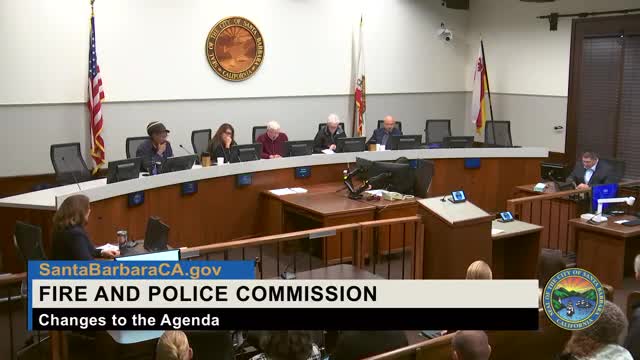
Summary
Police presented a long‑overdue update to the city’s massage-establishment ordinance to align with California law and add permit, inspection and certification requirements; licensed therapists praised safety goals but urged lower fees, grandfathering for long‑standing practitioners, and inspection protections for sole proprietors.
The Santa Barbara Police Department on Wednesday outlined a proposed overhaul of Chapter 5.76 of the municipal code to update the city’s massage-establishment rules, align local rules with the California Massage Therapy Act and give enforcement tools to address illicit activity, staff told the Fire and Police Commission.
Jocelyn, the police service coordinator leading the permit review, said the current city ordinance dates to 1976 and “is outdated and does not comply with state laws as outlined in the California Business and Professions Code 4600.” She told commissioners the draft ordinance would require establishments to keep an on-site roster of employees, display permits and ensure therapists hold California Massage Therapy Council (CAMTC) certification or a limited exception. The proposal would also empower police to conduct annual or unannounced inspections to detect investigative clues of illicit activity, staff said.
Police Commander Miller described enforcement priorities as protecting public safety and service providers while pursuing tips through investigations. “Our prior priority always is public safety, both for the community and for the service providers themselves,” he said, and added that the ordinance would create standards that make violations easier to identify and address even when probable cause for arrest is not met.
Staff said the city intends to simplify the application process by making the police department the primary point of contact, removing a separate finance-department handoff that had caused applicant confusion. The proposal includes a new sole‑proprietor permit for practitioners who own and operate without employees and sets proposed annual fees at $375 for establishments and $275 for sole proprietors; staff said fees are intended to reflect program costs, not revenue.
Therapists and other members of the public generally supported stronger protections against illicit activity but raised concerns about fees, inspection procedures and implementation. Thea Altman, a longtime licensed massage therapist, said older schooling records can make CAMTC certification difficult to document and asked whether a city business license would be an alternative. Sarah Loser, CAMTC certified, said she supports the ordinance “to a degree” but called the jump in individual fees—from about $25 historically to $275—“extremely harsh” and asked for a way to protect sole‑proprietor client privacy during inspections.
Several commenters asked for grandfathering or a limited‑exception path for long‑standing practitioners who lack CAMTC certification and for clearer rules for out‑call and home‑visit therapists. Colin Silverman, a permit holder since 1996, urged the city to differentiate medical or therapeutic practices from spa businesses and to consider grandfathering for established clinicians.
Commissioners pressed staff on several points: whether the commission was being asked to take action (staff said the presentation was informational and that feedback would inform an ordinance committee review), whether unannounced inspections would be limited to complaint‑driven cases, and whether sole‑proprietor fees could be reduced. The city attorney noted the business tax certificate (roughly $25) is distinct from a regulatory permit and that permit fees must be cost‑based.
Staff said they had held a public meeting with about 30 attendees and plan to take community feedback to the ordinance committee in December, then to City Council; if council approves an ordinance, it would be subject to the typical 30‑day enactment period. Staff also acknowledged some materials have cited January 1, 2028 as the CAMTC compliance deadline while others listed January 1, 2029 and said the timeline remains subject to refinement.
Next steps: staff will review the commission’s feedback, revisit sole‑proprietor fees and grandfathering language as appropriate, and bring a revised draft to the ordinance committee and then council. The commission made no formal vote on the ordinance at the special meeting.