Get Full Government Meeting Transcripts, Videos, & Alerts Forever!
Get email alerts on the Wildfire Resilience topic
No spam. Unsubscribe anytime.
USGBC California outlines home‑hardening, electrification and community resilience steps
Summary
Ben Stapleton of the U.S. Green Building Council of California briefed the NDL Sustainability Commission on wildfire hardening, training for landscapers and contractors, and community resilience tools such as batteries and resilience hubs. He said about 1,800 people have completed USGBC trainings.
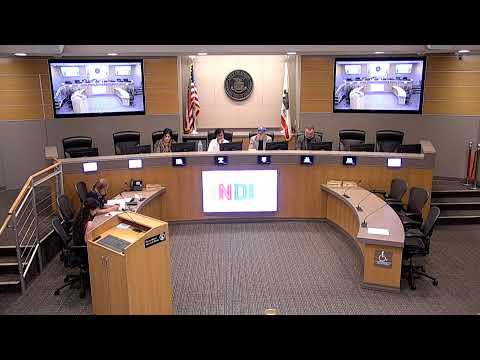
Ben Stapleton, executive director of the U.S. Green Building Council of California, told the NDL Sustainability Commission on Oct. 27 that the organization has expanded home‑ and landscape‑hardening work since the 2018–19 Thomas and Woolsey fires and now offers contractor and landscaper certifications aimed at reducing ember‑driven loss.
Stapleton said USGBC California has certified roughly 1,800 people through landscape and home‑hardening classes and maintains a group‑purchasing platform to help residents buy low‑cost, fire‑resilient materials. "We launched some resources to help support people going through that, including a rebuilding guide," he said during the presentation.
The presentation outlined low‑cost and no‑cost actions homeowners can take — from noncombustible roofing to trimming plants within five feet of roofs — and described training the council offers for contractors and landscaping professionals. Stapleton also discussed certification and a directory of credentialed professionals who can help implement hardening measures.
On infrastructure and technology, Stapleton recommended that cities assess options beyond expensive utility undergrounding, including distributed battery backups and community‑scale microgrids. "Would that be a lot cheaper than $1,000,000,000 a mile?" he asked, urging a cost‑benefit approach to resilience investments.
He described resilience hubs as spaces with clean air filtration, battery backup and water where residents could shelter during disasters. He also emphasized electrification — designing all‑electric homes to reduce gas‑related ignition risk — and urged municipalities to consider landscape design that maintains biodiversity while reducing fire ladders.
The commission asked about USGBC California's relationship with state agencies; Stapleton said the organization is an independent nonprofit that partners with Cal Fire, the California Energy Commission and CalEPA on education and funding for certain programs. He offered to share his slides and resources with staff.
The commission did not take formal action on the presentation; staff will receive the presenter’s materials and may follow up on specific local training needs.