Get Full Government Meeting Transcripts, Videos, & Alerts Forever!
Get email alerts on the School Safety topic
No spam. Unsubscribe anytime.
District outlines Alyssa’s Law compliance and recent security upgrades
Summary
The district’s safety director described upgrades — a $2.2 million 2019 physical‑security project, $100,000 radio investment, camera and access‑control expansion and RiverCom integration — and explained how alert buttons and live video feeds now fit Alyssa’s Law requirements.
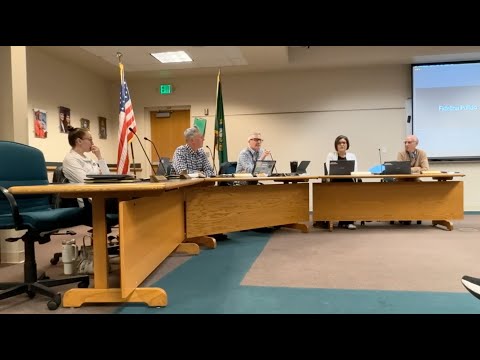
Tom Cui, the district’s director of safety and security, briefed the school board on the district’s multi‑year investments in physical security and steps taken to meet requirements under Alyssa’s Law.
Cui traced the improvements from upgrades to radio systems and cameras to a major 2019 effort worth about $2.2 million that added secure lobbies, perimeter fencing, additional PA systems, and audio‑video systems in school vestibules. He said the district has invested roughly $100,000 in radios and has more than 150 access‑control doors across schools that can be locked centrally.
“Alyssa’s Law really addresses these five things — alert buttons, live video and audio feeds,” Cui said, describing how pressing an alert button triggers the standard response protocol message ("Lockdown, locks, lights, out of sight"), locks access‑control doors and notifies principals, directors and SROs. He told the board RiverCom staff now have access to the district’s camera feeds and access controls in some locations and that the district added flashing lights at bus ramps so drivers know not to unload children when the lights are active.
Cui also explained technical constraints. Some older high‑school systems — multiple alarm partitions and a legacy fire alarm vendor — complicate integration and raise repair costs. Portables present additional operational challenges because of exit points and separation from main buildings. He said staff are working to consolidate multiple access‑control systems into a single platform and to resolve remaining RiverCom audio‑integration issues.
Board members thanked staff for the updates and noted the tradeoff between security measures and campus accessibility. Board members said that, once accustomed to the systems, families generally find them reassuring despite initial concerns about appearance and access.
The presentation did not include new funding requests; it outlined completed and ongoing technical work and described how the current systems are being used to support emergency response.